By Lionel Kubwimana
••4 min
How to use African proverbs to teach both language and cultural values to your children.
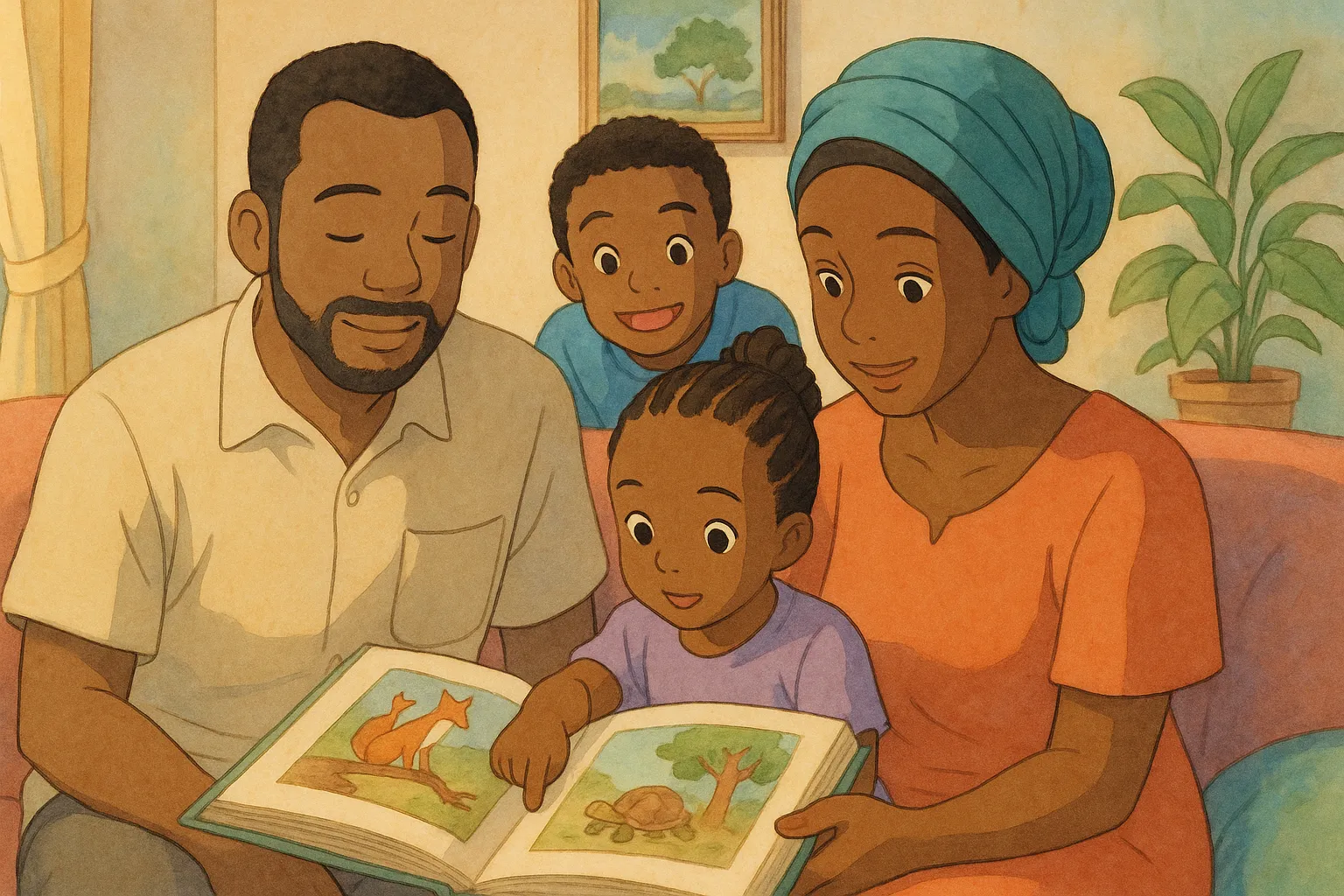
Proverbs are more than just wise sayings; they are compact cultural capsules that carry generations of wisdom, values, and worldview in a single, memorable sentence. Unlike vocabulary lists, which can feel like a chore, proverbs engage children’s imagination and curiosity. They tell a story, convey a moral, and connect to everyday situations, making them far easier to remember and internalize.
Every culture has its own collection of proverbs—short, pithy statements that capture a universal truth through a local lens. In African traditions, proverbs often draw from nature, family, and community life, embedding complex ideas in imagery that feels familiar. Because they are story‑based, they activate narrative memory, which is much stronger than rote memorization. When a child hears “It takes a village to raise a child,” they don’t just learn the words; they absorb a whole philosophy of communal responsibility.
Vocabulary lists, by contrast, present words in isolation, stripped of context and emotional weight. Proverbs give those words a purpose—a reason to be remembered. They also model grammar, idiomatic expressions, and cultural nuances that textbooks rarely capture.
“Mwana ulanji mpele” (Kiswahili)
Literal translation: “A child is like an arrow you shoot.”
Meaning: The way you raise a child determines where they go in life.
Context: Use this when talking about parenting choices, education, or guiding a child’s behavior. It’s a reminder that our early investments in a child’s character shape their future direction.
“Igihe cy’imvura ntikigwa ikizamurika” (Kinyarwanda/Kirundi)
Literal translation: “The time of rain does not fall on a raised roof.”
Meaning: Preparation protects you from hardship.
Context: A perfect proverb for teaching planning and foresight. When your child is about to start a new school year or a big project, this saying can spark a conversation about getting ready ahead of time.
“Omo eni kii, omo eni kii” (Yoruba)
Literal translation: “The child of the house, the child of the house.”
Meaning: A child raised within the family (or community) absorbs its values naturally.
Context: Emphasize the importance of immersion and daily exposure. If you want your child to speak your language and understand your culture, they need to be “the child of the house”—surrounded by it, not just taught in lessons.
Storytelling
Turn each proverb into a short, vivid story. For “Mwana ulanji mpele,” you could tell a tale about an archer who carefully chooses the wood, shapes the arrow, and aims it toward a distant target. The arrow’s flight depends on the archer’s skill—just as a child’s future depends on the care they receive.
Drawing
Ask your child to draw the imagery behind the proverb. For “Igihe cy’imvura ntikigwa ikizamurika,” they might sketch a house with a steep roof while rain pours down. The act of visualizing the metaphor helps cement both the language and the lesson.
Daily use
Weave the proverb into everyday conversation. When your child shares a toy, you can say, “That’s like ‘Omo eni kii’—you’re being a true child of our house.” When they prepare for a test, remind them, “Igihe cy’imvura ntikigwa ikizamurika—you studied ahead, so you’re ready.”
Start this week. Pick one proverb from your own heritage, try one of these activities, and watch how a single sentence can carry more cultural pride than an entire textbook.