
Bilingual bedtime routine: a simple way to weave language into daily life
By Lionel Kubwimana
••4 min
How to create a 10‑minute bilingual bedtime ritual that builds language naturally.
KEY HIGHLIGHTS
- •Bedtime offers a unique window of emotional safety and repetition—perfect for language learning.
- •A simple 10‑minute ritual: song, story, goodnight words in your heritage language.
- •When kids resist, adapt—keep it playful and pressure‑free.
Why bedtime works
Bedtime isn’t just about sleep—it’s a moment of emotional safety and quiet connection. For children, the predictability of a nightly ritual lowers anxiety and opens their minds to new information. When you weave your heritage language into that space, you’re not “teaching” in a formal sense; you’re simply making the language part of the comforting fabric of their day.
The repetition of a bedtime routine is a language‑learner’s secret weapon. Kids thrive on repetition; hearing the same words, phrases, and stories night after night builds familiarity without pressure. Unlike flashcards or forced lessons, a bedtime ritual feels natural—because it is.
Step‑by‑step ritual
Here’s a simple 10‑minute ritual you can start tonight:
-
Song (2 minutes)
Choose a short, gentle song in your heritage language—maybe a lullaby you remember from your own childhood, or a simple folk tune. Sing it softly while you settle your child. The melody helps anchor the words, making them easier to recall. -
Story (5–7 minutes)
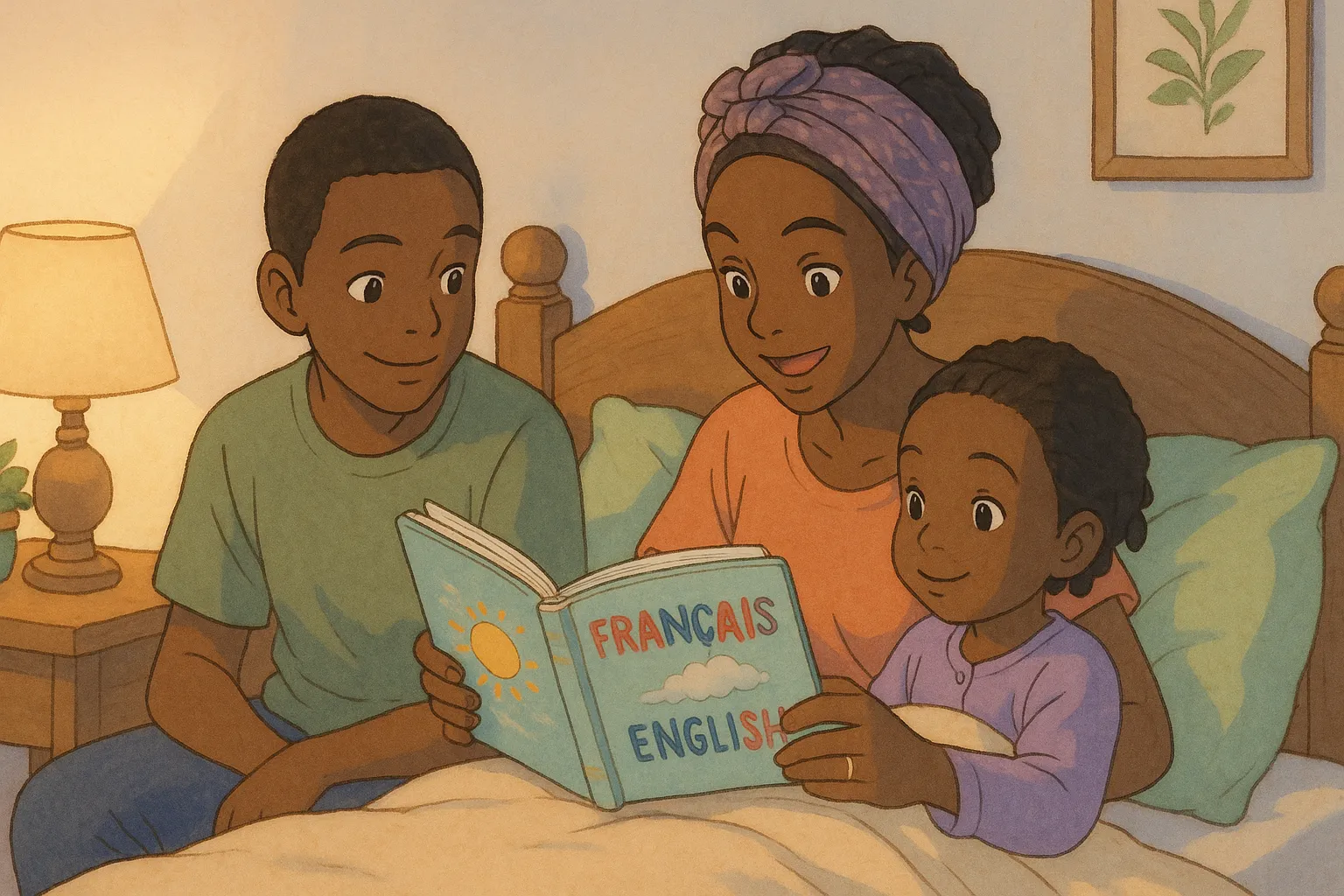
Read a bilingual picture book—or tell a short story from memory—in your heritage language. Don’t worry about translating every word; the pictures and your tone will convey the meaning. If your child asks for a word in the community language, offer it casually (“Oh, that’s ‘moon’ in English”). Keep it light and joyful. -
Goodnight words (1 minute)
End with a few simple phrases in your heritage language: “Good night,” “Sweet dreams,” “I love you.” Kiss them on the forehead, turn off the light, and leave the room. That’s it.
The whole ritual takes about ten minutes, but the language exposure compounds over weeks and months.
Troubleshooting
When kids resist
If your child says, “I don’t understand!” or “Speak English!”, don’t force it. Switch to a mix of languages, or reduce the amount of heritage language to just one song or one phrase. The goal is positive association, not perfection.
When you’re tired
On exhausted nights, shorten the ritual to just the goodnight words. Consistency matters more than duration.
When you’re not fluent
Use what you know. Even a handful of words repeated nightly is powerful. You can learn alongside your child—look up one new word each week and add it to your ritual.
The long‑term payoff
A bedtime routine built around your heritage language does more than teach vocabulary; it ties the language to safety, love, and belonging. Years from now, your child may not remember every word, but they’ll remember the feeling of being wrapped in your voice—and in the language that connects them to their roots.