Lingu.Africa Logo
Lingu.Africa
HomeBooksLearnTeachPricingDownloadPracticeTranslationAboutBlog
Lingu.Africa

Discover the beauty of African languages through bilingual books.

Our Books

  • Amharic Books
  • Bambara Books
  • Cape Verdean Kriolu Books
  • Ewe Books
  • Haitian Creole Books
  • Hausa Books
  • Igbo Books
  • Kikuyu Books
  • Kinyarwanda Books
  • Kirundi Books
  • Krio Books
  • Lingala Books
  • Luganda Books
  • Malagasy Books
  • Oromo Books
  • Pidgin Books
  • Shona Books
  • Somali Books
  • Swahili Books
  • Tigrinya Books
  • Twi Books
  • Wolof Books
  • Xhosa Books
  • Yemba Books
  • Yoruba Books
  • Zulu Books

Company

  • Translation Services
  • Blog
  • About Us
  • Languages
  • FAQ

Contact

Email: hello@lingu.africa

© 2026 Lingu.Africa•Terms•Privacy

Home
Blog
The Moment Your Child Uses a Proverb Correctly in Conversation

TABLE OF CONTENTS

  • Why proverb moments matter (they show deep cultural integration)
  • How to create more opportunities for proverb use (without forcing it)
  • What to say when it happens (amplify the pride)

The Moment Your Child Uses a Proverb Correctly in Conversation

By Lionel Kubwimana

•Aug 24, 2026•

3 min

Recognize and celebrate those tiny moments of cultural transmission—they’re proof your efforts are working.

The Moment Your Child Uses a Proverb Correctly in Conversation

KEY HIGHLIGHTS

  • •Proverb moments show deep cultural integration, not just language acquisition.
  • •Create natural opportunities for proverb use through storytelling and everyday conversations.
  • •Amplify pride when your child uses a proverb correctly—it reinforces cultural identity.
parentingcultural transmissionproverbslanguage learningAfrican diaspora

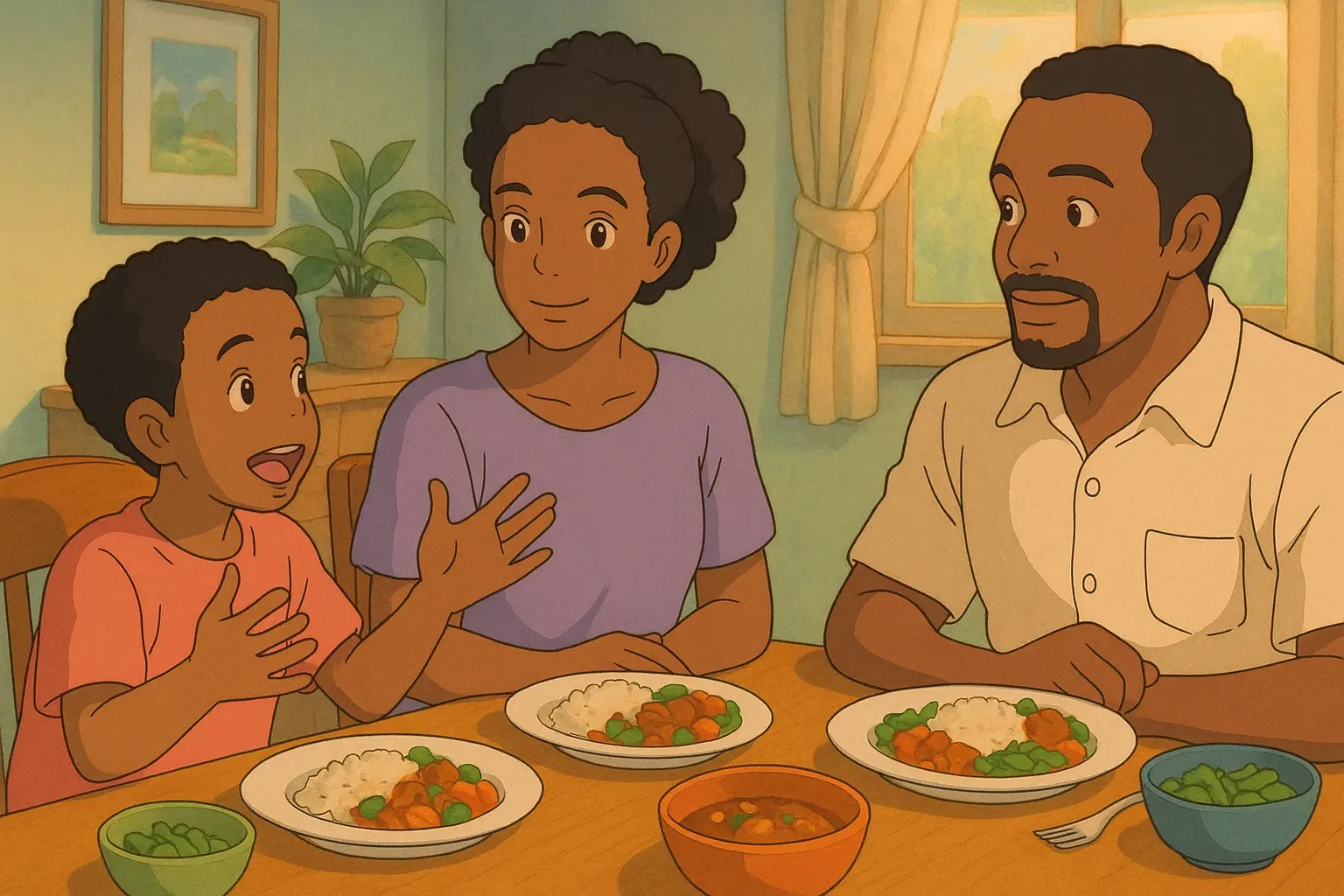
You’re sitting at the dinner table when your eight‑year‑old finishes a story about a friend who kept bragging about a new toy, then looks up and says, “You know, Mama, it’s like the saying: The empty pot makes the loudest noise.”

For a second, you freeze. Then a warm, proud smile spreads across your face. That wasn’t just a sentence—it was a proverb, used correctly, in context, without any prompting. In that tiny moment, you see something profound: your child isn’t just learning words; they’re absorbing a whole way of thinking.

Why proverb moments matter (they show deep cultural integration)

Proverbs are more than phrases. They’re compressed wisdom—lessons about patience, respect, community, and resilience that have been passed down for generations. When a child uses one appropriately, it means they’ve internalized not only the language but also the underlying value system.

Think of it like this: learning vocabulary is like collecting bricks. Using a proverb correctly is like laying those bricks into a wall—it shows structural understanding. Your child has moved from knowing the words to thinking with the culture.

For parents in the diaspora, these moments are especially precious. They’re tangible proof that your efforts—speaking Kirundi at home, sharing stories, explaining traditions—are actually taking root. The proverb becomes a bridge between your childhood memories and your child’s lived experience.

How to create more opportunities for proverb use (without forcing it)

The magic of proverb moments is that they can’t be forced. If you drill them like flashcards, they’ll feel like homework. Instead, weave them naturally into daily life:

  1. Tell stories that illustrate proverbs. Instead of explaining “A single stick can be broken easily,” tell a short story about teamwork—maybe about how your family built a garden together. Then casually drop the proverb at the end.
  2. Use proverbs yourself in everyday conversations. When your child is impatient, you might say, “Patience is the mother of all virtues.” Don’t turn it into a lecture; just let the phrase hang in the air.
  3. Ask open‑ended questions. After reading a book or watching a show, ask, “What do you think the lesson was?” If they stumble, you can gently suggest, “Maybe it’s like the proverb…”
  4. Celebrate when you hear other people use proverbs. Point out when a grandparent, an aunt, or a character in a movie uses one. Normalize proverbs as part of normal speech.

The goal isn’t to make your child a proverb‑quoting machine. It’s to surround them with the rhythm and wisdom of the language until it becomes a natural part of their own voice.

What to say when it happens (amplify the pride)

When that golden moment arrives—your child drops a perfect proverb—your response matters. Here’s how to amplify the pride without overwhelming them:

  • Acknowledge the wisdom. “Wow, that was so true! You really understood the situation.”
  • Connect it to heritage. “That’s a saying your grandma used to tell me when I was your age.”
  • Ask a follow‑up. “How did you know that was the right time to use it?” This invites reflection and reinforces the thinking process.
  • Share the moment. Later, tell your partner or call a relative: “You won’t believe what Nia said today…” Let your child overhear you bragging about their cultural insight.

Avoid over‑praising or turning it into a big performance. The message should be: This is normal for our family. This is how we talk. This is who we are.


Every proverb your child uses correctly is a small victory—a sign that the thread of culture hasn’t been broken. It’s evidence that the language isn’t just a subject to study, but a living tool for thinking and relating.

So the next time you hear that little voice wrap a situation in the wisdom of your ancestors, pause. Smile. And know that you’re not just raising a bilingual child—you’re raising a cultural carrier.

Kirundi proverb for the road: “Ubutware ntibuvyuka uko buhise.” (Leadership isn’t inherited; it’s earned.)

Previous ArticleWhen Your Child is Teased for Speaking Your Language: How to Respond
Next ArticleCar Ride Language Games: Turn Commute Time into Language Time
Start Your Language Learning Journey