By Lionel Kubwimana
••4 min
Use a single, visually‑rich proverb as a gateway to cultural connection, breaking it down through stories, pictures, and everyday situations.
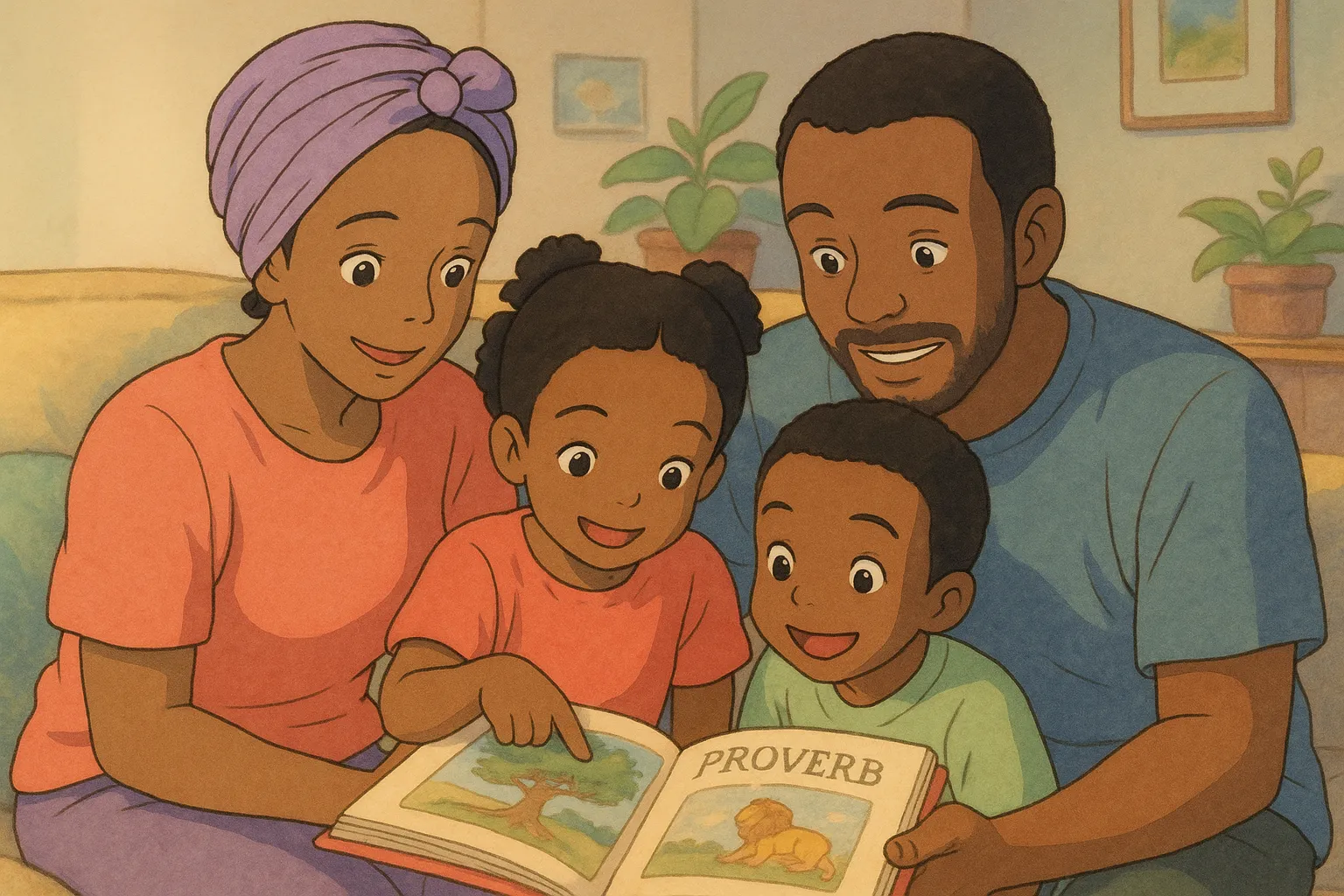
If you grew up hearing proverbs from your grandparents, you probably remember the weight they carried—each phrase felt like a tiny capsule of wisdom, history, and identity. Yet when you try to share those same sayings with your own children, they often fall flat. The words can seem abstract, the metaphors distant, and the cultural context unfamiliar.
This feeling of inaccessibility is completely normal. Proverbs were born in a different time and place; they were shaped by oral traditions, agrarian life, and community values that may not directly translate to your child’s modern, screen-filled world. But that doesn’t mean we should abandon them. Proverbs are worth the effort because they do more than teach a lesson—they tie your child to a lineage. They offer a shortcut to values like respect, patience, and resilience, wrapped in a phrase that’s easy to remember and repeat.
Think of a proverb as a cultural anchor. When your child learns one, they’re not just learning a saying—they’re learning a piece of your family’s story, and through that, a piece of their own identity.
Start with just one. Choose a proverb that resonates with you personally, one that you can explain with a simple story. For example, the Swahili proverb “Haraka haraka haina baraka” (Haste has no blessing) speaks to patience and deliberate action.
Step 1: Tell the story behind the proverb. Instead of just stating the phrase, share a moment when you experienced its truth. Maybe you rushed through a task as a child and ended up making a mistake, and your grandmother gently reminded you of this saying. Stories make proverbs relatable.
Step 2: Show a picture. Use an illustration that captures the proverb’s essence. If you’re talking about “Haraka haraka haina baraka,” a picture of a child carefully building a tower of blocks—while another child’s tower collapses because they rushed—makes the idea visual and concrete. You can even create a simple drawing together.
Step 3: Connect it to a real‑life example. The next time your child is hurrying through homework or a chore, gently ask, “Remember our proverb about haste?” Point out how taking a little more time leads to a better result. This bridges the abstract saying to their everyday experience.
By combining story, image, and real‑life application, you transform a distant proverb into something tangible and alive.
Once you’ve introduced the proverb, the goal is to weave it naturally into your family’s conversations. Use it as a gentle reminder, not a lecture. When your child is impatient in line at the grocery store, you might smile and say, “Haraka haraka…” and let them finish the phrase. This turns the proverb into a shared shorthand—a family inside joke that also carries wisdom.
Create rituals around the proverb. Maybe you have a “proverb of the week” where you display the illustrated picture on the fridge and challenge everyone to spot moments when the proverb applies. At dinner, ask each person to share one time they saw the proverb in action that day.
Over time, the proverb will become part of your family’s cultural fabric. Your child will not only understand the words but also feel the values behind them. And when they eventually pass the same proverb to their own children, they’ll have a story, a picture, and a lifetime of real‑life examples to make it tangible all over again.
That’s the power of a single phrase: it can connect your child to their roots, one proverb at a time.