By Lionel Kubwimana
••4 min
Transform bedtime into a gentle language-learning moment with a simple, repeatable script.
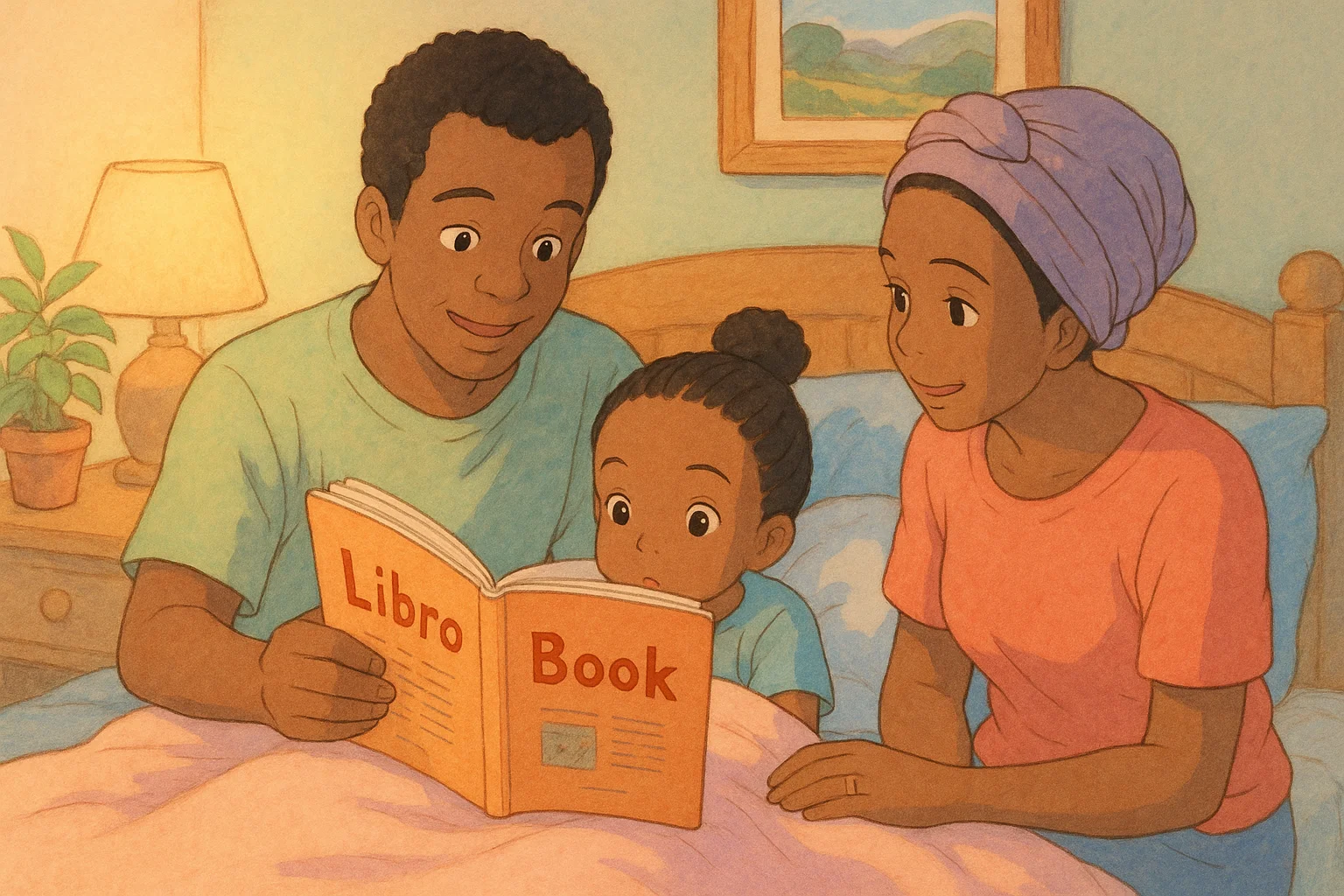
Bedtime offers a unique window for language learning. The quiet, calm atmosphere of the evening allows children to be more receptive to new words and phrases. Unlike the hustle of daytime, bedtime is a moment of emotional connection—a time when children feel safe and loved. This emotional safety lowers the “affective filter,” making it easier for them to absorb a second language without pressure.
Research shows that children recall new vocabulary better when it’s presented in a relaxed, stress‑free setting. Bedtime stories, prayers, and goodnight rituals provide a predictable framework that can be gently enriched with bilingual phrases. Because these moments are repeated nightly, they create a natural “spaced repetition” system—the gold standard for language retention.
A simple, repeatable script helps you weave two languages into your nightly routine without overwhelming your child (or yourself). Here’ voice a three‑part script that takes about 10 minutes and can be used from toddlerhood through the early school years.
Choose a short, illustrated book in your heritage language—or a bilingual edition if available. Read one or two pages, pointing to the pictures as you say the words. After reading the text, pause and ask a simple question in your home language: “What do you see?” or “What do you think happens next?” This keeps the interaction active and encourages comprehension.
Whether your family is religious or not, a moment of gratitude can be expressed bilingually. Start with a simple phrase in your heritage language: “Thank you for today.” Then add a sentence in the community language: “We’re grateful for our family.” Rotate which language you begin with each night. This teaches children that both languages carry equal weight in expressing heartfelt emotions.
End with a loving “goodnight” in each language. You might say, “Sleep well, my love” in English, followed by “Urane neza, mwana wanjye” in Kinyarwanda (or your own heritage language). Use the same phrases every night so your child begins to anticipate and eventually repeat them.
Toddlers (1–3 years)
Keep the script extremely short—just a few words per part. Focus on labeling pictures during story time (“Look, a cat!”) and using single‑word prayers (“Thank you”). The goal is exposure, not mastery.
Preschoolers (3–5 years)
Expand the story conversation by asking “why” questions (“Why do you think the cat is happy?”). Introduce simple sentence prayers (“Thank you for our home”). Encourage your child to repeat the goodnight phrase after you.
Early elementary (5–8 years)
Let your child choose the book and try reading a sentence themselves in the heritage language. Prayers can become longer, expressing specific gratitude for the day’s events. Goodnight wishes can include a quick recap of the day in both languages.
Older children (8+)
Invite your child to help translate a line from the story each night. Prayers can be entirely led by the child. Goodnight wishes can evolve into a short conversation about something they’re looking forward to tomorrow—conducted partly in the heritage language.
By adjusting the complexity while keeping the same three‑part structure, you turn bedtime into a language‑learning ritual that grows with your child. Over time, they’ll associate the warmth of bedtime with the beauty of speaking two languages—and they’ll carry that positive connection into adulthood.