By Lionel Kubwimana
••4 min
Five simple words you can start using today to introduce your native language to your child.
As a parent, introducing your native language to your child can feel like a monumental task. Where do you even begin? The good news is that you don’t need to start with full sentences or complex grammar. In fact, the most effective approach is often the simplest: start with just a handful of everyday words.
When you focus on a small set of core words, you remove the pressure to be “perfect” and create a manageable foundation that both you and your child can build on. This isn’t about teaching a language in the academic sense—it’s about weaving your heritage tongue into the fabric of your daily life, one word at a time.
Overwhelm is the enemy of consistency. Many parents abandon their language goals because they set the bar too high, trying to speak only in their native language from day one. That’s a recipe for frustration. Instead, picking a few key words reduces the cognitive load for you and makes the learning process feel like a game for your child.
Small wins build confidence—for both of you. Every time your child understands or repeats one of those words, you get a little boost. That positive reinforcement keeps the habit alive and turns language transmission into a shared joy, not a chore.
Here are five simple, powerful words that appear in almost every family’s daily rhythm. Each one is a doorway to more vocabulary and a chance to connect culture with routine.
1. Mama (or the equivalent in your language)
This is often the first word a child says, and it’s a natural anchor. In many African languages, “mama” or its local variant carries deep emotional weight. Use it consistently when referring to yourself or when your child reaches for you. It’s a word of comfort and recognition.
2. Maji (water)
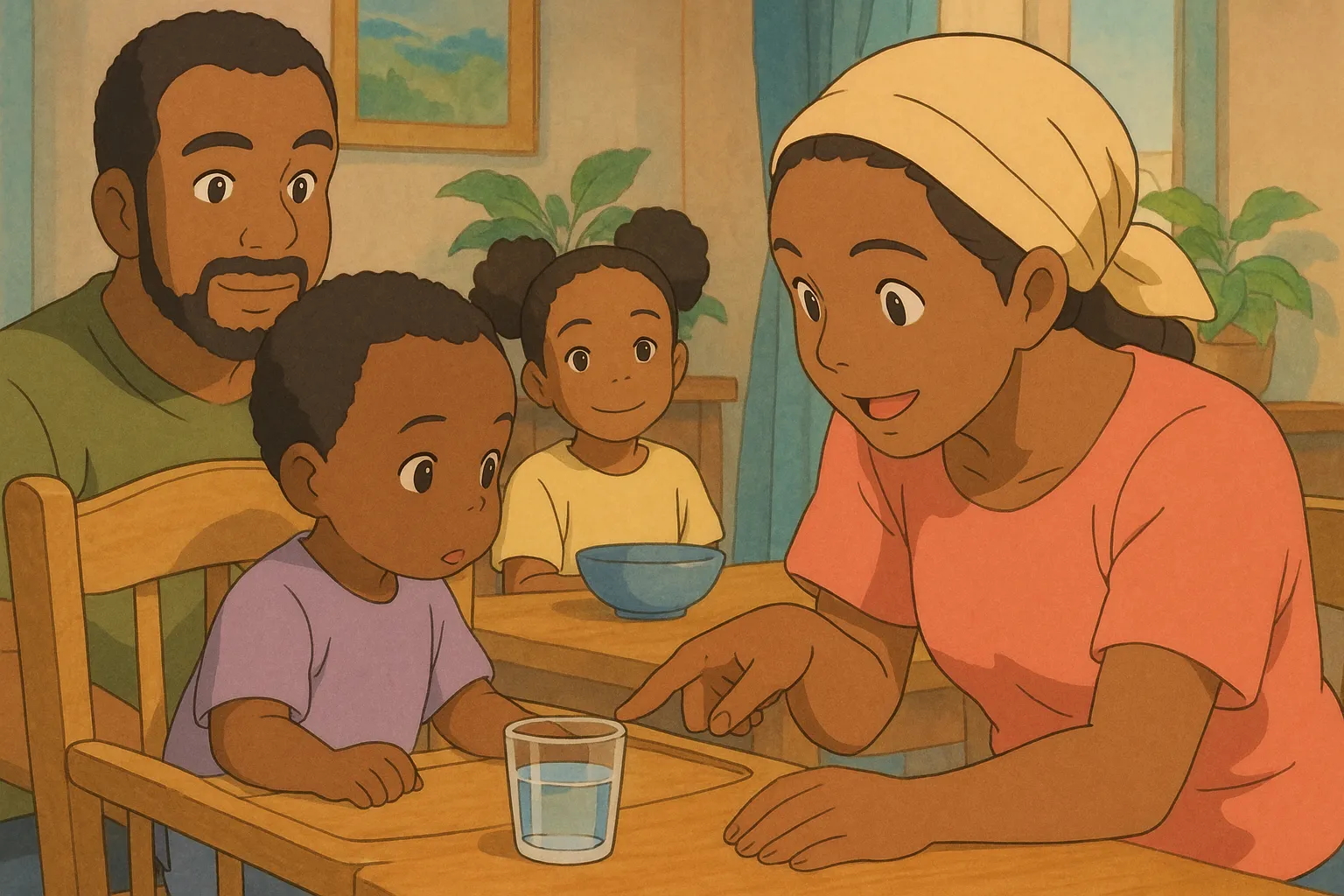
Water is life—and it’s everywhere. From bath time to drinking, pointing to a glass of water and saying “maji” (or your language’s word for water) turns a mundane moment into a language lesson. Picture a mother pointing at a cup of water while saying “maji” to her toddler. That simple gesture, repeated daily, embeds the word in your child’s mind.
3. Kula (eat)
Mealtime is a daily ritual, and associating the action of eating with your language’s word for “eat” creates a strong sensory link. Say “kula” when you serve food, when your child picks up a snack, or when you sit down together. It’s a word that comes with a built-in reward: delicious food.
4. Lala (sleep)
Bedtime is another predictable routine. Whisper “lala” as you tuck your child in, sing it in a lullaby, or say it when they yawn. The calm, repetitive context helps the word stick and adds a layer of cultural warmth to the wind‑down ritual.
5. Cheza (play)
Play is how children explore the world. Labeling playtime with your language’s word for “play” turns fun into learning. Whether you’re building blocks, dancing, or tickling, a cheerful “cheza!” reinforces that your heritage language is part of joy and connection.
These five words—mama, maji, kula, lala, cheza—are just examples. Choose the equivalents in your own language, and feel free to swap in any other high‑frequency words that fit your family’s daily life.
You don’t need special lessons or flashcards. The magic happens in the flow of your day.
At mealtime
As you prepare breakfast, point to the water glass and say “maji.” When you hand your child a banana, say “kula.” Keep it light and natural. If your child repeats the word, celebrate with a smile—no pressure to get it “right.”
During bath time
Water play is a perfect opportunity. Pour water from a cup and say “maji” each time. Splash and laugh together while using the word. The sensory experience strengthens the memory.
At bedtime
As you dim the lights, whisper “lala.” Use the same word every night. You can even create a short, calming phrase like “Lala, mtoto wangu” (Sleep, my child) if you feel comfortable adding a second word.
In play
When you pull out toys, announce “Cheza!” Use the word while you play— “Cheza na mpira” (Play with the ball) if you want to add an object. The goal isn’t full sentences yet; it’s to associate the word with fun.
Throughout the day
Look for moments when these five words naturally fit. If your child points to you, say “mama.” If they’re thirsty, offer “maji.” The repetition across different contexts builds a robust, lived‑in vocabulary.
Once these five words feel comfortable, you can gradually add more. Maybe “nyumba” (house), “samaki” (fish), or “ngoma” (drum). The key is to add new words slowly, always linking them to concrete objects or actions your child encounters daily.
Remember, you’re not just teaching vocabulary—you’re sharing identity. Every “maji” at the water fountain and every “cheza” on the playground is a thread that ties your child to their roots. Start with these five words today, and watch how a small beginning grows into a lifelong connection.