Lingu.Africa Logo
Lingu.Africa
HomeBooksLearnTeachPricingDownloadPracticeTranslationAboutBlog
Lingu.Africa

Discover the beauty of African languages through bilingual books.

Our Books

  • Amharic Books
  • Bambara Books
  • Cape Verdean Kriolu Books
  • Ewe Books
  • Haitian Creole Books
  • Hausa Books
  • Igbo Books
  • Kikuyu Books
  • Kinyarwanda Books
  • Kirundi Books
  • Krio Books
  • Lingala Books
  • Luganda Books
  • Malagasy Books
  • Oromo Books
  • Pidgin Books
  • Shona Books
  • Somali Books
  • Swahili Books
  • Tigrinya Books
  • Twi Books
  • Wolof Books
  • Xhosa Books
  • Yemba Books
  • Yoruba Books
  • Zulu Books

Company

  • Translation Services
  • Blog
  • About Us
  • Languages
  • FAQ

Contact

Email: hello@lingu.africa

© 2026 Lingu.Africa•Terms•Privacy

Home
Blog
When Grandma Calls: How a Simple Video Call Becomes a Language Lesson

TABLE OF CONTENTS

  • The magic of intergenerational connection
  • Turning small talk into vocabulary lessons
  • Making it a ritual

When Grandma Calls: How a Simple Video Call Becomes a Language Lesson

By Lionel Kubwimana

•Jul 25, 2026•

4 min

That moment when grandma's voice fills the room and suddenly you're not just chatting—you're passing on your language.
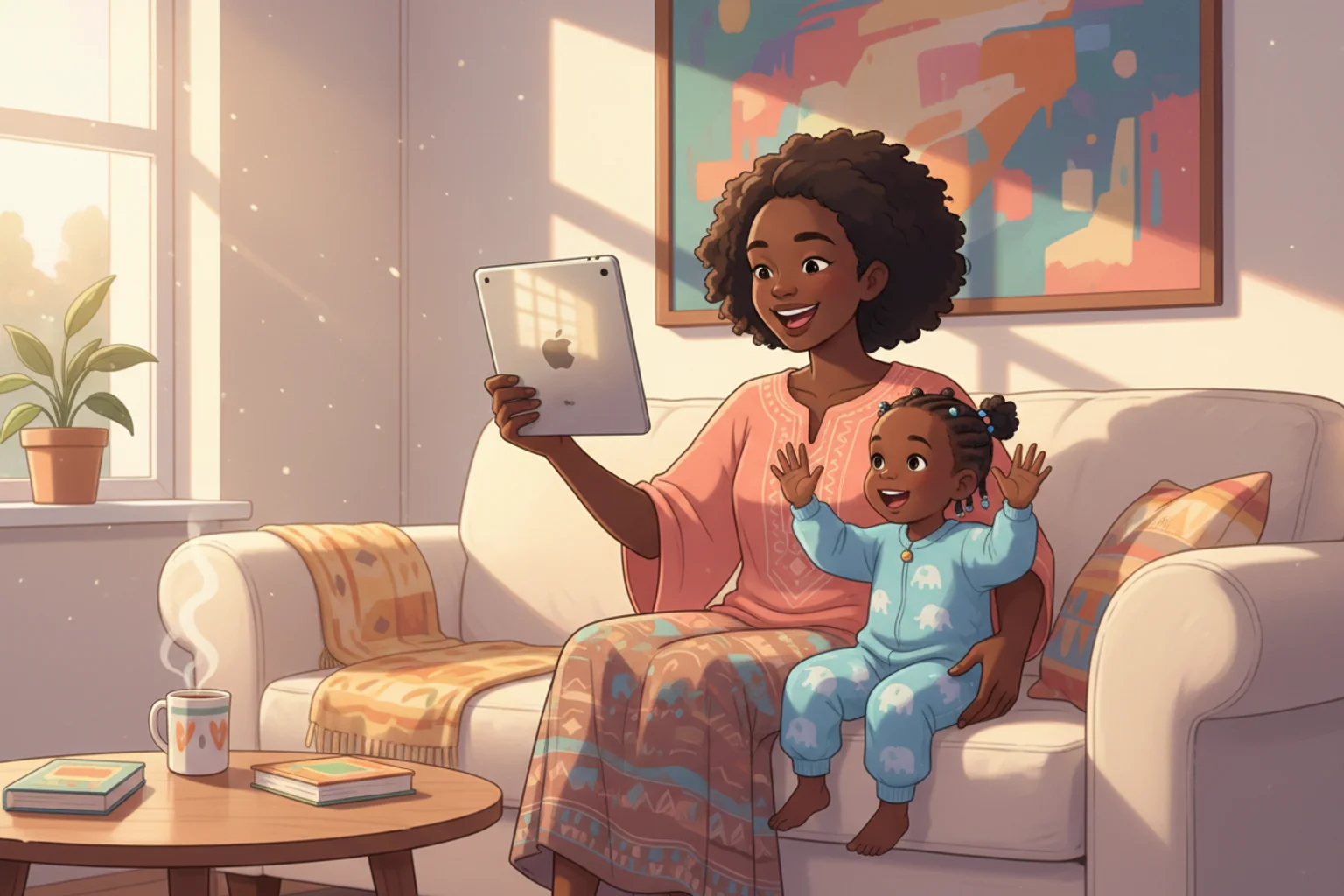
When Grandma Calls: How a Simple Video Call Becomes a Language Lesson

KEY HIGHLIGHTS

  • •Turn weekly video calls into structured language lessons
  • •Use everyday topics like food and weather to build vocabulary
  • •Strengthen family bonds while preserving your heritage language
video callslanguage learninggrandparentsbilingualismfamily

The magic of intergenerational connection

Video calls with grandparents aren't just about catching up—they're a unique language‑learning opportunity. When your child hears grandma's voice, they're not only connecting with family; they're hearing the rhythms, tones, and vocabulary of your heritage language in its most authentic form. That intergenerational bridge turns a simple screen into a portal for cultural transmission.

Research shows that children learn languages best from native speakers, especially those they have an emotional bond with. Grandparents often speak with a purity and depth that parents, who may have mixed their language with English, can't always replicate. And because these calls are driven by love and curiosity, the pressure to “study” disappears. The language flows naturally, wrapped in stories, jokes, and everyday gossip.

Turning small talk into vocabulary lessons

The secret is to turn the small talk that fills video calls into deliberate vocabulary lessons. Here are a few concrete examples:

  • Food: Ask grandma to describe what she's cooking. “What's that spice called in Kinyarwanda? How do you say 'I'm hungry'?” Have your child repeat the words and even write them down after the call.
  • Weather: “Grandma, what's the weather like there?” Compare terms for rain, sunshine, clouds. This builds a practical, weather‑related lexicon.
  • Family news: When grandma shares news about cousins or uncles, pause and unpack the relationships. “So that's your uncle’s son—how do we say 'cousin' again?” These kinship terms are crucial for understanding family trees.

Each call can focus on one theme, but let the conversation wander. The goal isn't to drill vocabulary but to embed it in real, meaningful dialogue.

Making it a ritual

For video calls to become consistent language lessons, they need to become a ritual. Here’s how to structure weekly calls that both teach and connect:

  1. Set a regular time: Sunday afternoons, Wednesday evenings—pick a slot that works for both sides and stick to it. Consistency signals that this time is special.
  2. Prepare a “prompt” list: Before the call, jot down three or four questions or topics you'd like to explore (e.g., “Ask grandma about her favorite childhood game,” “Learn the names of three fruits”). Share the list with your child so they feel involved.
  3. Keep it short and sweet: Especially with younger children, aim for 15–20 minutes. Better a lively, engaged short call than a dragged‑out marathon.
  4. Review afterward: After the call, spend five minutes recapping. “What new word did you learn today? Can you say it again?” This solidifies the learning and shows your child that their effort matters.

Over time, these weekly calls will build a library of vocabulary and, more importantly, a living connection to the language that no textbook can provide. Your child will start looking forward to hearing grandma's voice—not just because it's grandma, but because it's a chance to explore their heritage in a safe, joyful space.

When grandma calls, it's more than a check‑in. It's a lesson wrapped in love, a conversation that carries your language forward. And that’s a gift that lasts long after the screen goes dark.

Previous ArticleThe Guilt of Missing Words: When You Can't Name Simple Things in Your Own Language
Start Your Language Learning Journey