By Lionel Kubwimana
••7 min
When grandparents live far away, maintaining a real connection feels impossible. This 'connection toolkit' gives you three structured activities to build bonds that last, starting this week.
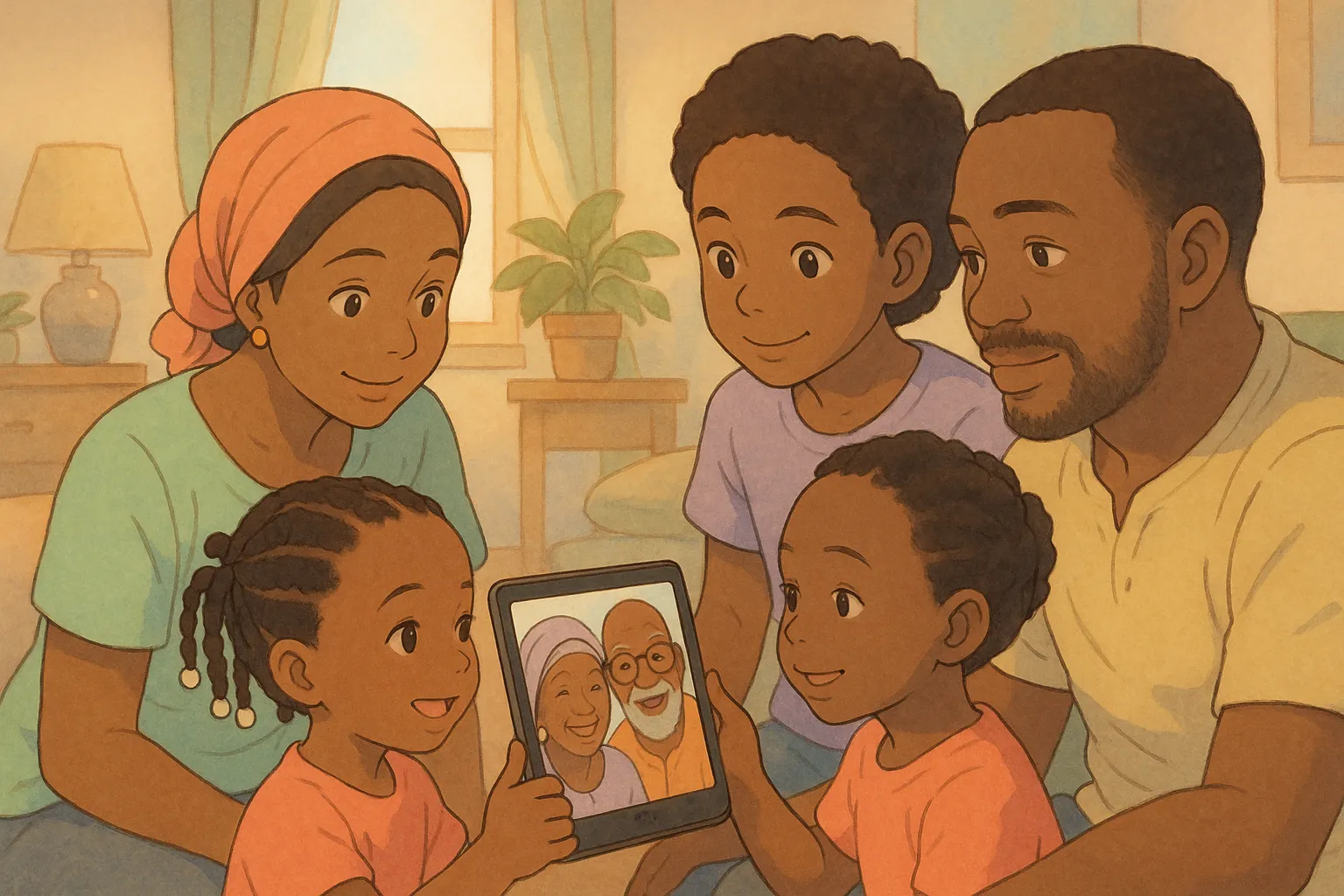
When your child’s grandparents live hundreds—or thousands—of miles away, it’s easy to feel that a real, meaningful relationship is slipping out of reach. Video calls help, but they often become routine check‑ins that don’t build the kind of shared history that cements bonds. The good news is that physical distance doesn’t have to mean emotional distance. With a little intentionality, you can turn those brief digital moments into lasting connections.
Over the last few years, I’ve watched my own children grow up with grandparents who live in a different country. What started as a challenge—how do we keep them close when they’re so far?—became an opportunity to design a simple, repeatable “connection toolkit.” These three tools—photos, recipes, and recorded stories—don’t require fancy apps or hours of planning. They simply give both generations something tangible to share, one step at a time.
Distance is measured in miles, but closeness is measured in shared moments. When grandparents and grandchildren are separated by geography, the default mode of interaction tends to be the occasional video call. While seeing each other’s faces is valuable, these calls often lack substance. Kids quickly run out of things to say, grandparents ask the same questions, and the conversation fizzles.
The key is to shift from “catching up” to “creating together.” Instead of asking “What did you do today?”, give them a joint project—something that spans the miles and gives them a reason to keep talking, to keep thinking about each other even after the call ends. That’s where the connection toolkit comes in.
Each element of this toolkit is designed to be low‑effort, high‑reward, and repeatable. You can introduce them one at a time, and each one naturally extends beyond a single video call.
Photos with a purpose
Instead of just sharing random snapshots, pick a theme for the week—something like “something green in your house” or “your favourite breakfast.” Both the grandparent and the child take a photo that fits the theme, then share it during the next video call. Suddenly, the call has a built‑in topic: “Why did you choose that green plant?” “What’s the story behind that breakfast dish?”
This simple ritual turns a photo exchange into a conversation starter and, over time, builds a joint photo album that tells a story about their shared interests.
Recipes that travel
Food is one of the most powerful connectors across generations. Choose a simple recipe that a grandparent can walk a child through over video call. Something like a cookie recipe, a smoothie, or a family dish that has sentimental value. The child gathers ingredients on their side, the grandparent guides them step‑by‑step, and at the end, they both enjoy the same food (or at least the same kind of food) together, miles apart.
Not only does this create a shared experience, but it also passes down culinary knowledge in a way that feels immediate and practical.
Recorded stories for keeps
Ask a grandparent to record a short story—maybe a childhood memory, a folk tale, or an explanation of a family tradition—using the voice memo app on their phone. The recording can be sent ahead of time, and the child listens before the call. During the call, they can ask questions, share their thoughts, or even record a response.
These audio clips become treasured keepsakes that the child can return to again and again, long after the call is over.
You don’t need to roll out all three tools at once. Start with the one that feels most natural for your family. Here’s how to do it:
Bridging the distance between grandparents and grandchildren isn’t about finding more time—it’s about making the time you already have more meaningful. With this toolkit, you’re not just filling minutes on a screen; you’re creating tangible bridges that span the miles. You’re giving your child and their grandparents something to hold onto, something that outlasts the call.
Start small. Pick one tool, one theme, one 15‑minute window this week. The connection you build in that quarter‑hour will ripple forward, turning fleeting digital moments into memories that last a lifetime.