By Lionel Kubwimana
••4 min
That moment you realize you've lost words in your native language—and how to turn guilt into a game you play with your child.
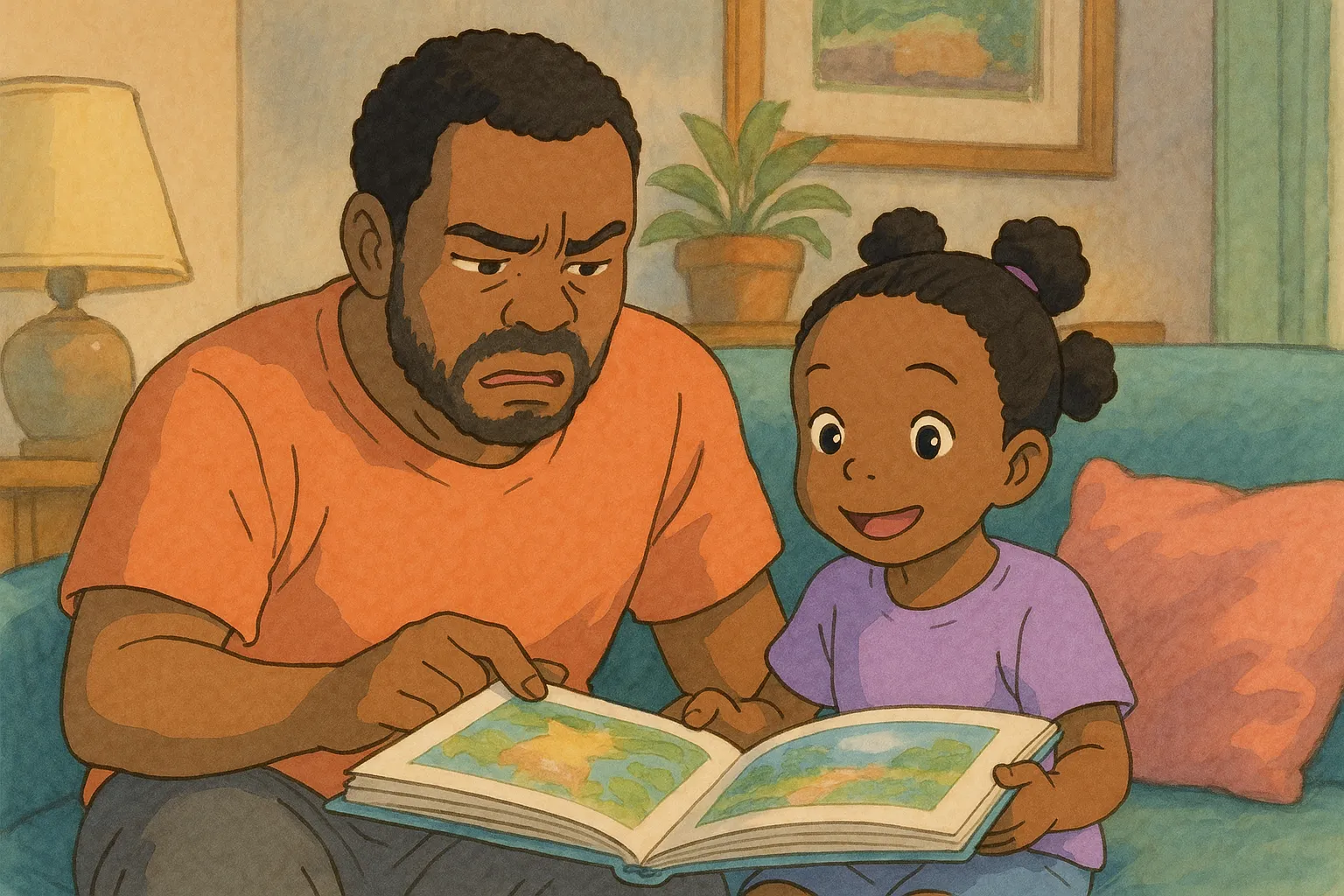
You're sitting with your child, pointing at a picture of a butterfly in a colorful book. Your mouth opens, but the word doesn't come. You fumble, trying to recall what your grandmother called these delicate wings in your language. The silence stretches, heavy with guilt. How can you not know something so simple in your own tongue?
This moment is more common than you think. For diaspora parents, language attrition—the gradual loss of vocabulary—is a natural consequence of living in a different linguistic environment. It's not a failure; it's a sign of adaptation. Yet, the emotional weight can feel overwhelming.
Language attrition is a well-documented phenomenon among bilingual individuals who spend more time using one language over another. Studies show that vocabulary retrieval can become slower, and some words may fade entirely from active memory. This doesn't mean you've lost your cultural identity; it means your brain is optimizing for the language you use daily.
You're not alone. Many diaspora parents experience the same guilt when they realize they can't recall simple words in their native language. This feeling is compounded by the pressure to pass on the language to the next generation. But guilt is not a useful teacher. Instead, we can transform it into something positive.
The key is to shift from feeling guilty to being curious. Learning alongside your child turns a moment of frustration into a shared adventure. Here are practical steps you can take:
Use everyday objects: Start with items around your home—a spoon, a chair, a window. Point to them and say the word in your language. If you don't know it, look it up together. Make it a game: "What's this called in our language?"
Create a "word of the day" ritual: Each day, pick a new word to learn together. Use it in sentences throughout the day. Celebrate when you both remember it.
Leverage picture books: Books are visual prompts that reduce pressure. When you encounter an image, ask your child what they think the word might be. If you don't know, admit it and search together.
Embrace mistakes: Laugh when you forget. Normalize the process of forgetting and relearning. This models resilience and shows your child that it's okay not to know everything.
Connect with community: Reach out to other diaspora parents. Share your experiences and exchange vocabulary. This builds a support network and reduces isolation.
By approaching language learning as a collaborative game, you replace guilt with connection. You're not just teaching your child words; you're showing them how to navigate uncertainty with grace.
The next time you struggle to recall a word, pause and remind yourself: this is an opportunity to learn together. Your child doesn't need a perfect teacher; they need an engaged partner. Let go of the guilt and embrace the journey of rediscovering your language, one word at a time.