By Lionel Kubwimana
••4 min
Use asynchronous voice messages to create a “language podcast” from grandparents, where they share stories, words, and songs that your child can listen to anytime.
Why voice messages lower the barrier
Voice messages offer a unique blend of intimacy and convenience that makes intercultural communication less intimidating. Unlike video calls that require scheduling across time zones, a voice message can be sent anytime, allowing grandparents to record a story when they feel most inspired—maybe after morning tea or while sitting on the porch. This removes the pressure to perform “on stage” and encourages more authentic, unscripted language transfer. The asynchronous nature means grandparents can pause, think, and choose their words without the anxiety of a live audience. This leads to richer, more thoughtful language sharing that preserves cultural nuances often lost in rushed conversations.
Voice messages also capture tone, laughter, pauses—elements that text cannot convey. This emotional layer strengthens bonds and makes the language feel alive. When a grandparent chuckles while explaining a word, or when their voice catches recalling a memory, those nuances become part of the language itself, embedding culture in sound.
How to set up a simple voice‑message routine
Start small. Ask grandparents to send one word a day—a favorite Kinyarwanda term, a Swahili greeting, or a proverb they grew up with. Pair it with a short explanation (“This is what we say when we see a rainbow”). Once that feels natural, expand to one story a week: a childhood memory, a folktale, or a description of a family photo. Consistency builds a rhythm that children can anticipate, turning sporadic exchanges into a dependable “language podcast.” Use a shared family chat (WhatsApp, Telegram) or a dedicated app like LinguaFolio to organize the messages. Set gentle reminders, but keep the tone light and appreciative—never demanding.
Create a simple schedule to build habit. For example, designate Monday as “word day” and Friday as “story day.” This predictability helps grandparents remember and gives children something to look forward to. If grandparents are less tech‑savvy, offer to walk them through the process via a quick screen‑share or even record a short tutorial video. The goal is to make the routine feel effortless, not like a chore.
Turning the messages into interactive learning
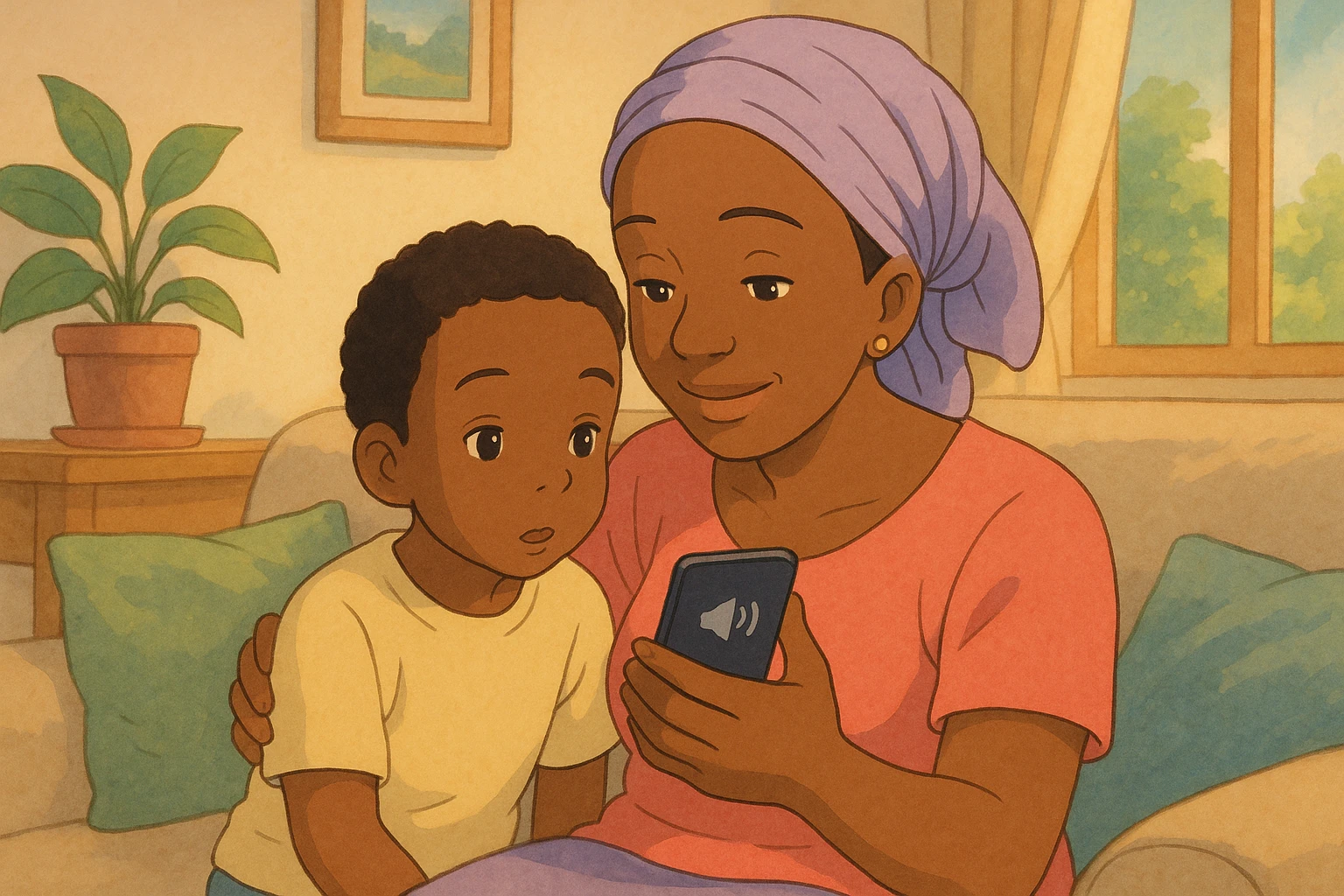
Don’t just archive the recordings. Play them together and repeat the words aloud. Encourage your child to record a reply—even a simple “thank you” in the same language. Over time, compile the messages into a private family archive that both documents the language journey and reinforces emotional bonds. This interactive loop transforms passive listening into active cultural participation. Create simple activities: “Can you draw a picture of the story Grandpa told?” or “Let’s try to use Grandma’s new word at dinner tonight.” These small engagements deepen the connection and make the language feel alive, not just preserved.
Turn the archive into a living language resource. Label each recording with the date, speaker, and topic. Every few months, revisit earlier messages and notice how the child’s comprehension has grown. Celebrate milestones: “Today you used Grandma’s proverb correctly!” This reinforces progress and shows grandparents their contributions matter. You can even create a family “word wall” or a digital scrapbook where each voice message is paired with a photo or drawing.
This approach transforms distance into closeness, and language learning into a shared family legacy.