By Lionel Kubwimana
••4 min
How to involve grandparents in teaching your native language, even from a distance.
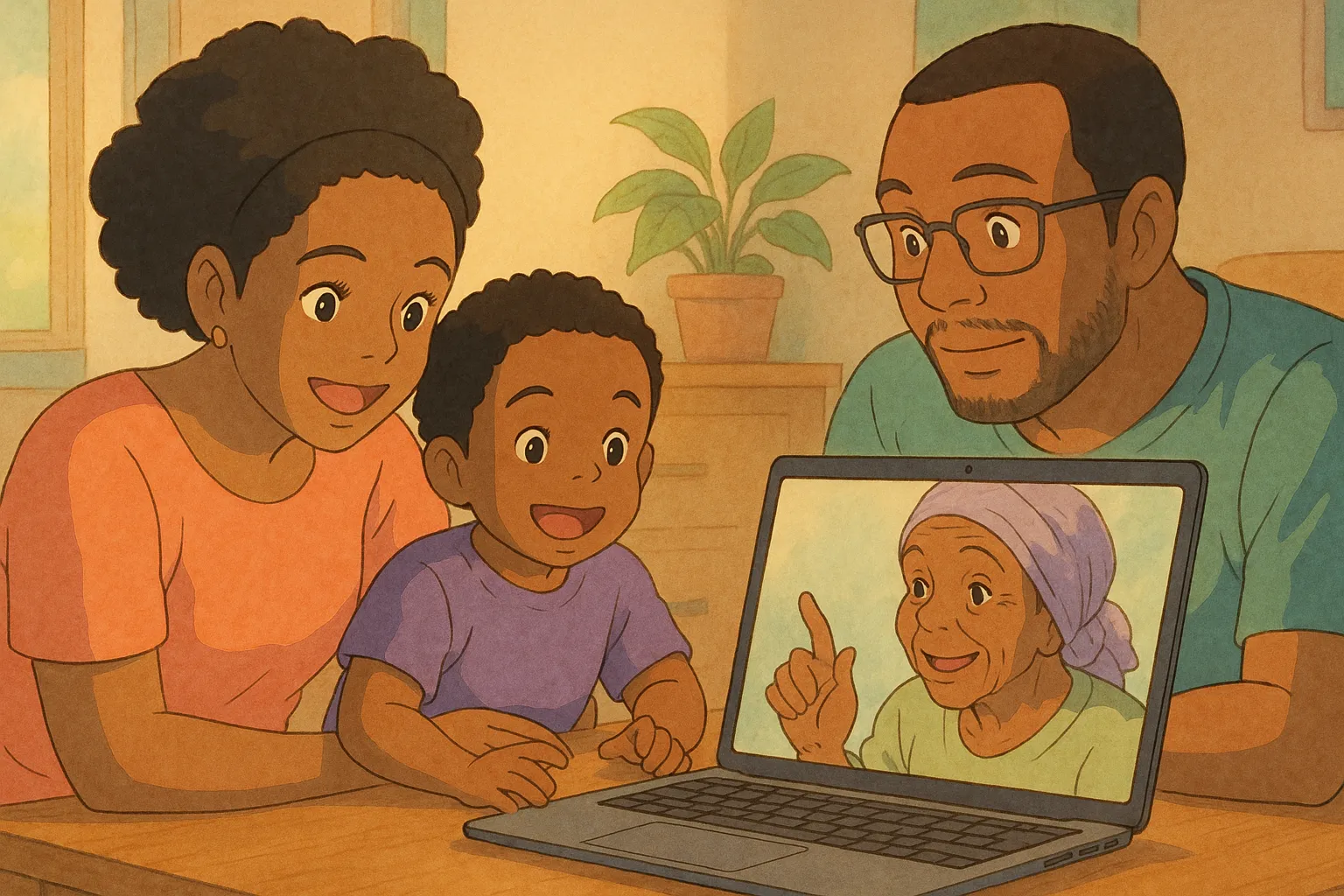
Grandparents carry more than just vocabulary—they carry the cultural nuance, emotional weight, and lived history of your native language. Their speech is seasoned with proverbs, idioms, and subtle contextual meanings that textbooks never capture. When they tell a story, they’re not merely recounting events; they’re weaving in values, humor, and a sense of belonging that anchors your child’s identity.
Research shows that children who interact regularly with grandparents in their heritage language develop stronger emotional bonds and a more positive attitude toward that language (NIH, 2014). Grandparents often speak a “purer” form of the language, less diluted by the dominant language of the diaspora. They also bring patience and a non‑judgmental presence that makes language learning feel safe and joyful.
Video calls with a purpose. Instead of leaving the conversation to chance, give it a gentle structure. Before each call, agree on a simple theme—for example, “today we’ll talk about what we ate” or “tell us a story about when you were young.” Prepare a few vocabulary words or phrases you’d like your child to hear. Let the grandparent lead; their natural storytelling will do the rest.
Recorded stories. Ask grandparents to record short audio or video stories in your language. These can be saved and replayed during car rides, bedtime, or quiet moments. The recordings become a portable library of family wisdom and language exposure that doesn’t depend on anyone’s schedule.
In‑person visits with intention. When grandparents visit (or when you visit them), create small rituals that revolve around language: cooking a traditional dish together, naming objects around the house, or singing a familiar song. The shared activity lowers the pressure and makes the language flow naturally.
Dialect differences. It’ scope normal for grandparents to speak a regional dialect that differs from the version you’re teaching. Instead of seeing this as a problem, frame it as richness. Explain to your child that “Grandma says it this way, and we say it that way—both are correct.” This teaches flexibility and respect for linguistic diversity.
Patience and pace. Grandparents may speak more slowly or repeat stories—this is a feature, not a bug. The repetition reinforces vocabulary, and the slower pace gives your child time to process. If your child gets restless, switch to a hands‑on activity (like drawing what’s being described) to keep engagement high.
Technology hiccups. When video calls freeze or audio cuts out, turn it into a language game: “What do you think Grandpa was about to say?” or “Let’s guess the next word.” This keeps the connection alive even when the signal isn’t perfect.
By intentionally involving grandparents, you’re not just teaching a language—you’re building a bridge between generations. That bridge carries words, yes, but also love, identity, and a sense of continuity that will outlast any single lesson.
Reference:
National Institutes of Health. (2014). Intergenerational language transmission and emotional bonding. PMC4000832.