When You're Losing Vocabulary in Your Own Language
By Lionel Kubwimana
••4 min
Accept that language attrition is normal, and turn your search for forgotten words into a collaborative discovery with your child.
KEY HIGHLIGHTS
- •Vocabulary loss is normal for diaspora parents—it’s not your fault.
- •Turn forgetting into a game: “Let’s find out together” with your child.
- •Build a family “word bank” that grows as you relearn together.
You're trying to teach your child the word for "butterfly," but you can't remember it. That moment of blankness hits you with a wave of guilt—how can you pass on a language you're losing yourself?
First, know this: forgetting words is normal. Language attrition—the gradual loss of vocabulary in a less-used language—is a well-documented phenomenon among bilinguals and diaspora communities. When you live in an English‑speaking environment, your brain naturally prioritizes the language you use daily. The words you learned growing up don't vanish; they simply retreat to deeper storage, waiting for a cue. This isn't a personal failing; it's a neurological adaptation. Millions of parents in your shoes experience the same hesitation. Accepting that fact lifts a weight off your shoulders.
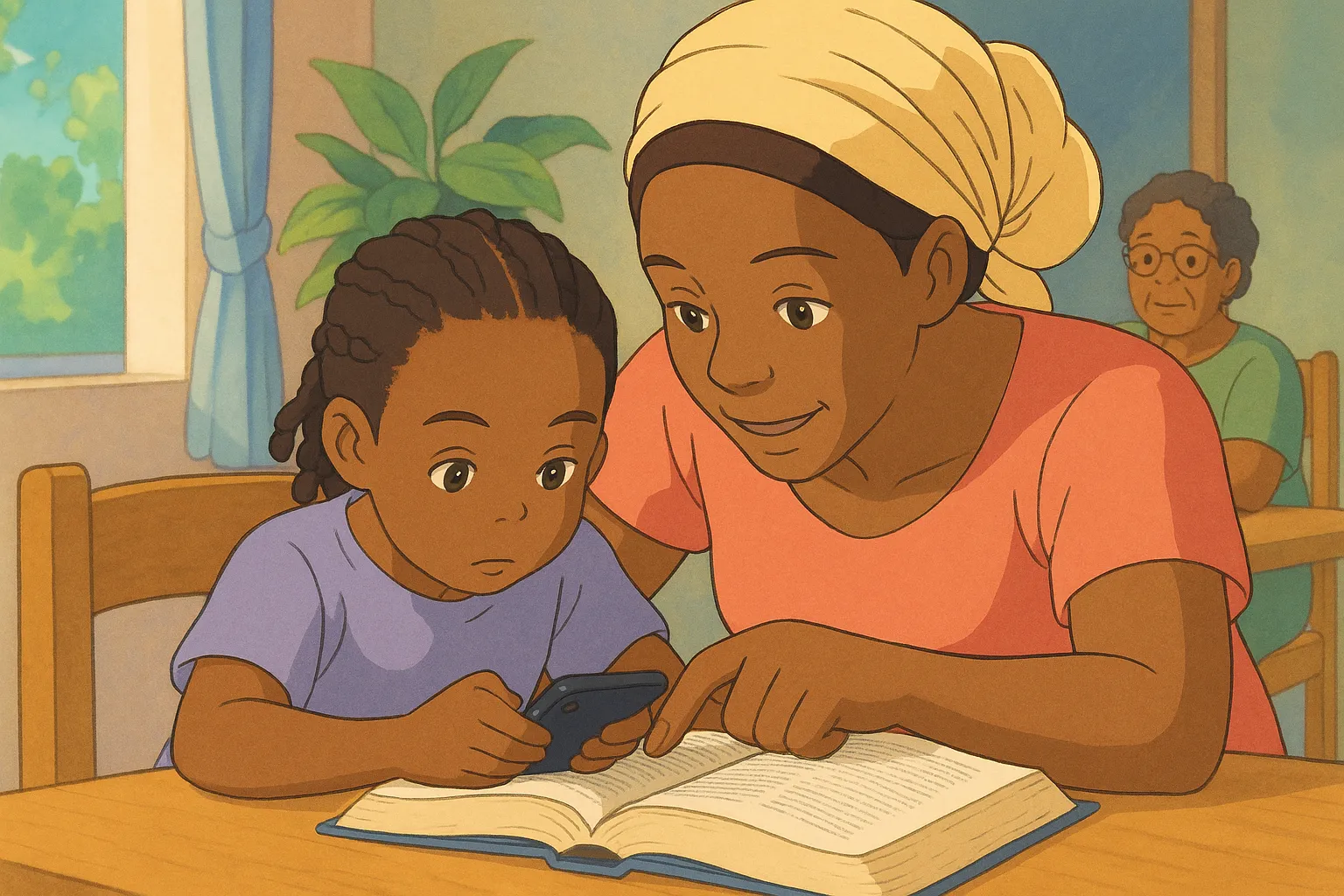
Instead of letting guilt freeze you, turn the search into a game. The next time you draw a blank, smile and say, "Let's find out together!" Grab your phone and open a dictionary app or a translation site. Type the English word together and listen to the pronunciation. Call a grandparent or an aunt via video and ask, "What do we call this?" Make the moment collaborative—your child sees you as a fellow learner, not an all‑knowing authority. That shift, from "I should know" to "We can discover," transforms anxiety into curiosity.
You can formalize the game with a "Word of the Week." Choose a common object you've forgotten the name for—like "spoon," "cloud," or "bicycle." Throughout the week, use the word in sentences, draw it, and find songs or stories that mention it. By Friday, the word feels familiar again. This ritual makes relearning active and playful, not a chore.
Now build a family "word bank"—a shared record of your rediscovered vocabulary. Use a physical notebook, a whiteboard in the kitchen, or a simple digital document. Every time you recover a word, write it down along with the date, who helped find it, and a sentence using it. Add a drawing or a photo if you like. Over weeks, the word bank grows into a tangible archive of your heritage. Each entry is proof that you're not losing the language; you're actively rebuilding it, together.
The goal isn't perfection. It's connection. Every time you look up a word with your child, you're showing them that learning is lifelong and that their heritage matters enough to search for. That lesson—that perseverance and curiosity matter more than flawless fluency—is something no native speaker could teach better. So the next time you can't remember "butterfly," take a breath, smile, and say, "Let's find out together." Your child will remember the search long after they've learned the word.