By Lionel Kubwimana
••4 min
That moment your child corrects your pronunciation is a sign of growing confidence. Here's how to nurture it.
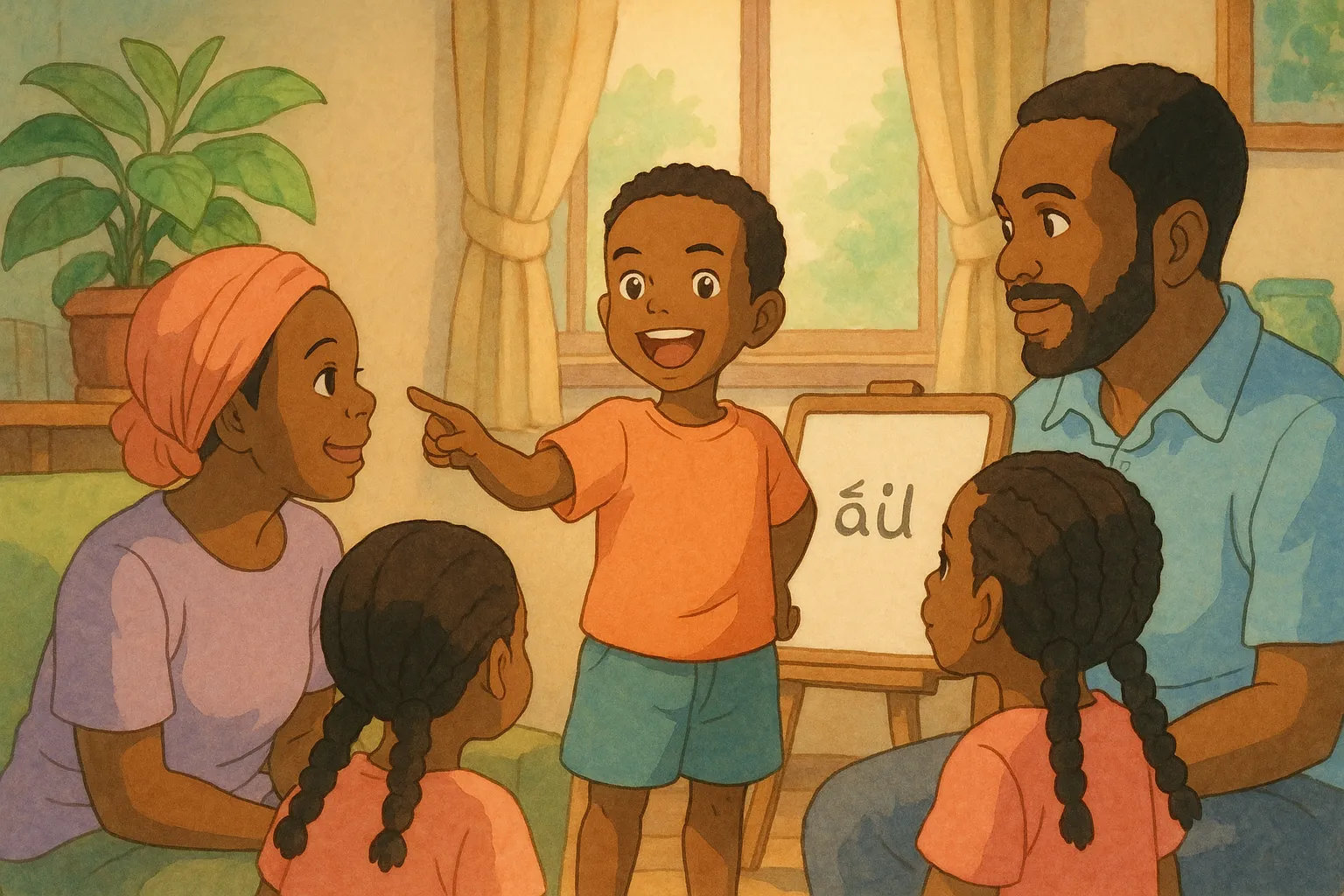
It's a Thursday evening, and you're reading a bedtime story in your heritage language—perhaps Kirundi or Yoruba. You stumble over a word's pronunciation, and your six‑year‑old gently corrects you: "Mama, it's inyana, not inyona." Instead of feeling embarrassed, you feel a surge of pride. Your child isn't just repeating words; they're owning the language. This moment marks a crucial shift from passive learning to active confidence, a turning point many bilingual families eagerly await.
Growing up with two (or more) languages isn't just about vocabulary. It's about identity, belonging, and the subtle dance between cultures. When children begin to self‑correct, code‑switch intentionally, or initiate conversations in the heritage language, they're signaling that the language has moved from "something my parents want me to know" to "something that is mine." Recognizing these signs—and knowing how to nurture them—can transform your bilingual journey from a challenge into a celebration.
Children who correct a parent's pronunciation or grammar are demonstrating metalinguistic awareness—they've internalized the rules enough to spot deviations. This isn't defiance; it's evidence that the language has taken root. Celebrate these moments warmly. You might reply, "You're right! Thank you for helping me say it correctly." This validates their expertise and reinforces that their knowledge matters.
Code‑switching—mixing languages within a conversation—often gets a bad reputation. But when children do it purposefully, it shows they understand each language's social context. For example, your child might use English to discuss a school project but switch to Swahili when asking Grandma for a recipe. This flexible maneuvering means they're not just translating; they're choosing the right tool for the right situation.
Perhaps the most heartwarming sign is when your child starts a conversation in the minority language without prompting. They might greet you in Kinyarwanda after school or tell a sibling a joke in Lingala. This initiative reveals that the language has become a natural part of their social toolkit, not just a lesson to be endured.
Instead of saying "Good job!" try, "I love how you used the word ubuntu in that sentence—it fits perfectly." Specific praise highlights what they did well and why it matters, making them feel seen and competent.
Invite your child to co‑create stories in the heritage language. Start a tale about an adventurous animal, then pause and ask, "What happens next?" This collaborative storytelling lowers the pressure to be "perfect" while giving them creative control. As they fill in the plot, they're practicing vocabulary, grammar, and narrative flow—all while having fun.
Make it clear that mistakes are welcome. If your child hesitates or mixes up a word, gently model the correct form without criticism. You could say, "I sometimes forget words too! Let's look it up together." When children know they won't be judged, they're more likely to take risks and speak up.
If you have younger children, empower your confident bilingual to be a "language teacher." They can help label objects, sing songs, or read simple books together. Teaching reinforces their own knowledge and builds a sense of responsibility.
When friends visit, encourage your child to share a word or phrase from your heritage language. They might teach everyone how to say "hello" or "thank you." This turns their bilingualism into a social asset, boosting pride and reinforcing cultural connections.
Look for community events—cultural festivals, library story hours, or school multicultural days—where your child can showcase their language skills. Perhaps they can introduce a traditional song or help translate a simple greeting for attendees. These roles position them as bridges between cultures, deepening their sense of purpose.
When your child starts owning the language, the dynamic changes. You're no longer the sole source of knowledge; you become a conversation partner, a co‑learner, and a cheerleader. This transition can feel bittersweet—after all, you've worked hard to reach this point—but it's also incredibly rewarding. Your child is now carrying the language forward, weaving it into their identity with every self‑correction, every code‑switch, and every initiated conversation.
Remember, confidence grows in small, consistent steps. Celebrate each sign of ownership, provide gentle reinforcement, and create leadership opportunities that make bilingualism a source of pride. By doing so, you're not just raising a child who speaks two languages; you're nurturing a confident, culturally rooted individual who sees their heritage as a gift to be shared—one word, one conversation, one correction at a time.