By Lionel Kubwimana
••4 min
Turn supermarket trips into language scavenger hunts with two no‑prep games kids love.
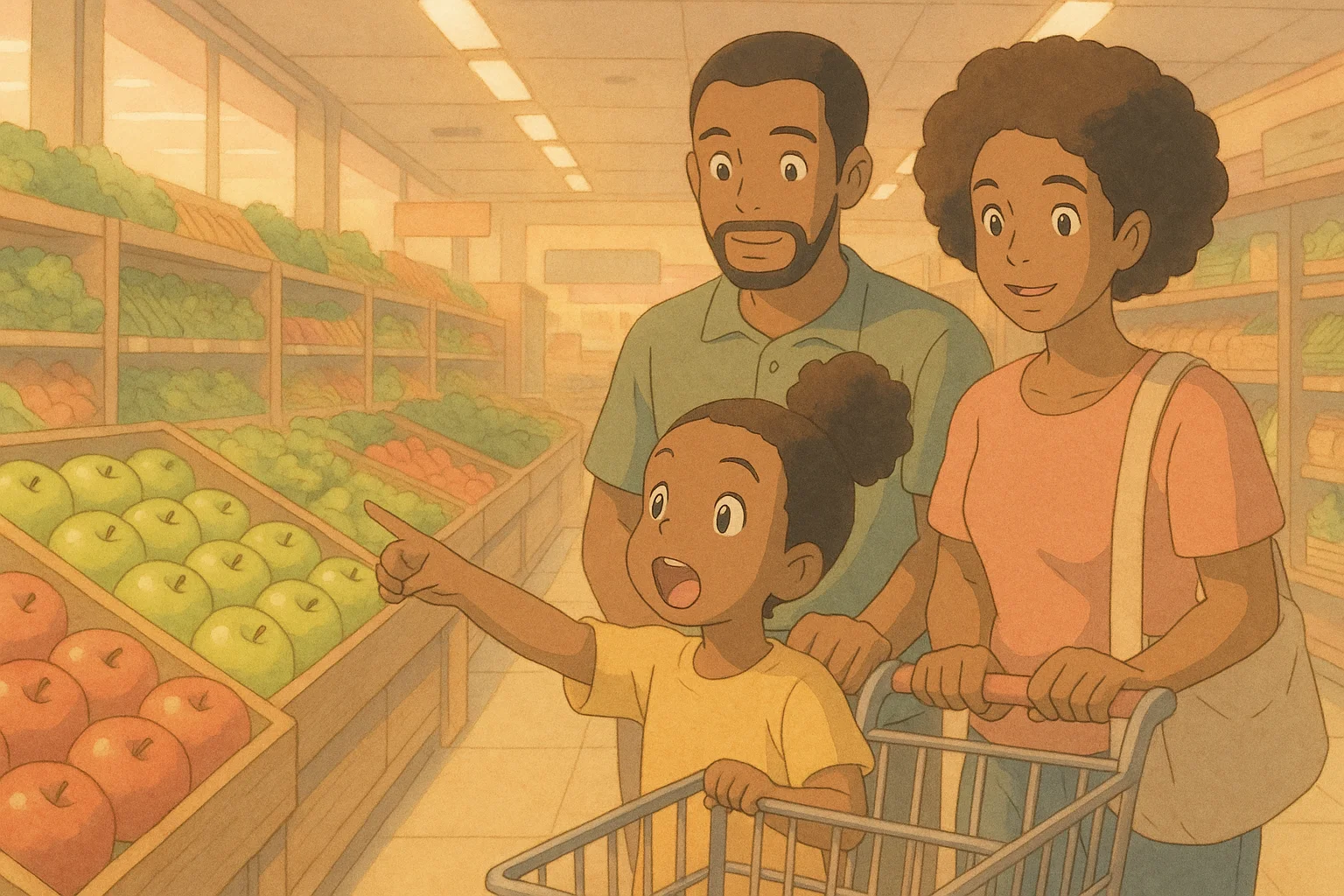
Does this sound familiar? You’re pushing a cart down the cereal aisle, already exhausted by the weekly grocery run, when your child looks up and asks, “What’s that in Swahili?”
You freeze.
You know the word. You’ve said it a hundred times at home. But right now? Blank.
Grocery stores are chaotic, but they’re also the most predictable, visual, and convenient language classroom you already visit every week. Today, I’ll show you two no‑prep games you can start playing today—no flashcards, no lesson plans, just the food in front of you.
Predictability – Every supermarket has the same sections: produce, dairy, meat, bakery. That consistency means your child can anticipate what they’ll see, turning anxiety into curiosity.
Visual anchors – Pictures help memory. The bright red of an apple, the bumpy skin of a mango, the way lettuce leaves fan out. Each visual cue ties the word to something physical.
You’re already there – No extra time, no extra effort. You’re checking “buy milk” off the list anyway—why not also check “say maziwa (Swahili for milk) three times”?
In the diaspora, we don’t always have the luxury of a village that speaks our language. The grocery store becomes that village. It’s where your child first hears “ndizi” for banana next to a real bunch of bananas, not just a cartoon drawing.
As you walk each aisle, pick a color. Challenge your child to point to three things that are that color and name them in your language.
Pick an aisle with many items (canned goods, fruit displays). Count together in your language as you put each item in the cart.
Both games require zero prep. They use what’s already on the shelves. They turn passive shopping into active language practice.
Every parent knows the moment: “I don’t wanna play.”
Instead of pushing, shift the goal. Introduce the “surprise item.”
Tell your child you’re looking for one “surprise” item in the store that you’ll name together in your language. Let them choose which aisle, and when you find it, you both say the word with a silly voice.
Last week, my seven‑year‑old and I were in the canned‑food aisle. We played the color game—looking for red things. He pointed to a can of tomatoes and asked, “What’s that in Kinyarwanda?”
I drew a blank. I didn’t know the word for “canned tomatoes” because that’s not something we ever said at home.
So we did what every parent can do: we looked it up on my phone together, right there in the aisle. We learned that inyanya z’ibikoresho (literally “tomatoes of containers”) is the phrase. Now, every time we see that brand, he points and says the whole phrase proudly.
Grocery‑store language games do more than teach vocabulary. They show your child that your language isn’t confined to the home. It belongs in the world—in the supermarket, on the street, anywhere you go.
When your kids hear you name ndizi next to the real bananas, they learn that your language is real, relevant, and usable.
Pick one game next time you shop. Keep it short. Five minutes is enough.
Remember, you’re not just stocking your pantry. You’re stocking your child’s memory with words that will echo for a lifetime.
Have a grocery‑store language story? Share it with us—tag @linguafrica on TikTok or Instagram.