By Lionel Kubwimana
••5 min
Turn family legends into weekly storytelling rituals that naturally reinforce your native language across generations.
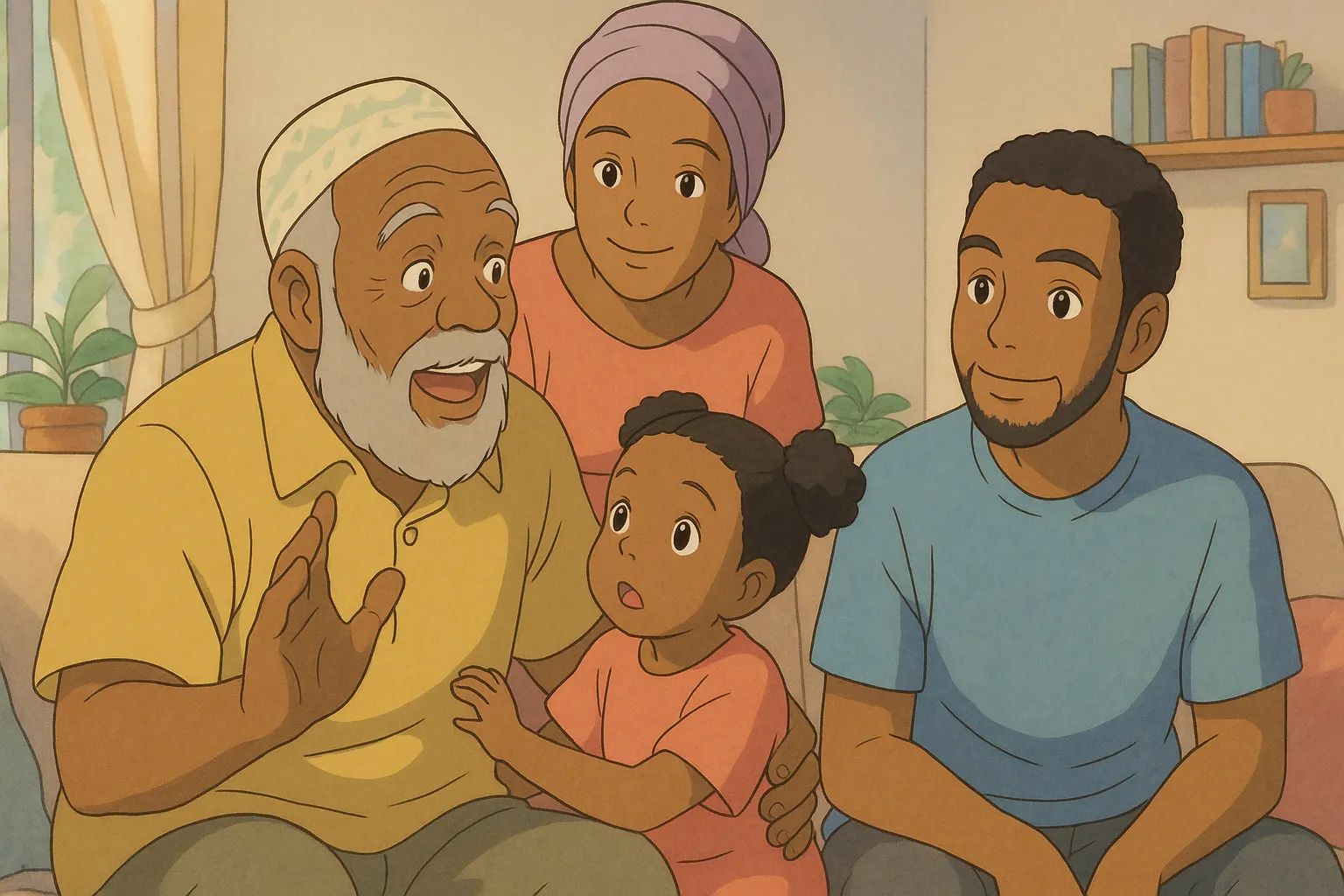
Vocabulary lists are static, abstract, and easily forgotten. Stories, by contrast, wrap words in emotion, context, and sensory detail—the very ingredients our brains use to form long‑term memories. When a grandparent recounts how they outsmarted a leopard, or how the village came together to build a school, the Kinyarwanda (or Yoruba, Swahili, etc.) words for “leopard,” “school,” “village,” “together” are no longer isolated items to memorize; they become part of a living narrative. The child’s mind attaches the new vocabulary to characters, plot, and feeling, making recall almost automatic the next time the story is told.
Neuroscience backs this up: narrative structure activates more regions of the brain than rote repetition, creating stronger neural pathways. And because family legends are personally meaningful, they trigger the release of dopamine, a neurotransmitter that reinforces learning. In short, stories turn language acquisition from a chore into a gift.
You don’t need a professional interviewer’s skill to gather these tales. Start with a simple voice‑note request: "Grandma, tell me about your funniest childhood mistake" or "Grandpa, what's the bravest thing you ever saw someone do?" Most elders light up when asked to share a piece of their past. Record the story (with permission) in whichever language they tell it—even if it’s a mix of English and your heritage tongue.
Once you have the raw material, adapt it for your child’s age and attention span. Keep the core plot but simplify complex sentences. Highlight a few key vocabulary words you want to reinforce—maybe five to ten per story. If the original tale is long, break it into episodes. Add playful sound effects or gestures when you tell it. The goal isn’t word‑for‑word translation; it’s preserving the spirit while making the language accessible.
If grandparents are far away, a weekly video call can become the story‑gathering session. Let your child ask the questions; their curiosity often uncovers gems you’d never think to request.
Consistency, not perfection, builds language habits. Pick a fixed time—Sunday after dinner, Friday bedtime—and make “story time” a non‑negotiable 15 minutes. Use a physical prop: a special blanket, a “storytelling” mug, a hand‑drawn picture of the grandparent. The ritual signals to your child’s brain: "Now we switch into our heritage language."
Rotate through three or four collected stories so repetition doesn’t grow stale. After a few weeks, invite your child to fill in the next sentence, or to act out a scene. Gradually increase their participation until they can retell the whole tale themselves. Celebrate each small victory: "You remembered the word for ‘leopard’! That’s exactly what Grandma used."
This weekly rhythm does more than teach vocabulary; it weaves the grandparent’s voice and values into your child’s identity. The language becomes a living bridge between generations, not a subject to be studied. And because the ritual is anchored in love and connection, your child will want to keep crossing that bridge.
Start this week. Choose one story from your own childhood or ask a grandparent for one. Tell it at the next meal. You don’t need a plan—just begin. The words will follow.