By Lionel Kubwimana
••4 min
Join a simple weekly gathering where families share short stories in their heritage language, creating a sense of belonging and connection across generations.
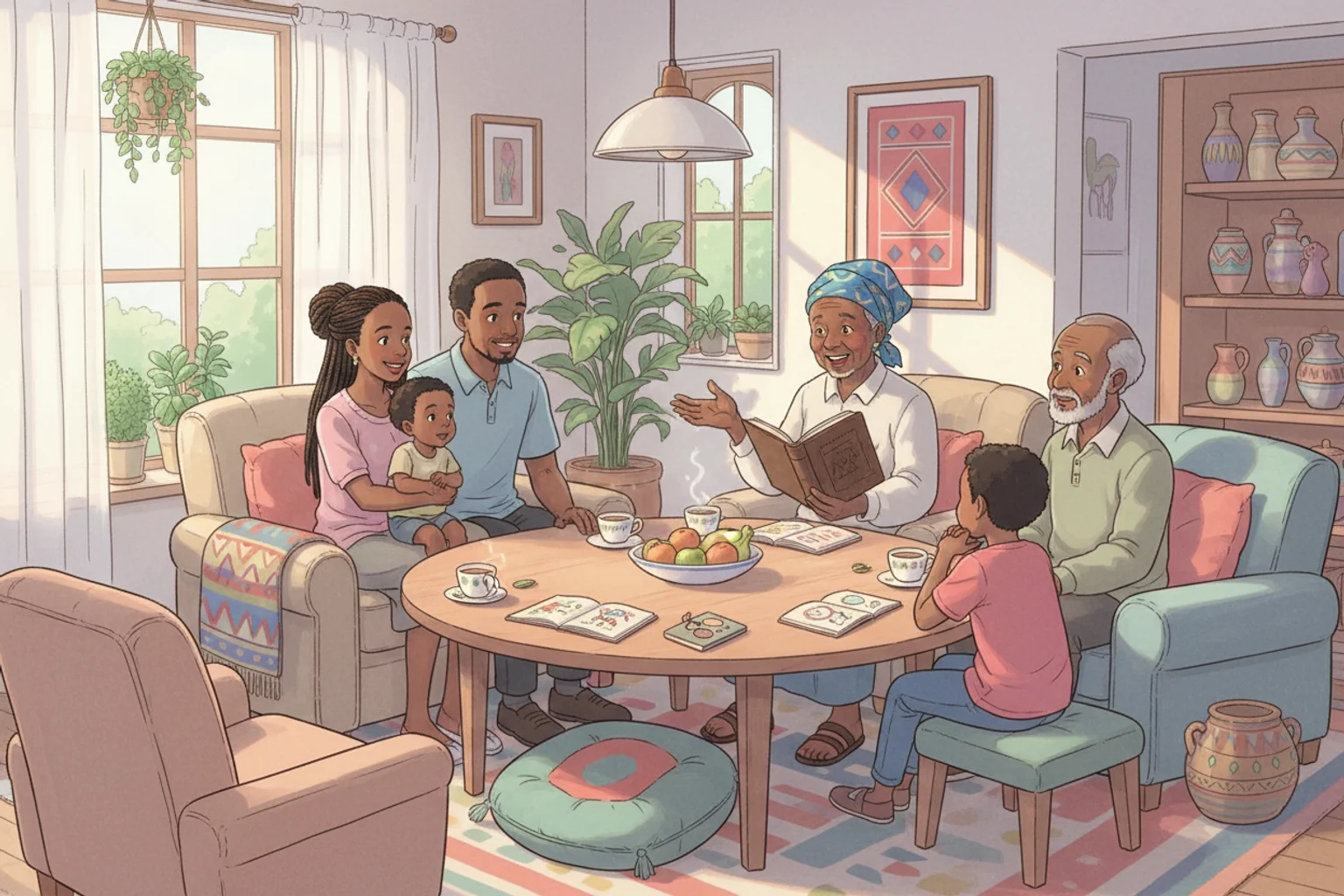
Weekly family language meetups are more than just another item on the calendar—they’re a deliberate space where language, identity, and belonging are woven together through the simple act of sharing stories. In diaspora families, where daily life often unfolds in the dominant language of the new country, creating a regular, predictable moment for the heritage language can transform a child’s relationship with their roots from something abstract into something lived, felt, and owned.
When a family gathers weekly with the explicit purpose of using their heritage language, they send a powerful message: this language matters, and so does the part of you that speaks it. For children, especially those growing up in environments where their home language is a minority, this consistent, low-pressure practice builds confidence and reduces the anxiety that sometimes accompanies “lessons.” It’s not about getting every word perfect; it’s about showing up together and letting the language be a bridge, not a barrier. Over time, this safe space becomes a touchstone of identity—a reminder that they belong to a story larger than themselves.
The beauty of this ritual lies in its simplicity. You don’t need elaborate materials or a teaching degree—just a family, a story, and a little intention.
The whole setup takes less than five minutes, and it ensures that each meetup feels purposeful but relaxed.
Once you’re gathered, the rhythm is straightforward:
Over weeks and months, these meetups accumulate into a shared history—a growing library of moments when your heritage language was the soundtrack to connection. Children begin to associate the language with warmth, attention, and family closeness, which is far more motivating than any external reward.
The weekly family language meetup isn’t about fluency overnight; it’s about building a habit of belonging. By carving out just 30 minutes a week to share stories in your heritage language, you’re doing more than teaching vocabulary—you’re telling your child, in the most tangible way possible, that their linguistic heritage is a gift worth celebrating together.