By Lionel Kubwimana
••6 min
Research‑based insights into how multilingual books boost cognitive development, strengthen cultural identity, and make language learning easier for diaspora families.
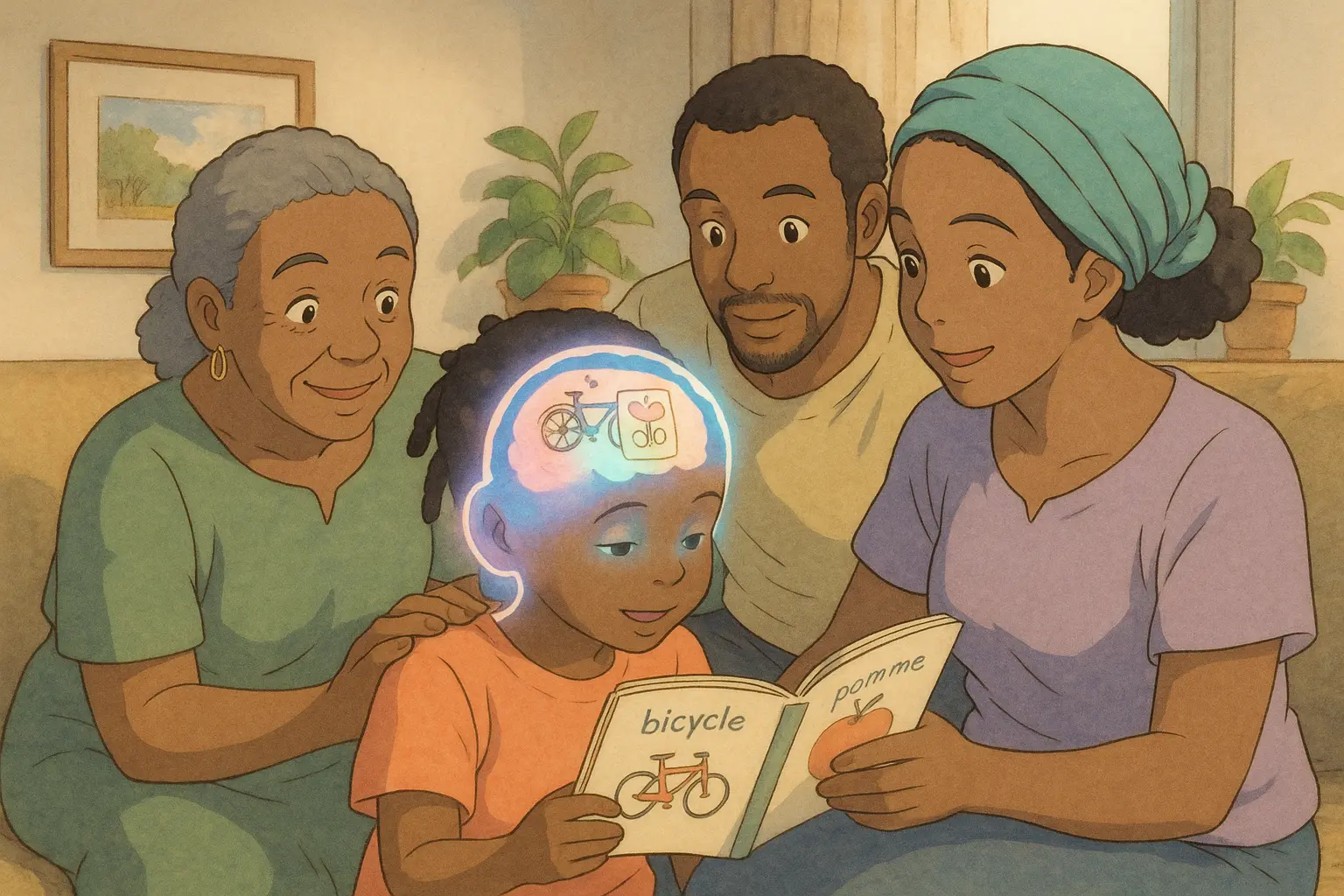
Multilingual books are more than just a bridge between languages—they are a gateway to cognitive enhancement, cultural preservation, and intergenerational connection. For diaspora families, they offer a tangible way to pass on heritage while equipping children with measurable advantages in executive function, problem‑solving, and emotional resilience.
Neuroscience shows that children who engage with dual‑language texts develop stronger executive function—the mental skills that help them plan, focus, remember instructions, and juggle multiple tasks. A 2025 meta‑analysis of 47 studies found that bilingual reading activities correlate with improved cognitive flexibility and inhibitory control, gains that persist into adulthood.
Multilingual books present information in two (or more) linguistic codes simultaneously. This forces young readers to continually switch between languages, a mental exercise that sharpens attention and working memory. Over time, this practice builds a cognitive reserve that can delay age‑related decline and improve academic performance across subjects.
For children growing up between cultures, multilingual books act as mirrors and windows. They reflect the family’s heritage language(s) and traditions, validating the child’s lived experience. At the same time, they open a window onto the majority culture, helping the child navigate both worlds with confidence.
Reading stories that feature characters who share their background reduces “cultural shame”—the feeling that one’s heritage is inferior or irrelevant. When grandparents, parents, and children read together in the mother tongue, the activity becomes an act of cultural transmission that strengthens intergenerational bonds and fosters pride.
Many diaspora parents feel overwhelmed by the task of teaching their heritage language. Multilingual books ease this burden by providing structured, engaging materials that require no special training. The parallel‑text format allows parents to read in whichever language they are most comfortable, while children absorb both versions naturally.
Because the books are designed for shared reading, they turn language learning into a collaborative, low‑stakes family ritual rather than a chore. This reduces parental anxiety and makes heritage‑language acquisition feel like a joyful discovery instead of an obligation.
Investing in multilingual books is an investment in your child’s cognitive future and cultural roots. The science is clear: these resources boost brain development, reinforce identity, and make language learning easier for everyone involved. For diaspora families, they are not just educational tools—they are keepsakes that preserve heritage across generations.
Start with one book this week. Read it together, talk about the pictures, and let the words—in all their languages—weave a stronger, more connected family story.