Grandma's Village: A Story That Connects My Child to Their Roots
By Lionel Kubwimana
••4 min
Learn how a simple story about Grandma's village can help your child feel connected to their heritage and learn your language.
KEY HIGHLIGHTS
- •Personal narratives like 'Grandma's village' create emotional bridges to heritage.
- •Every story contains teachable language moments that make vocabulary stick.
- •Inviting children to retell and expand stories turns them into active language learners.
The power of personal narratives in preserving heritage cannot be overstated. When we share stories about our own lives, our families, and our ancestors, we create a living bridge between generations. For children growing up in diaspora or in multicultural environments, these stories become anchors—tangible connections to a heritage that might otherwise feel distant or abstract.
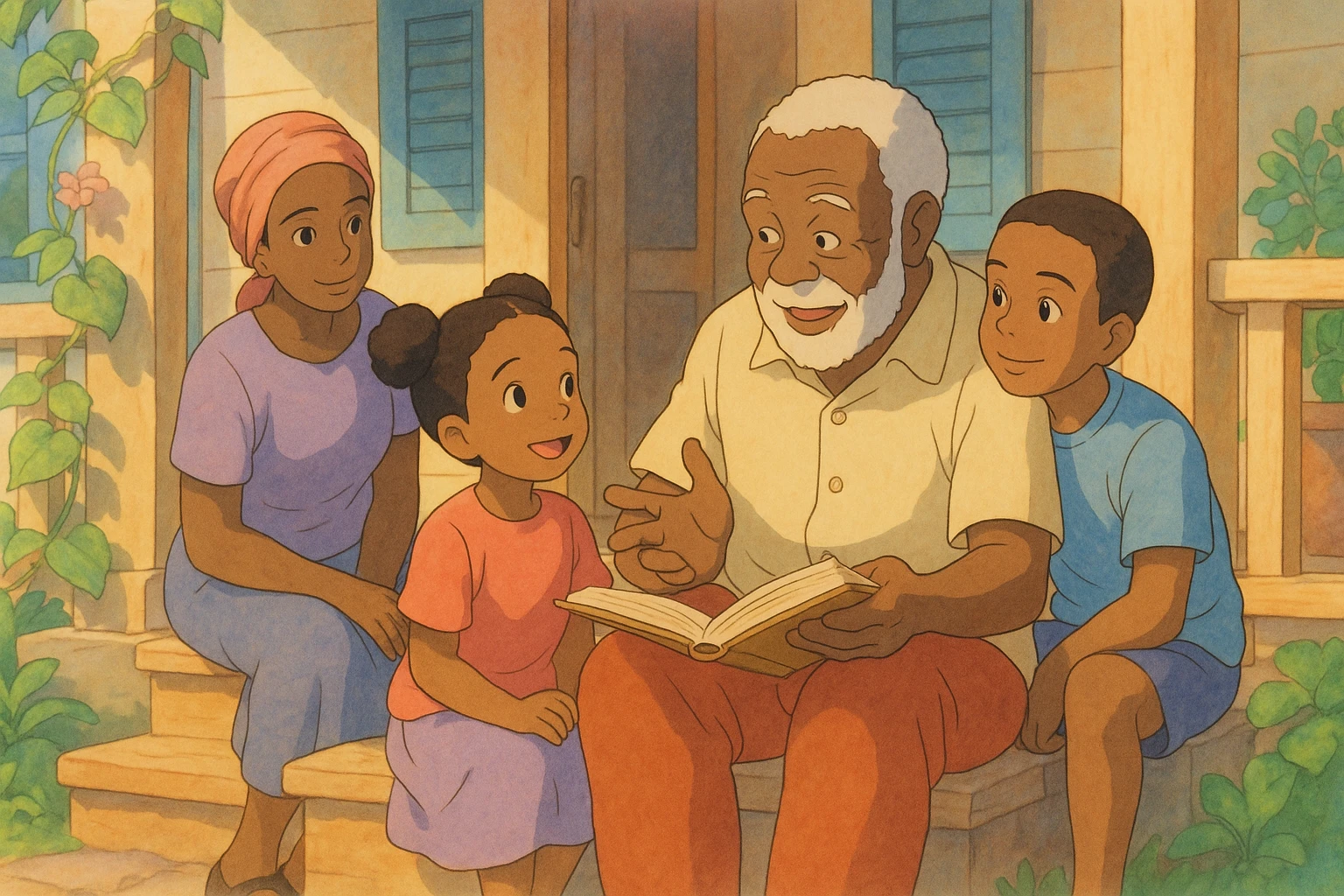
Consider the simple story of Grandma's village. It's not just a tale about a place; it's a window into a world of traditions, values, and language. By telling this story, you give your child a sense of belonging, a mental map of their roots, and a reason to care about the language that carries those roots.
Breaking down the story into teachable language moments is where the magic happens. Every narrative is built from vocabulary, grammar, and cultural concepts. As you recount Grandma's village, you can pause to highlight key words in your heritage language: "village," "farm," "market," "celebrations." You can describe the scenery using descriptive phrases that expand your child's vocabulary. You can introduce phrases that express relationships, emotions, and actions—all within a context that feels meaningful and memorable.
To make the story even more engaging, you can use props or photos. A picture of Grandma, a map of the region, or a traditional object from your culture can serve as visual anchors. These concrete items help children visualize the story and create stronger memory associations. You can also act out parts of the story together—pretend to be Grandma walking to the market, or mimic the sounds of the village animals. This multisensory involvement deepens the learning experience and makes the language feel alive.
This approach turns storytelling into an interactive language lesson. Instead of drilling flashcards, you're co‑creating a world where language is the natural medium. Your child learns not only what words mean but why they matter.
Finally, encouraging children to retell and expand the story transforms them from passive listeners into active custodians of their heritage. Ask your child to retell Grandma's village in their own words, using the heritage language as much as they can. Celebrate their attempts, correct gently, and invite them to add new details: "What do you think happened next?" "Who else lived in the village?" "How do you think Grandma felt when she visited the market?"
This cycle of listening, retelling, and expanding builds fluency, confidence, and a deeper emotional connection to the language. It also reinforces the idea that their heritage is not a static relic but a living, evolving story that they themselves can shape.
In the end, Grandma's village is more than a memory—it's a gift that keeps giving, a story that grows with each telling, and a powerful tool for raising a bilingual, bicultural child who feels rooted in both past and present.