By Lionel Kubwimana
••5 min
Language loss can feel like losing a part of yourself. Discover how storytelling can rebuild that connection for your children.
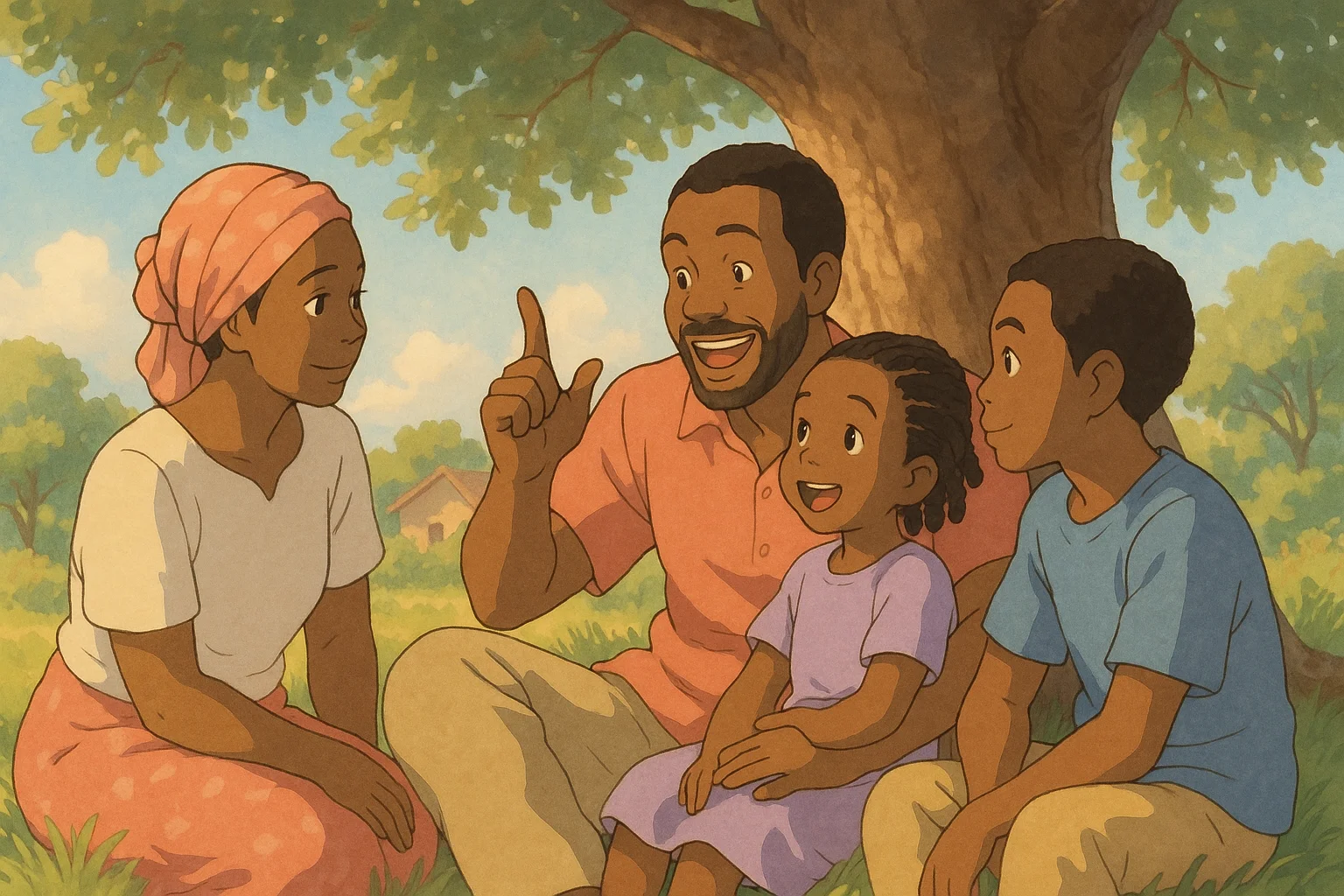
Growing up between cultures, I watched my mother switch effortlessly between Kirundi and French, her voice softening when she spoke our mother tongue. Yet by the time I had children of my own, that same language felt distant—like a childhood home whose key I’d misplaced. Language loss isn’t just about forgetting words; it’s about losing the emotional texture of your heritage. When we can no longer name the flavors of our grandmother's stew in the language she used, or whisper a lullaby the way our ancestors did, we lose more than vocabulary—we lose a piece of who we are.
Research shows that language shapes how we perceive the world. In bilingual families, studies reveal that children who speak their heritage language experience stronger intergenerational bonds and report higher emotional well-being. The words we inherit carry memories, values, and ways of seeing that English alone cannot translate. When those words fade, a vital bridge between generations crumbles.
Storytelling is the antidote to language loss. Unlike formal lessons, stories weave language into the fabric of everyday life. They turn abstract vocabulary into vivid scenes a child can touch, smell, and feel. In our family, we started with simple tales: “The clever hare who outsmarted the hyena,” “The grandmother who cooked magic beans.” Each story introduced a handful of Kirundi words—umugani (story), igituntu (bean), ingwe (leopard)—and wrapped them in a plot that made them unforgettable.
Oral tradition has always been Africa’s primary library. Griots and elders didn’t just recount events; they embedded language, ethics, and history into narratives that traveled across generations. Today, you don’t need to be a master storyteller to harness this power. Even a five-minute bedtime story can plant seeds of cultural identity that grow with your child.
Start with Visuals
Use a picture book—or even a family photo—as a prompt. Point to an image and describe it in your native language. “Look at this tree. In Kirundi, we call it igiti. Can you say igiti?” Pairing words with images builds mental hooks that stick.
Create Character Voices
Children love silly voices. Give each character in your story a distinct tone or accent. The grumpy lion speaks low and slow; the mischievous monkey chatters quickly. Voices make the language playful and memorable.
Incorporate Repetition
Repeat key phrases throughout the story. “And the hare said again, ‘Sinzigera ngire—I won’t give up!’” Repetition reinforces vocabulary without feeling like a drill.
Link Stories to Rituals
Attach storytelling to a daily routine: during bath time, while cooking together, or on the drive to school. Consistency turns language practice into a comforting ritual rather than a chore.
Record Your Stories
Use your phone to record yourself telling a short tale in your heritage language. Let your child listen to it later—or better yet, invite them to record their own version. Hearing their own voice speaking the language builds pride and ownership.
Language loss can feel like losing a part of yourself, but storytelling gives you a way to reclaim it. Every tale you tell becomes a thread that weaves your child back into the cultural tapestry you carry. You don’t need to be fluent to begin. Start with one word, one image, one simple story. The language will grow from there, and with it, a deeper sense of identity for your whole family.