By Lionel Kubwimana
••4 min
Turn Sunday‑night guilt into a tiny, repeatable language moment that builds momentum and actually reduces the pressure.
You know the feeling. It's Sunday evening, the weekend is slipping away, and a quiet voice in your head whispers: You haven’t practiced your language with the kids all week.
Maybe you tell yourself you’ll start fresh on Monday. Or next weekend. Or maybe you just feel a familiar pang of guilt and push the thought aside.
You’re not alone. For parents raising bilingual children—especially when the heritage language isn’t the dominant one in your home—guilt is a constant companion. It shows up as pressure to “do it right,” to create perfect language-rich environments, to schedule elaborate cultural activities.
And that pressure, ironically, is why we end up doing nothing at all.
Guilt thrives on big expectations. When we think of “teaching our children a language,” we imagine structured lessons, curated storybooks, daily conversation practice. That’s a beautiful ideal. But when life is already full—when there’s school, work, chores, and a hundred other small demands—the gap between the ideal and reality feels enormous.
So we postpone. We wait for a “better time,” a day with fewer obligations, a weekend when we can finally sit down and do it properly.
That perfect day rarely comes. And each week we don’t start, the guilt grows heavier.
Psychologists call this the “all-or-nothing” mindset. If we can’t do it perfectly, we decide it’s not worth doing at all. It’s a trap that keeps us stuck in inaction.
But there’s a way out—and it doesn’t require more time, more planning, or more pressure. It requires less.
Instead of waiting for the perfect hour-long session, I invite you to try something radically simple.
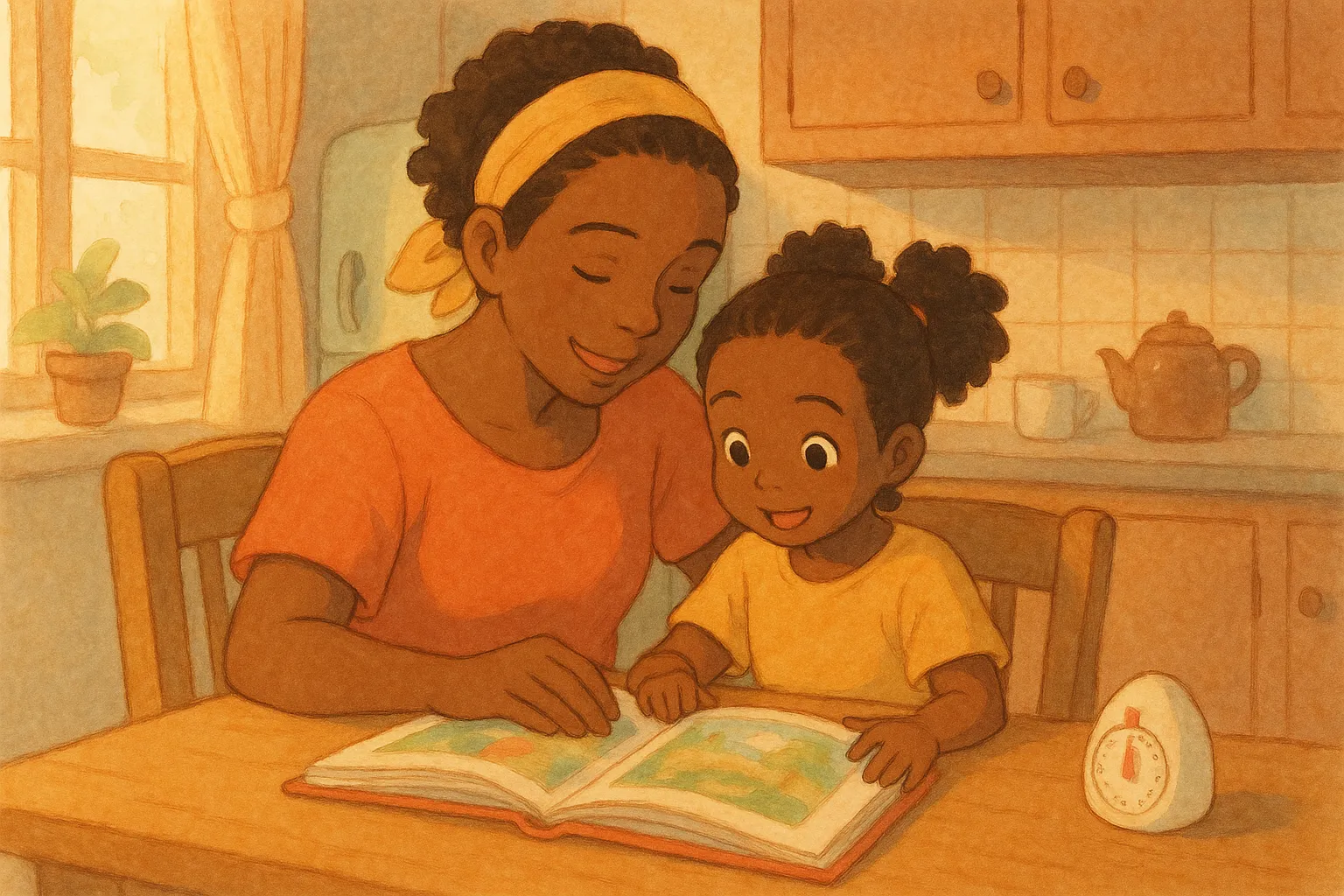
Every Sunday evening, set a timer for ten minutes. Yes, just ten.
Pick one tiny language activity you can do with your child:
That’s it. No prep. No elaborate materials. Just ten minutes of focused, playful, low‑stakes connection.
The key rules:
At first, ten minutes might feel trivial. But here’s the magic: small wins create momentum.
When you finish those ten minutes, you’ve done something. You’ve broken the cycle of "I should but I haven't." You’ve replaced guilt with a tiny, tangible success.
And because it’s so small, it’s repeatable. It doesn’t drain your energy or require heroic effort. Over weeks, those ten‑minute moments add up—not just in language exposure, but in building a habit of showing up.
More importantly, it changes your relationship with the language. It’s no longer a heavy obligation; it becomes a small, warm ritual. A pocket of connection.
Guilt diminishes because you’re no longer measuring yourself against an impossible ideal. You’re measuring yourself against a realistic, achievable commitment—and meeting it.
Often, you’ll find those ten minutes spark something else: a child asking for another story the next day, a spontaneous word exchange during dinner, a moment of pride when they recognize a phrase.
Those are the real victories. They grow naturally from consistency, not from perfect planning.
So this Sunday, try it. Set a timer for ten minutes. Pick one simple activity. And give yourself permission to be imperfect, present, and proud of showing up—even for just ten minutes.
Because in the end, raising bilingual children isn’t about grand gestures. It’s about small, repeated moments of love, wrapped in the sounds and words of home.