By Lionel Kubwimana
••5 min
Five actionable, real‑world strategies for diaspora parents who want to raise bilingual children without getting lost in theory.
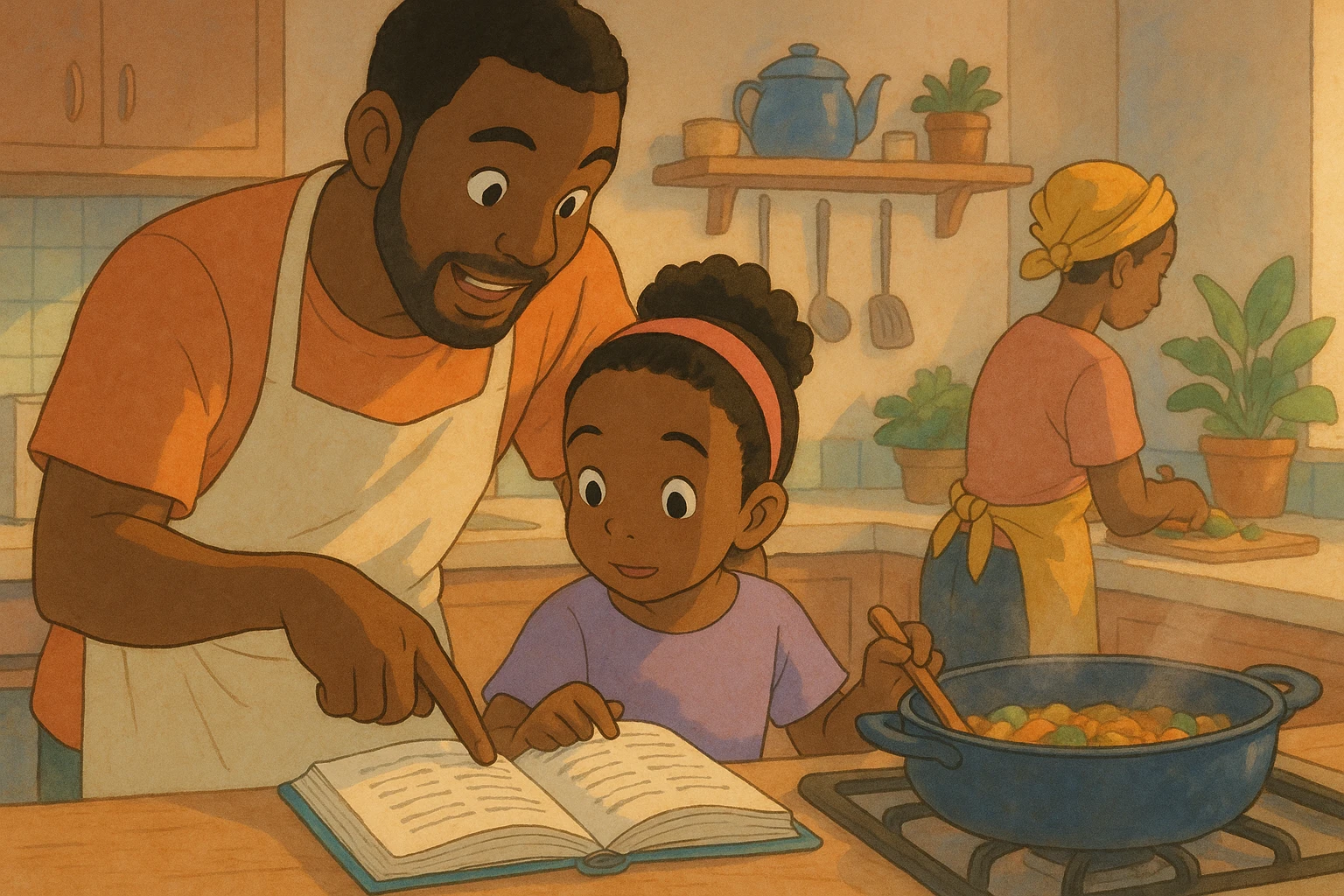
The classic “One Parent, One Language” (OPOL) approach says each parent speaks only their own language to the child. For diaspora families juggling work, school, and cultural distance, that rigid rule often feels impossible. Instead, think of OPOL as anchored language moments.
Pick three predictable daily touchpoints where you commit to using your heritage language, no matter what. For example:
These moments become linguistic anchors your child can count on. They’re small enough to be sustainable, yet frequent enough to build familiarity. Over time, you can expand the anchor moments, but start with consistency, not perfection.
Bilingual books are treasure troves, but reading them aloud word‑for‑word often turns into a passive activity. Instead, treat each page as a conversation prompt.
When you see an illustration of a market scene, ask: 年 "What do you think that vendor is selling?" (first in your heritage language, then in English if needed). 年 "Have we ever bought something like that?" 年 "What would you buy if we were there?"
If the child answers in English, repeat their answer in your language and add a related phrase. This creates a natural back‑and‑forth that builds vocabulary without feeling like a lesson.
Keep a stack of bilingual books in the car, by the sofa, or in the kitchen. Use them during waiting moments—when dinner is cooking, before bath time—to turn idle minutes into language‑rich interactions.
Routines are repetitive, predictable, and emotionally safe—perfect for language insertion.
Meals: Name the foods in your language each time you serve them. “Here’s your ugali” (Swahili) / “Isombe is ready” (Kinyarwanda). Use simple meal‑time phrases: “Wash hands,” “Come eat,” “It’s delicious.”
Bath time: Bath is a sensory‑rich, low‑stress environment. Count bubbles (“moja, mbili, tatu…”), name body parts (“head – kichwa”), sing a short water‑related song.
Play: If your child loves cars, learn the words for “car,” “road,” “fast,” “stop” in your language and sprinkle them during play. If they build with blocks, count blocks together.
The key is association, not translation. Connect the language directly to the activity, so the child experiences the word with the object or action, not as an English equivalent.
Every diaspora parent faces days when speaking the heritage language feels like one more burden. On those days, fall back to your minimum viable language (MVL) – the one phrase you can still say. Maybe it’s “I love you” or “Good night.” Say it, and let that be enough. Consistency over years matters more than perfection today.
Remember, your goal isn’t to raise a fluent academic speaker overnight. It’s to give your child a living connection to a part of their identity that geography has stretched thin. Each word you share is a thread that keeps the tapestry intact.
Pick one tip that feels doable this week. Maybe it’s adding a heritage‑language greeting each morning, or turning one page of a bilingual book into a conversation. Do it, notice how it feels, and then build from there.
The journey of bilingual parenting is a marathon of tiny steps. Celebrate each step. You’re not just teaching words—you’re weaving heritage into everyday life.