By Lionel Kubwimana
••5 min
How diaspora parents can record, translate, and preserve grandparent stories as bilingual family archives that bridge generations.
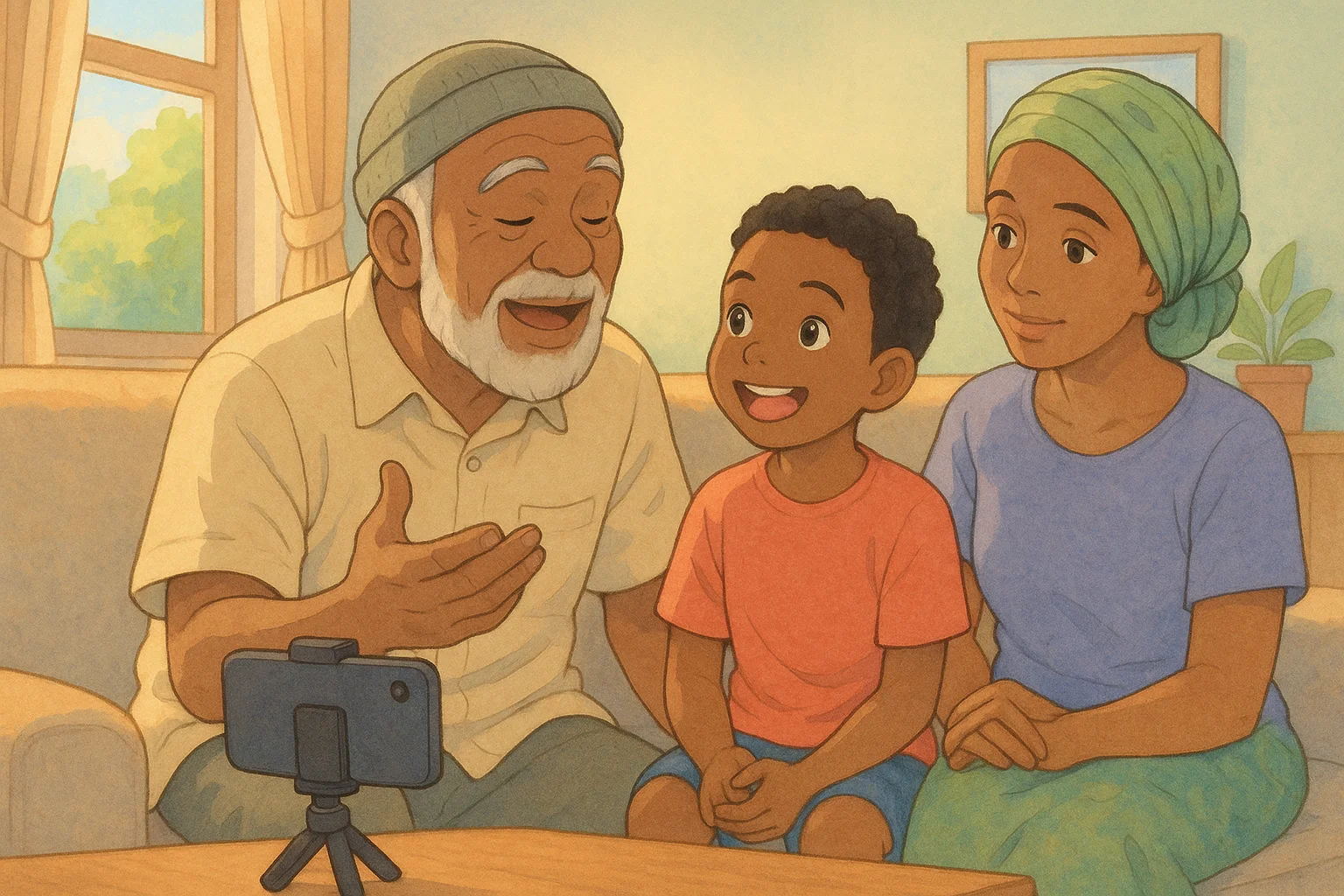
Oral storytelling has been the heart of African cultures for centuries. Grandparents sat children down under the shade of a tree, at the hearth, or on a woven mat, and through the rhythm of their voice, the family’s history, values, and identity were passed down. These stories weren’t just entertainment—they were living libraries of lineage, wisdom, and moral codes. In the diaspora, however, that chain often breaks. Distance, language barriers, and the relentless pace of modern life mean that many children grow up never hearing the tales their ancestors once told.
When storytelling stops, something vital is lost. It’s more than just the stories themselves; it’s the intimacy of the telling, the shared laughter and gasps, the subtle inflections that carry emotion and cultural nuance. It’s the loss of a collective memory that anchors a family to its roots. The good news is that it doesn’t have to stay lost. With a little intentional effort, diaspora parents can reclaim this tradition, turning it into a powerful tool for language transmission and cultural preservation.
The simplest way to begin is to make recording a family ritual. Here’s a practical, step‑by‑step approach:
Set the stage for comfort. Choose a relaxed moment—after a meal, during a weekend video call, or when grandparents visit. Explain that you want to capture their stories for the children and for future generations. Many elders feel honored when asked.
Use the tools you already have. A smartphone is enough. Place it discreetly on a table, start the voice‑memo or video app, and let the conversation flow naturally. You can also use a dedicated recorder if you prefer higher audio quality.
Ask open‑ended questions. Instead of “Tell us a story,” try prompts like:
Involve your children in the process. Let them hold the phone, press the record button, or ask their own questions. This turns a passive listening session into an active collaboration.
Translate together, not later. As the story unfolds, pause occasionally and whisper a quick translation to your child. Use simple, child‑friendly language. If the story includes a proverb or a culturally specific term, take a moment to explain it. This real‑time translation reinforces vocabulary and cultural context in a way that feels immediate and relevant.
Keep the recordings short. Aim for 5–10 minutes per story. Shorter clips are easier to revisit, transcribe, and turn into illustrated pages later.
Once you have a recorded story, the next step is to transform it into a tangible artifact—a homemade bilingual storybook. This doesn’t require design skills or expensive software. Here’s how:
Transcribe the story. Play the recording and write down exactly what was said in the original language. Then, on the same page, write your child‑friendly translation side‑by‑side. This creates a parallel‑text layout that supports comprehension in both languages.
Break the story into pages. Each page should contain one or two sentences, accompanied by a simple illustration. Even stick‑figure drawings or cut‑out photos work perfectly—the goal is visual support, not artistic perfection.
Involve your child in the illustration. Ask them to draw what they imagine for each page. Their interpretation adds a personal layer to the story and strengthens their emotional connection to it.
Bind it simply. Use a hole‑punch and ribbon, a small binder, or even a stapler. Give the book a title and write the names of the storyteller, the translator (you), and the illustrator (your child) on the cover.
Read it together regularly. Add the book to your bedtime rotation. Because the story is personally meaningful and visually familiar, children are more likely to engage with the language and remember its vocabulary.
Recording and book‑making do more than teach words; they build bridges.
Pick one upcoming video call with grandparents. Beforehand, talk with your child about what kind of story they’d like to hear. Prepare the recording device. During the call, gently steer the conversation toward a memory or a folktale. Record for five minutes. Afterward, sit with your child and sketch one scene from the story together. That’s it—you’ve planted the seed.
Oral storytelling doesn’t have to be a lost art. With a smartphone, a little patience, and a willingness to translate on the fly, diaspora families can turn grandparent stories into living bilingual heirlooms. The stories are already there, waiting to be asked for. All we have to do is press record.