By Lionel Kubwimana
••4 min
Proverbs are more than sayings—they're the hidden language of our ancestors. Here's how to bring them to life for your children.
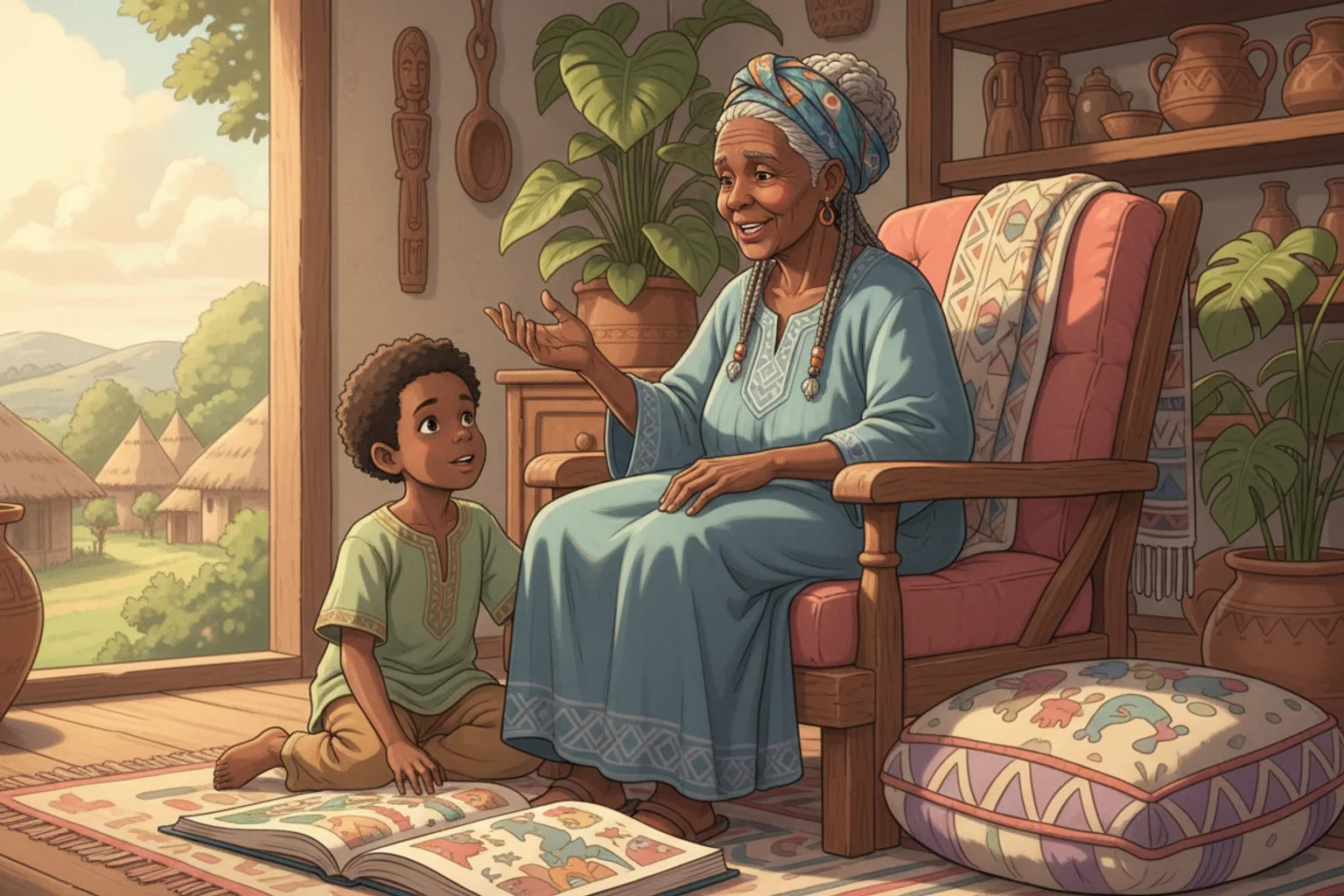
Proverbs are more than just clever sayings—they are compact packages of wisdom, history, and cultural values passed down through generations. Each proverb encapsulates centuries of lived experience, offering guidance, moral lessons, and a unique worldview in just a few memorable words. For African communities, proverbs serve as a hidden language that connects us to our ancestors, preserving traditions and strengthening identity in a rapidly changing world.
Proverbs function as cultural DNA. They carry ethical principles, historical truths, and collective memories that might otherwise be lost. For example, the Kinyarwanda proverb "Umusazi ntawugwa imbere" (A fool does not fall ahead) teaches foresight and planning, while the Swahili "Mchagua jembe si mkulima" (One who chooses a hoe is not a farmer) emphasizes the importance of action over mere selection. These sayings are not just advice; they are vessels of ancestral intelligence.
By studying proverbs, children learn the values that have sustained their communities for centuries: respect for elders, the importance of cooperation, the virtue of patience, and the necessity of courage. They also gain insight into historical events and environmental knowledge encoded in metaphorical language. This hidden language offers a direct link to the past, making history tangible and relevant.
Introducing proverbs to children requires creativity and relevance. Here are three effective approaches:
Storytelling: Wrap a proverb in a short, engaging story. Create characters and situations that illustrate the proverb’s meaning. For instance, tell a tale about a young hare who learns patience from a tortoise, bringing to life the proverb "Haraka haraka haina baraka" (Hurry hurry has no blessing).
Visuals: Use images, drawings, or videos to depict the proverb’s imagery. Children are visual learners; a picture of an old baobab tree with deep roots can illustrate "Mzee wa shamba ni mti mkubwa" (The elder of the farm is a big tree) – symbolizing stability and wisdom.
Real‑life examples: Point out moments in daily life where a proverb applies. When a child rushes through homework, gently remind them of the proverb about haste. When they share a toy with a sibling, highlight the proverb that praises generosity. This contextualizes abstract wisdom in concrete experience.
To truly integrate proverbs into family life, treat them as living mantras rather than museum pieces. Here’s how:
Create a “proverb of the week”: Pick one proverb each week and discuss its meaning at mealtime. Encourage everyone to find opportunities to use it in conversation.
Use proverbs as gentle guidance: Instead of saying “don’t be lazy,” you might say, “Remember, ‘A lazy man’s farm grows weeds.’” This softens criticism and ties behavior to cultural wisdom.
Celebrate when children use proverbs: If your child naturally incorporates a proverb into speech, acknowledge it enthusiastically. This positive reinforcement makes the language feel theirs.
Connect proverbs to modern contexts: Show how ancient wisdom applies to today’s challenges—like using a proverb about patience when waiting for a video game to load, or one about cooperation when working on a group project.
Over time, these practices weave proverbs into the fabric of everyday communication, transforming them from distant sayings into a shared family language. They become tools for navigating life, strengthening bonds, and keeping ancestral voices alive in the present.
Proverbs are a gift from our ancestors—a hidden language that carries the essence of who we are. By teaching them to our children through stories, visuals, and daily practice, we not only preserve cultural heritage but also equip the next generation with timeless wisdom. Start today: pick one proverb, share its story, and watch it take root in your family’s conversation.