Lingu.Africa Logo
Lingu.Africa
HomeBooksLearnTeachPricingDownloadPracticeTranslationAboutBlog
Lingu.Africa

Discover the beauty of African languages through bilingual books.

Our Books

  • Amharic Books
  • Bambara Books
  • Cape Verdean Kriolu Books
  • Ewe Books
  • Haitian Creole Books
  • Hausa Books
  • Igbo Books
  • Kikuyu Books
  • Kinyarwanda Books
  • Kirundi Books
  • Krio Books
  • Lingala Books
  • Luganda Books
  • Malagasy Books
  • Oromo Books
  • Pidgin Books
  • Shona Books
  • Somali Books
  • Swahili Books
  • Tigrinya Books
  • Twi Books
  • Wolof Books
  • Xhosa Books
  • Yemba Books
  • Yoruba Books
  • Zulu Books

Company

  • Translation Services
  • Blog
  • About Us
  • Languages
  • FAQ

Contact

Email: hello@lingu.africa

© 2026 Lingu.Africa•Terms•Privacy

Home
Blog
When Your Child Teaches a Friend a Word in Your Language

TABLE OF CONTENTS

  • Why a Child Teaching a Friend Is a Powerful Turning Point
  • How to Notice and Celebrate Those Moments Without Putting Pressure on Your Child
  • Using Those Moments to Deepen Your Own Language Practice as a Family
  • Keep the Hope Alive

When Your Child Teaches a Friend a Word in Your Language

By Lionel Kubwimana

•Aug 13, 2026•

4 min

Celebrate and amplify those small moments of external validation to fuel your own motivation and show your child the value of sharing their language.
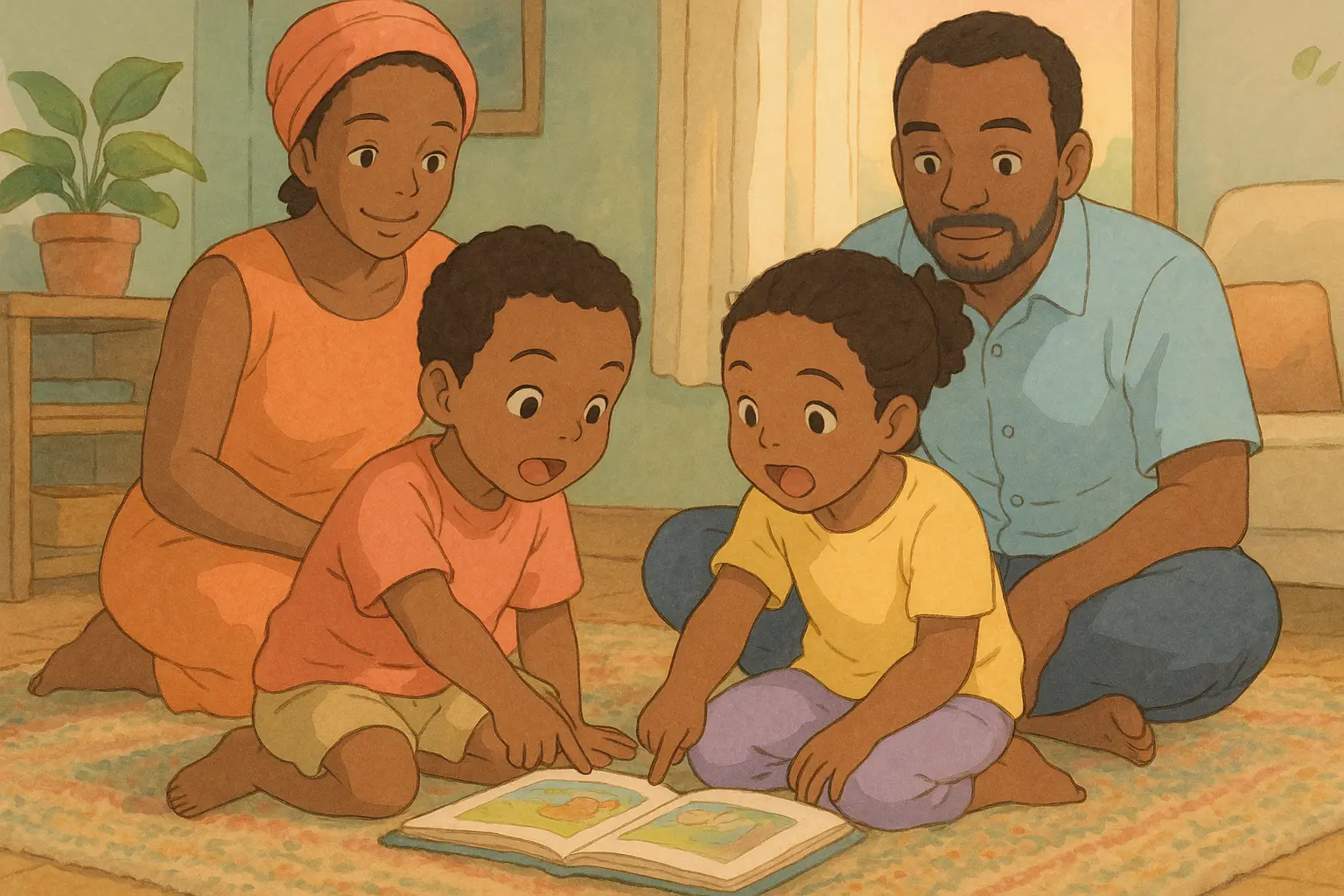
When Your Child Teaches a Friend a Word in Your Language

KEY HIGHLIGHTS

  • •Overhearing your child teach a friend a word is a powerful sign of language ownership.
  • •Celebrate the moment quietly—don’t turn it into pressure.
  • •Use that spark to deepen your family’s language practice together.
hopeteaching

Why a Child Teaching a Friend Is a Powerful Turning Point

You’ve been teaching your child your language alone, wondering if it will ever stick. Then one day you overhear them teaching a friend how to say “hello” in your language. That tiny moment is a spark of hope you can build on.

When a child voluntarily shares a word from your language with a friend, it’s more than just vocabulary—it’s a form of external validation. Your child is demonstrating that they not only understand the word but also feel proud enough to pass it on. This shift from passive reception to active ownership is a critical milestone in bilingual development.

For diaspora parents who often feel isolated in their language efforts, such moments provide tangible proof that their work is bearing fruit. The child’s willingness to teach signals that the language has become a part of their identity, not just a school subject or a family obligation. It’s a sign that the language is alive and relevant in their social world.

How to Notice and Celebrate Those Moments Without Putting Pressure on Your Child

When you witness your child teaching a friend, resist the urge to make a big deal out of it. Over-celebration can turn a natural, joyful exchange into a performance. Instead, acknowledge the moment quietly and positively.

  • Notice silently. A smile, a nod, or a gentle “I heard you sharing our language” is enough.
  • Ask open-ended questions later. “How did your friend react when you taught them that word?”
  • Avoid praise that creates pressure. Instead of “You’re so good at teaching!”, try “It must feel good to share something you know.”

The goal is to reinforce the child’s intrinsic motivation—the pleasure of sharing—rather than substituting it with extrinsic rewards or expectations. Keep the focus on the connection between the children, not on your own pride.

Using Those Moments to Deepen Your Own Language Practice as a Family

That spark of hope can fuel your family’s language journey for weeks. Use the momentum to introduce new words, revisit old ones, or create simple language games that involve friends.

  • Expand the vocabulary. If your child taught “hello,” introduce “how are you?” next week.
  • Invite friends into language activities. A playdate with a simple label‑hunt or picture‑book reading can make your language feel like a fun secret code.
  • Share stories of your own childhood. Tell your child about a time you taught someone a word from your language and how it made you feel.

By weaving these moments into your family’s daily life, you turn a one‑time event into a sustainable practice. The child sees that their small act of teaching is valued and that the language is a living, growing part of your home.

Keep the Hope Alive

Every time your child shares a word, remember that you’re not just teaching a language—you’re nurturing a bridge between generations and cultures. Those fleeting moments of external validation are reminders that your efforts matter, even when progress feels slow.

Celebrate them, build on them, and let them renew your own motivation. Your child’s willingness to teach is a sign that the language is becoming theirs, too. And that’s a victory worth honoring—quietly, joyfully, and together.

Previous ArticleWhen You're Losing Vocabulary in Your Own Language
Start Your Language Learning Journey