By Lionel Kubwimana
••4 min
A practical guide for diaspora parents who feel guilty about not passing on their heritage language—and how to start with just 5 minutes a day.
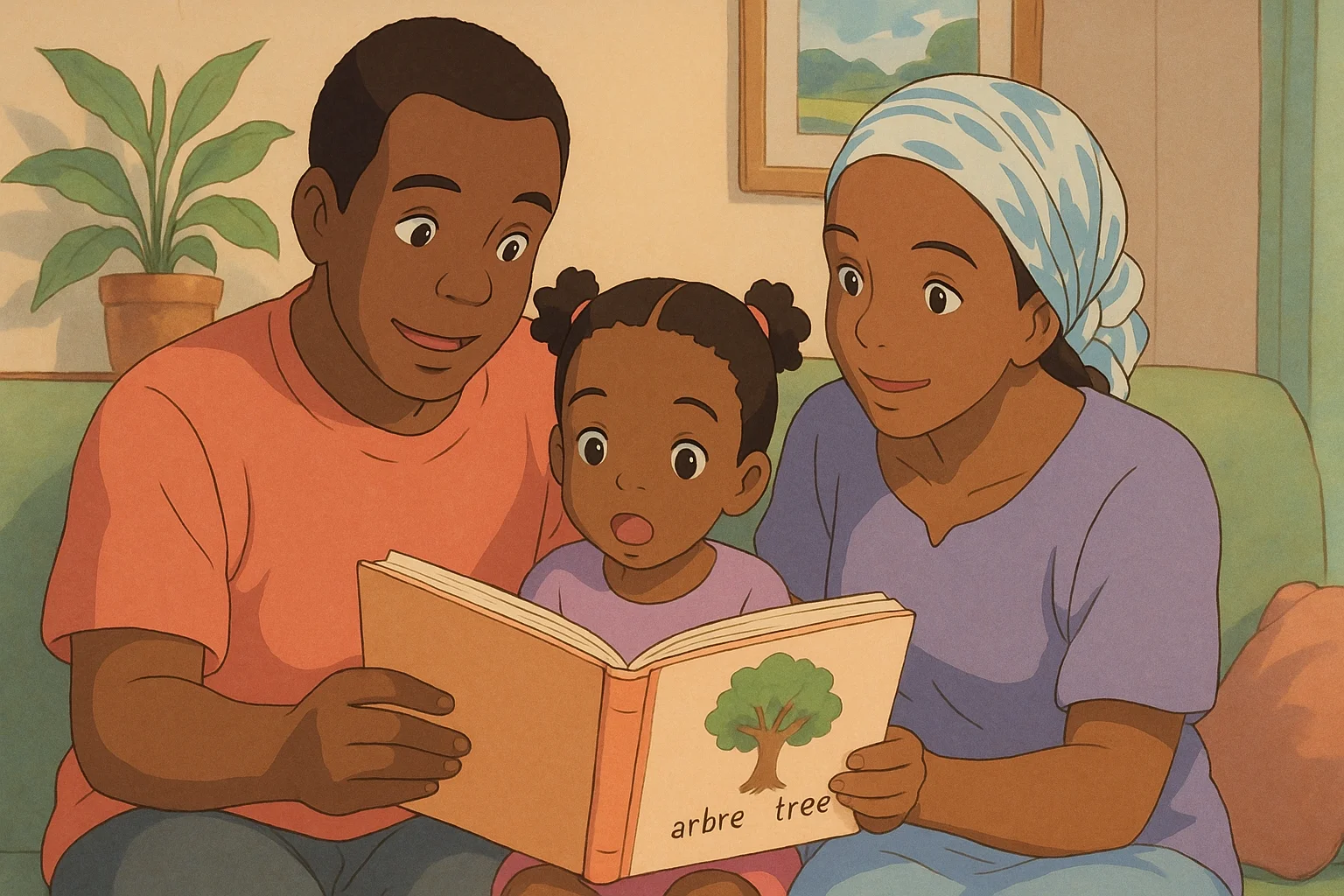
If you’re a parent living far from the country where your heritage language is spoken, you’ve probably felt it: that sharp pang of guilt when you realize another day has gone by without speaking your mother tongue to your child.
You’re not alone. Guilt is one of the most common emotions among diaspora parents who want to pass on their language. We carry the weight of cultural legacy, the fear of losing a precious part of our identity, and the pressure to give our children something we feel we’re failing to provide.
But guilt is a poor motivator. It’s heavy, paralyzing, and often leads to all‑or‑nothing thinking: “If I can’t raise my child fully bilingual, why bother at all?” That mindset keeps us stuck. The good news is that preserving your family language doesn’t require perfection—it only requires starting small.
Guilt arises from a gap between what we believe we should do and what we actually do. For many of us, the ideal is a fully bilingual household where the heritage language flows naturally every day. The reality, though, is a busy life in a dominant‑language environment, where work, school, and social pressures constantly pull toward the majority language.
This gap can feel unbridgeable, so we freeze. We tell ourselves we’ll start “when things settle down,” or “when we have more time.” But that mythical quiet season never arrives, and the guilt grows heavier.
The key is to recognize that guilt, while understandable, doesn’t help you or your child. It shifts your focus from what’s possible today to what you think you’ve already failed at. Letting go of the guilt doesn’t mean giving up on your goal—it means choosing a more helpful emotion: curiosity. What tiny step could you take right now?
Research on habit formation shows that consistency matters far more than intensity. A five‑minute daily practice, sustained over months, will do more for your child’s language development than a burst of weekend immersion followed by weeks of silence.
Think of it like watering a plant. A little water every day keeps it alive and growing; a deluge once a month drowns the roots and leaves the soil dry the rest of the time.
Instead of aiming for a “perfect” bilingual environment, aim for a regular one. That might mean:
The goal isn’t fluency overnight. It’s building a positive, low‑pressure association with the language—for you and your child.
Pick one existing daily ritual and gently weave your language into it. Rituals are already automatic, so they require less willpower.
For example, if you always pour cereal for breakfast, you could:
That’s it. The whole exchange might take 30 seconds. Repeat it tomorrow. Once that feels natural, add another ritual—perhaps brushing teeth or buckling the car seat.
The magic is in the repetition. Over weeks, those 30‑second moments will grow into a genuine vocabulary. Your child will start to recognize the sounds, then the meanings, and eventually will surprise you by using a word themselves.
Preserving your family language isn’t about being a perfect bilingual parent. It’s about showing up, day after day, with whatever small offering you can manage. Every word you speak, every song you sing, every story you share is a stitch in the tapestry of your child’s linguistic heritage.
Start this week. Pick one ritual. Speak one phrase. Let go of the guilt, and celebrate the tiny victory of beginning.
Your language—and your child—will thank you.