By Lionel Kubwimana
••4 min
Use structured, five‑minute video‑call rituals to let grandparents teach vocabulary and stories while strengthening family bonds.
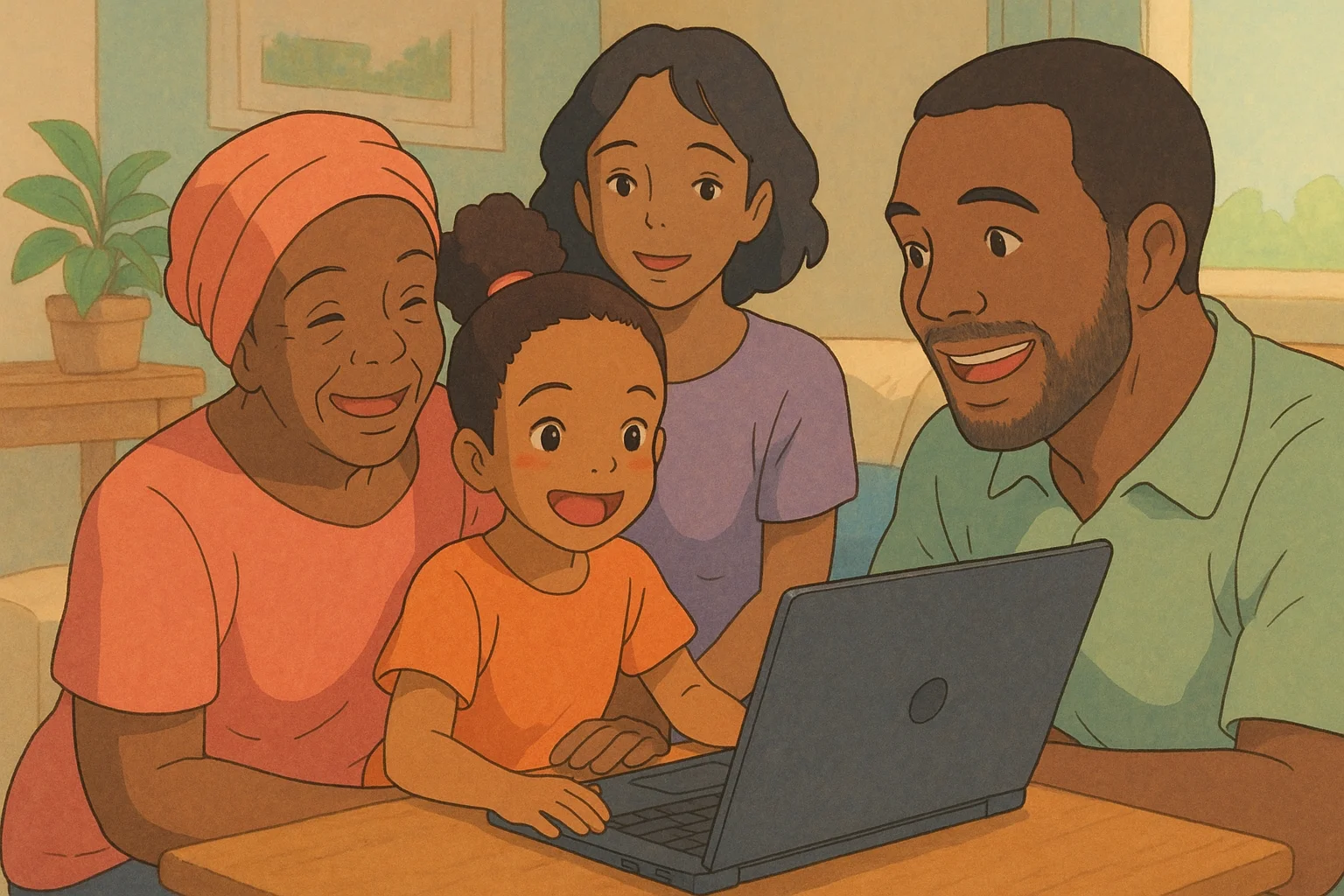
Distance can feel like an insurmountable barrier when you’re trying to pass a language from one generation to the next. Grandparents hold the vocabulary, the proverbs, the stories that make a language come alive—but when they live hundreds or thousands of miles away, those precious exchanges risk fading into occasional “hello” and “goodbye.”
The good news is that today’s video‑call technology, used with a little intention, can turn those brief connections into powerful language‑learning moments. Instead of leaving the call to chance, you can design five‑minute rituals that give grandparents a clear, joyful role as teachers. Here’s how.
When a grandparent is far away, the natural, everyday opportunities for language immersion disappear. A child doesn’t overhear Grandpa chatting with neighbors in Swahili or Grandma singing a Kinyarwanda lullaby while cooking. Video calls, when unstructured, often fall into the same limited patterns: “What did you do today?” “I’m fine.”
The flip is to treat the call not as a conversation to be filled, but as a mini‑lesson to be shaped. By giving the call a simple, repeatable structure, you hand the grandparent a teaching role they can step into with confidence. A ritual also reassures the child that this is a special time for learning, not just another screen interaction.
These activities are designed to be low‑pressure, require no preparation from the grandparent, and fit into five to ten minutes.
Ask the child to pick a toy and hold it up to the camera. The grandparent names the toy in the heritage language—e.g., “gari” (car) or “kifaru” (rhinoceros). The child repeats the word, then the grandparent asks a simple follow‑up: “What color is the car?” “Where is the rhino going?” This turns a passive show‑and‑tell into a two‑way vocabulary exchange.
Before the call, place a piece of fruit (real or a picture) near the camera. The grandparent says its name—“embe” (mango), “nanasi” (pineapple)—and the child repeats. Then switch roles: the grandparent holds up something from their kitchen, and the child tries to name it. The game stays fresh because you rotate the objects each week.
Grandparents are natural storytellers. Instead of asking for a long folktale, request a one‑minute story about something that happened earlier that day. “Tell us about the bird that visited your window this morning.” The grandparent narrates in simple sentences, mixing heritage language with gestures. Afterward, the child can draw the story and share the picture in the next call.
Each activity follows the same pattern: grandparent provides input, child responds, grandparent gently corrects or expands. The goal isn’t fluency in one call; it’s building a habit of joyful, focused language exposure.
Language is more than vocabulary—it’s identity, connection, and love. By turning video calls into structured language lessons, you give grandparents a tangible way to contribute to their grandchildren’s upbringing, no matter how many miles separate them. You also send a powerful message to the child: our language is worth making time for.
Start with one five‑minute activity this week. Let the grandparent choose which one feels most natural. What you’ll likely discover is that the ritual quickly becomes the part of the call everyone looks forward to—the moment when distance disappears, and the language comes home.