By Lionel Kubwimana
••4 min
Bilingualism isn't a compromise—it's a superpower that builds a flexible, rooted identity capable of navigating multiple worlds.
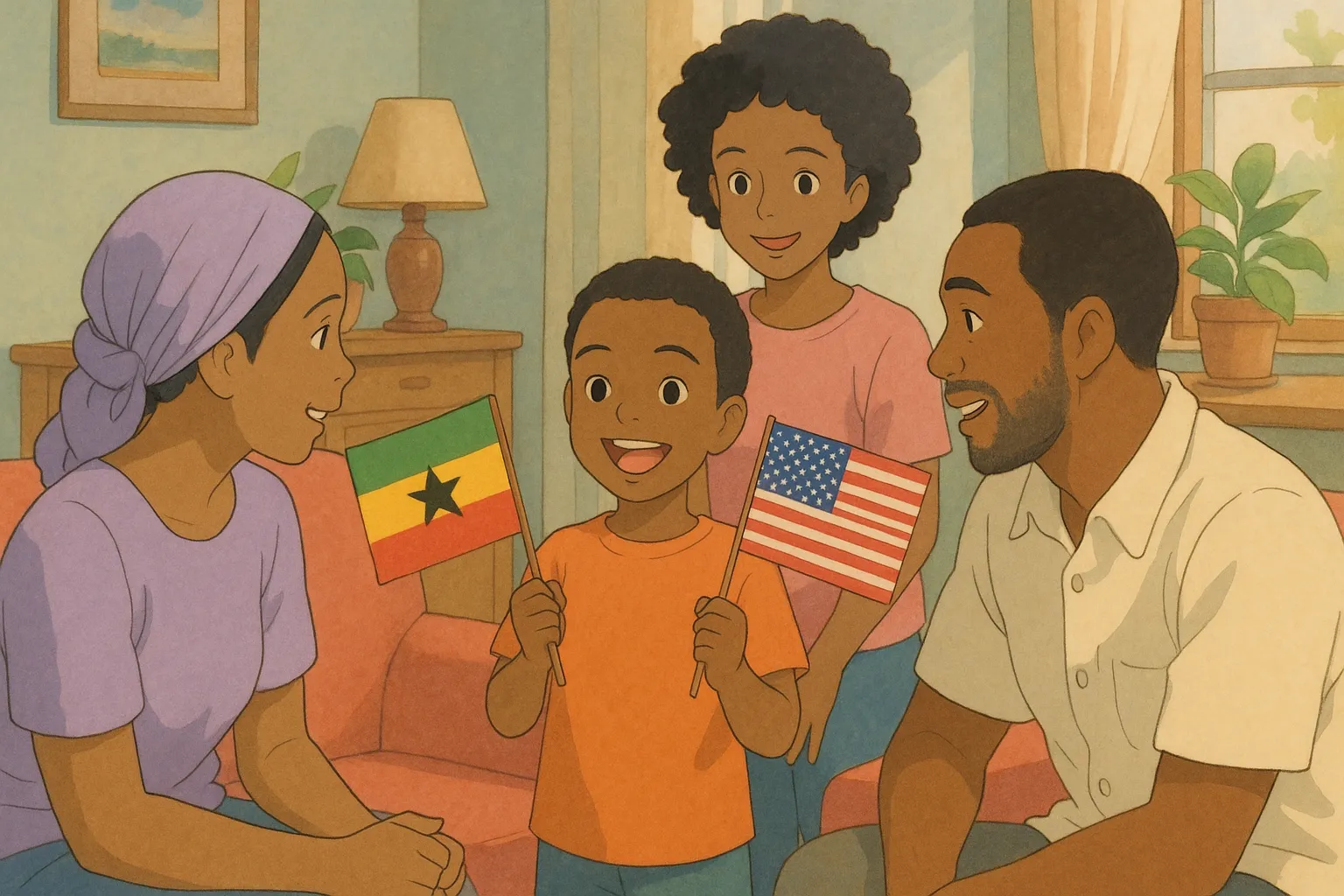
Growing up speaking two (or more) languages is a gift that many families around the world embrace—but it’s also a source of anxiety for some parents. Will my child get confused? Will they ever truly master either language? Will they feel caught between cultures, never fully belonging to either? These fears are common, especially in diaspora communities where parents want their children to stay connected to their heritage while thriving in their new home.
The good news is that decades of research on bilingual development have turned these worries on their head. Far from being a disadvantage, bilingualism actually strengthens a child’s cognitive flexibility, cultural empathy, and sense of self. Let’s walk through the three key points every parent should know.
The idea that a child exposed to two languages will become “confused” is an old, persistent myth. It often stems from early 20th‑century studies that framed bilingualism as a cognitive burden—studies that have since been thoroughly debunked.
Modern neuroscience shows that bilingual children’s brains develop denser neural connections in areas responsible for executive function, attention, and problem‑solving. Instead of mixing up languages indiscriminately, even toddlers quickly learn to differentiate between them, often as early as their first words.
What looks like “confusion” to an outsider is often just code‑mixing—a normal, temporary phase where children borrow words from the language they know better to fill gaps in the other. This isn’t a sign of failure; it’s a sign of resourcefulness. With consistent exposure and gentle correction, most children naturally separate the two languages by age 4–5.
The real confusion comes not from the languages themselves, but from inconsistent input or sudden switches in language policy at home. The key is consistency—not perfection.
Code‑switching—shifting between languages in a single conversation—is often stigmatized as a lack of mastery. In reality, it’s a sophisticated social and cognitive skill. Bilinguals code‑switch to express nuance, align with their audience, or signal which part of their identity they’re foregrounding at that moment.
For children, this ability is a powerful identity‑shaping tool. They learn early that they can be “the Swahili‑speaking child” with grandparents, “the French‑speaking student” at school, and “the mix‑and‑match kid” with siblings who share both languages. Each language becomes a wardrobe of social selves, all authentic, all part of the same whole.
This flexible identity isn’t fragmented; it’s integrated. Bilingual children often develop a stronger meta‑awareness of language itself—they think about how language works, how words carry culture, and how communication varies across contexts. That awareness builds empathy, adaptability, and a deep‑seated confidence that they can navigate multiple worlds without losing themselves.
How can you nurture this superpower in everyday life? Here are a few concrete strategies:
The goal isn’t perfect, accent‑free fluency in both languages. It’s raising a child who feels proud of their linguistic heritage, confident in their ability to communicate across contexts, and secure in a multifaceted identity that embraces all parts of their story.
Bilingualism isn’t a compromise between two cultures—it’s a richer, more nuanced way of being. By giving your child two languages, you’re not splitting your identity; you’re expanding it, building a foundation that can hold both the old world and the new without contradiction. That’s a gift that lasts a lifetime.