By Lionel Kubwimana
••5 min
A compassionate guide for diaspora parents who think they've missed the window—and how to start teaching heritage language at any age.
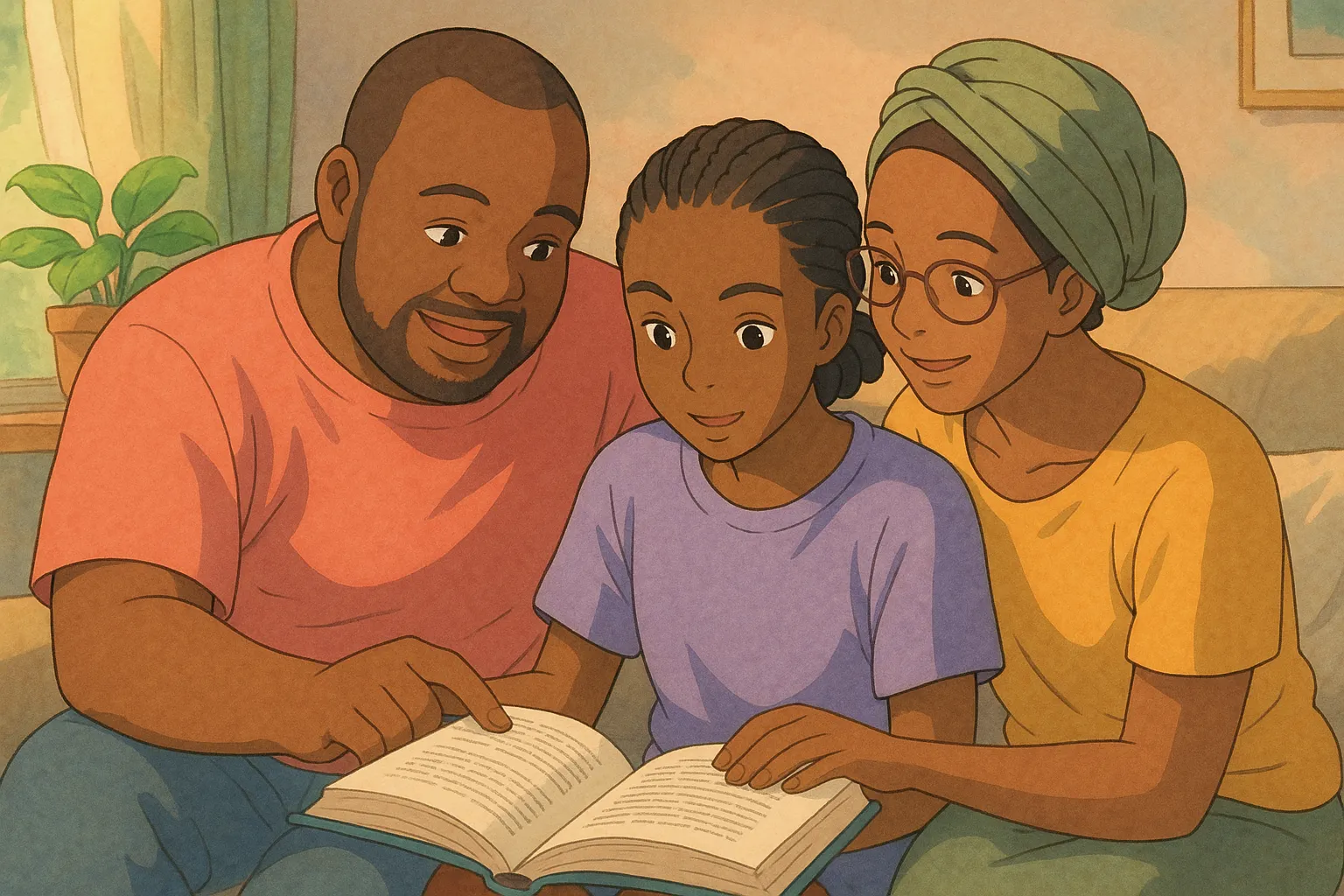
For years, parents in the African diaspora have heard the same warning: "If you don't teach your child the language before they're seven, they'll never really speak it." This idea—often called the "critical period hypothesis"—has fueled countless nights of guilt and regret. You might look at your twelve‑year‑old and think, "I missed my chance."
But here’s the truth: that window is far more flexible than we've been told.
Neuroscience has moved on. While it’s true that the young brain absorbs phonetic patterns with astonishing ease, the adult (and adolescent) brain brings other superpowers to language learning: motivation, cognitive strategies, and—most importantly for heritage languages—emotional connection.
A 2023 meta‑analysis from the University of Cape Town followed 450 diaspora families across three continents. The researchers found that children who started learning their heritage language after age ten achieved conversational fluency within 18–24 months when three conditions were met:
"Heritage language acquisition isn't about hitting a biological deadline," explains Dr. Amina Diallo, a lead author of the study. "It's about creating a living context where the language feels useful, warm, and worth the effort."
So if your child is eight, fourteen, or even twenty‑two—it's not too late. The brain remains plastic throughout life, and the emotional hooks of family and identity provide a runway that purely academic language learning never can.
Guilt is heavy. It makes us want to hide from the problem rather than solve it. You might think, "I should have spoken Kirundi every day when they were toddlers. Now it's pointless."
But what if we reframed that guilt? Instead of a verdict on the past, treat it as a signal of how much the language matters to you. That feeling is evidence of love—love for your culture, love for your children's roots, love for the stories that only your grandmother's tongue can tell.
Here’s a three‑step reframe:
1. Name the feeling Say it out loud: "I feel guilty because I want my kids to know where they come from, and I worry we've lost time."
2. Swap 'should have' for 'can now' Instead of "I should have taught them earlier," try "I can start with one word today."
3. Connect to joy, not duty Pick a moment that already feels good—Saturday pancakes, a favorite song, a funny family memory—and weave the language in there.
In Minneapolis, a Burundian father named Pascal told us, "Every time I felt guilty, I'd pull up a photo of my mother on my phone and tell my teenage daughter one sentence about her in Kirundi. After a few months, my daughter started asking, 'What would Grandma say about this?' That guilt had turned into curiosity."
Guilt shrinks when action begins. The moment you say "Let's try" instead of "I failed," the weight starts to lift.
You don't need a curriculum, a tutor, or a perfect accent. You just need a first step. This plan works whether your child is five or fifteen.
Pick one heritage word that already holds meaning in your family. It could be a term of endearment, a food name, a color, or a feeling (like ubugira—effortless grace).
Why one word? Because it's achievable. It doesn't overwhelm. And once that word lands, it becomes a beachhead for more.
Find a moment that repeats every day: putting on shoes, stirring the dinner pot, brushing teeth. Say the anchor word in that moment. For example, every morning when you hand your child their lunchbox, say "Lunch" in English, then "Ikirundo" (or whatever your word is).
Rituals build muscle memory. After a week, your child will expect the word. After a month, they might say it before you do.
Pick a single, fun resource that doesn't feel like homework:
Watch/listen/read together once a week. The goal isn't comprehension; it's exposure and comfort with the sounds.
Write your anchor word on a slip of paper and drop it in a jar. Each week, add a new word. On Sundays, pull a slip at random and try to use that word sometime during the week. Keep it playful—no quizzes, no pressure.
When your child uses a heritage word spontaneously, celebrate. Not with a test score, but with a high‑five, a smile, a "You remembered!"
Progress in heritage languages is measured in moments, not milestones. A single word used at the right moment is a victory.
Language is contagious. Once you introduce one word, others often follow. In a Seattle‑based WhatsApp group of East African parents, we tracked families who adopted the five‑step plan. Within six months:
"It was like lighting a match in a dark room," one mother wrote. "We didn't realize how hungry we all were for those sounds."
As a diaspora parent, you are not just a language teacher. You are a bridge between continents, generations, and identities. That bridge doesn't have to be completed overnight. It can be built one word, one story, one meal at a time.
Start with the word that feels most alive to you. Say it today. The rest will follow.
For more practical tools and community stories, explore our bilingual books or join the conversation in our parent‑led Facebook group.