By Lionel Kubwimana
••3 min
Use predictable car‑ride routines to introduce simple vocabulary and phrases through repetitive, playful games.
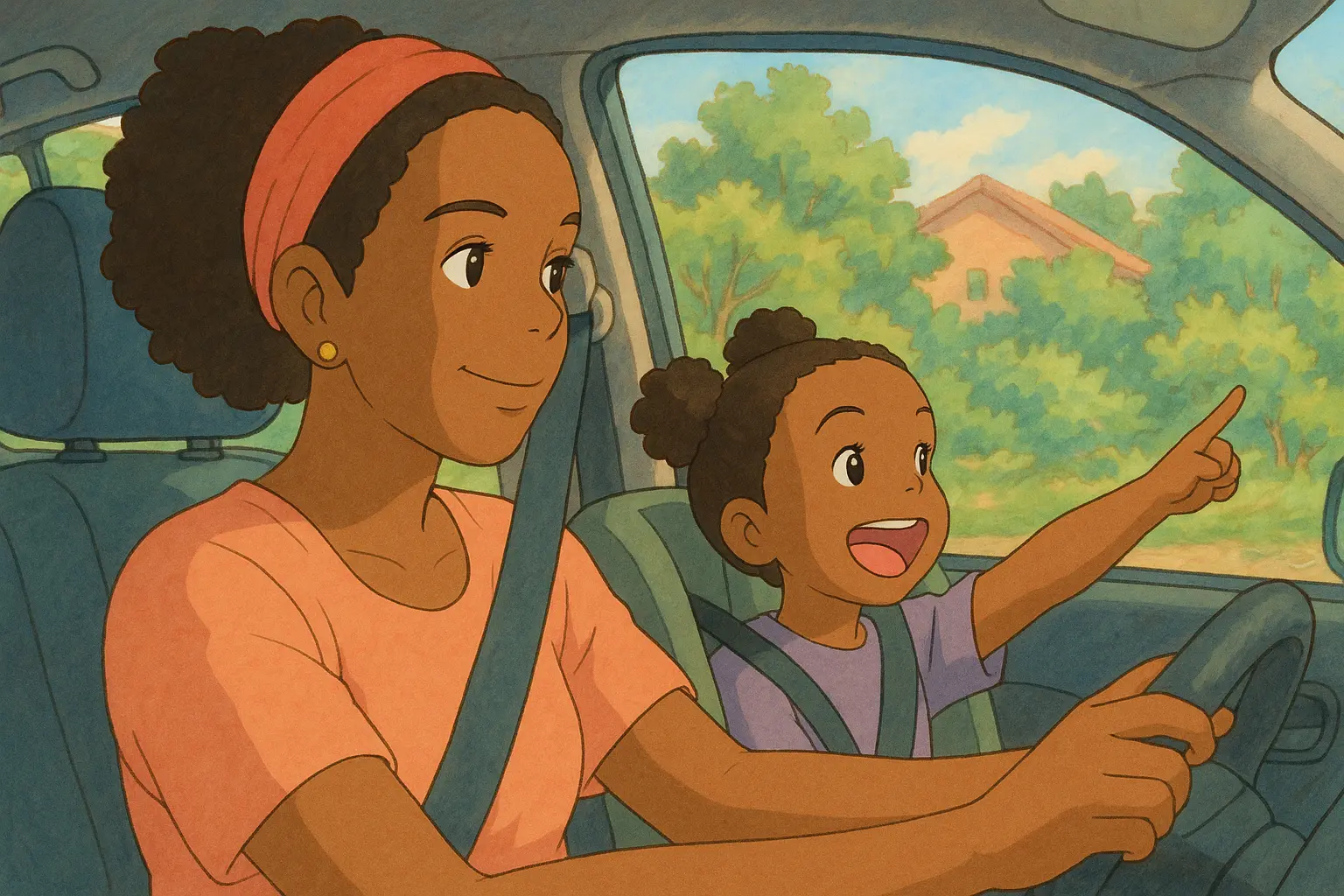
For diaspora parents, the daily car ride to school or activities is often a silent ritual—a slice of time that slips away unnoticed. Yet these minutes are a hidden treasure: a captive audience, a predictable routine, and a perfect opportunity to weave language exposure into the fabric of everyday life.
Children in the car are a captive audience. They’re buckled in, with nothing to do but look out the window or talk to you. That routine—the same route, the same time each day—creates a sense of safety and predictability. When you introduce a language game in that setting, you’re not adding another “lesson”; you’re simply turning a mundane moment into something playful.
Research shows that repetition in a low‑pressure environment is one of the most effective ways to build language fluency. The car ride gives you both: you can repeat the same phrases day after day, and because it’s just a game, there’s no performance anxiety. It’s language acquisition by stealth.
The classic “I spy” game, but played in the target language. Start with colors (“I spy something red”), then move to shapes, objects, or even letters on street signs. Keep the vocabulary simple and repeat the same words each time you play. The goal isn’t to teach dozens of new words—it’s to make the few you choose stick.
Pick a category (red cars, blue houses, trees, etc.) and count them together in the target language. This builds number fluency and reinforces category words. As your child gets comfortable, switch categories or add adjectives (“big red cars,” “small blue houses”).
Before you leave, say a simple phrase in the target language that hints at where you’re going. “We’re going to the place with slides and swings” (the park) or “We’re visiting the building full of books” (the library). Let your child guess, then repeat the phrase when you arrive. This connects language to real‑world context.
The moment language practice feels like a chore, the magic disappears. The car‑ride games work because they’re light, quick, and entirely optional. If your child isn’t in the mood, drop it and try again tomorrow. The repetition will happen naturally over weeks and months.
Remember, you’re not aiming for perfection. You’re aiming for exposure. A few minutes of playful interaction each day builds a foundation far stronger than an hour of forced study once a week.
Pick one game. Use it on your next commute. Watch how your child reacts, and adjust. The goal is to make language a natural part of your family’s rhythm—not another item on the to‑do list.
Turn the key, start the engine, and let the language adventure begin.