By Lionel Kubwimana
••6 min
Exploring how heritage language shapes identity and practical ways to pass on cultural context, not just vocabulary.
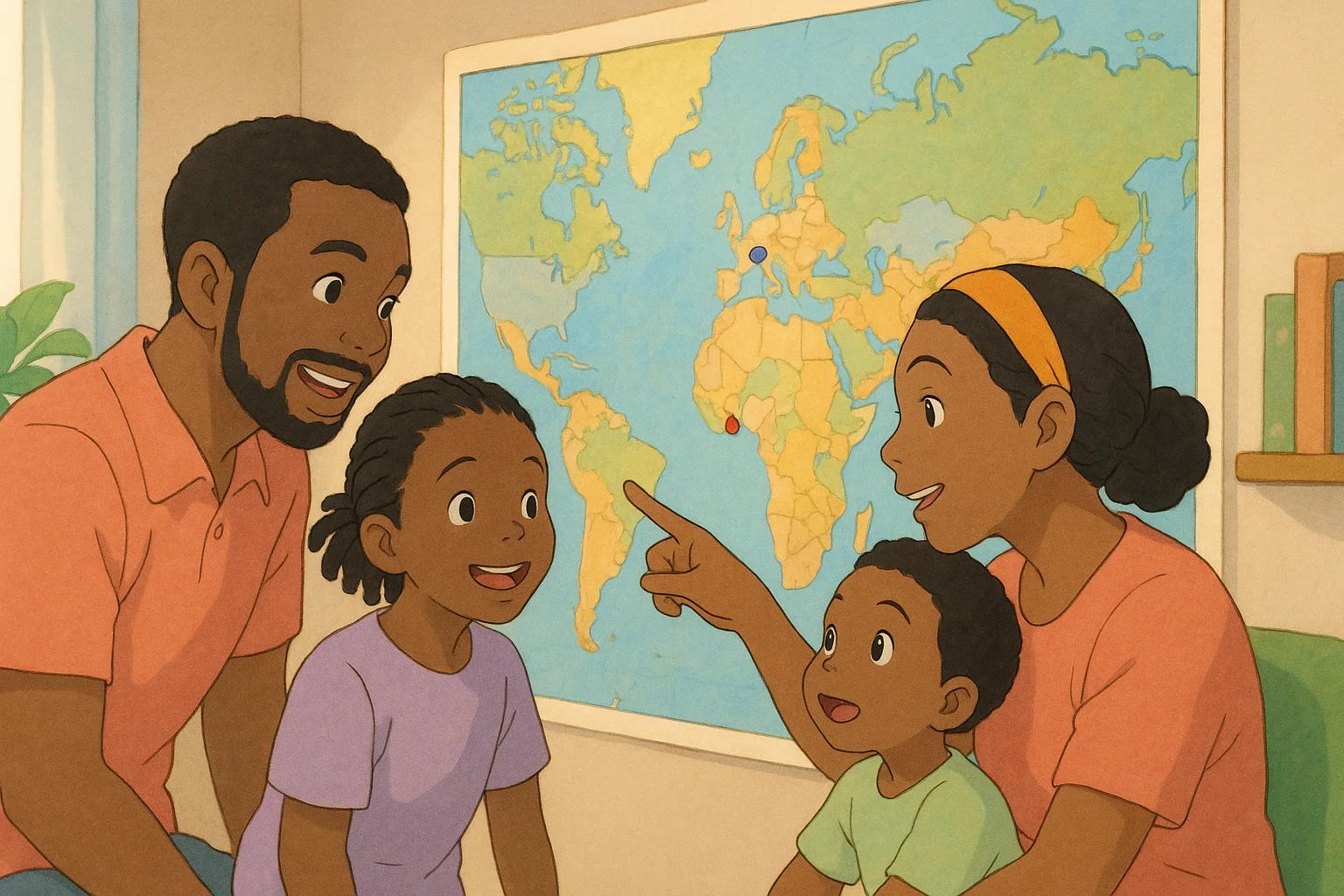
When your child asks "Where are we from?", what story do you tell them? For diaspora families, this question carries the weight of centuries—a bridge between the soil of your ancestors and the pavement of your present. Language is that bridge. It's not just vocabulary; it's the vessel of cultural identity, the whispered wisdom of proverbs, the worldview encoded in idioms, and the emotional resonance of ancestral voices.
Language does more than convey information—it shapes how we perceive reality. In Kirundi, the proverb "Uwupfuye ntiyumva ibitego" ("A dead person doesn't hear the drums") teaches acceptance of irreversible loss while honoring communal mourning traditions. This isn't merely translation; it's cultural philosophy embedded in syntax.
Consider how idioms reflect environmental intimacy. The Kinyarwanda expression "Gutera inkoni mu mazi" ("To throw a stick into water") describes futile effort, drawing from the physical reality of a floating stick that cannot sink. Such metaphors tie thought to landscape, something diaspora children might never see firsthand but can inherit through linguistic imagination.
Languages also encode social hierarchies and relational ethics. Many Bantu languages use noun classes that categorize objects as animate or inanimate, sacred or mundane, communal or individual. Learning these grammatical structures isn't academic—it's learning how your ancestors organized their moral universe.
You stand at a unique intersection: fluent enough in your heritage language to translate its textures, yet immersed enough in your host culture to explain why those textures matter. This position isn't a deficit; it's your superpower.
Children of diaspora often experience cultural identity as a puzzle with missing pieces. Language fills those gaps not with abstract concepts but with tangible emotional anchors. When you teach your child the word for "home" in your mother tongue, you're not just teaching phonetics—you're teaching them where home feels.
The challenge isn't merely linguistic preservation but cultural contextualization. A child learning French in Montréal learns about poutine and winter carnivals alongside subjunctive verbs. Similarly, heritage language education must include the proverbs, songs, jokes, and familial anecdotes that give the language its soul.
Your role isn't to replicate the monolingual immersion of the homeland—that's impossible. Instead, you're curating a portable heritage, selecting the most meaningful linguistic artifacts to carry forward. This selective transmission isn't dilution; it's adaptation, ensuring cultural survival in new soil.
Proverb-Centered Learning Each week, introduce one proverb in your heritage language. Discuss its literal meaning, cultural context, and modern application. For example, the Swahili proverb "Mwanzo wa kufika ni kuanza" ("The beginning of arrival is to start") becomes a family mantra for tackling new challenges.
Idiom Etymology Sessions Explore idioms that reference specific cultural practices or historical events. Map their origins visually—create a family "idiom wall" with drawings and explanations. When an idiom references farming techniques your children have never seen, supplement with photos or stories from elders.
Ritual Language Integration Attach specific phrases to daily rituals. Greetings, meal blessings, bedtime routines—these micro-moments of linguistic repetition build neural pathways while anchoring language in embodied experience. The Kirundi morning greeting "Amashyo" ("Wishes for a day of work") carries different intentionality than a simple "Good morning."
Digital Heritage Curation Create a family digital archive: record elders telling stories, singing songs, explaining traditions. Use translation apps not as crutches but as bridges—have children translate simple sentences from your heritage language to their dominant language and discuss what gets lost in translation.
Cultural Artifact Pairing Pair language lessons with tangible cultural objects. Learn food vocabulary while cooking traditional dishes, clothing terms while dressing for cultural events, or kinship terms while looking at family photo albums. Multi-sensory learning creates stronger memory connections.
Intergenerational Dialogue Facilitate video calls with relatives who still live in the homeland. Prepare specific questions about language nuances. When grandparents explain why certain words are used only in specific contexts, they're transmitting unspoken cultural rules no textbook contains.
Heritage Language Media Diet Curate age-appropriate media in your heritage language—music, cartoons, podcasts, books. Discuss not just the language but the cultural assumptions within the content. Why do characters react certain ways? What values are being communicated?
Teaching heritage language as cultural identity doesn't just preserve the past—it enriches the present. Bilingual children develop cognitive flexibility, empathy through multiple cultural perspectives, and resilience from navigating different worldview systems.
For diaspora parents, this work transforms anxiety about cultural loss into agency of cultural transmission. Each proverb taught, each idiom explained, each ritual phrase spoken becomes a stitch in the tapestry of identity your children will wear throughout their lives—not as costume but as second skin.
The world map on your wall with pins marking origin and current home isn't just decoration; it's a visual representation of the linguistic journey your family is taking. Each word learned is another pin connecting geography to genealogy, syntax to soul.
Your child's identity isn't just about where they live—it's about the language they speak to their ancestors. And through that language, they learn the most important lesson of all: how to carry home within themselves, no matter where in the world they stand.