Lingu.Africa Logo
Lingu.Africa
HomeBooksLearnTeachPricingDownloadPracticeTranslationAboutBlog
Lingu.Africa

Discover the beauty of African languages through bilingual books.

Our Books

  • Amharic Books
  • Bambara Books
  • Cape Verdean Kriolu Books
  • Ewe Books
  • Haitian Creole Books
  • Hausa Books
  • Igbo Books
  • Kikuyu Books
  • Kinyarwanda Books
  • Kirundi Books
  • Krio Books
  • Lingala Books
  • Luganda Books
  • Malagasy Books
  • Oromo Books
  • Pidgin Books
  • Shona Books
  • Somali Books
  • Swahili Books
  • Tigrinya Books
  • Twi Books
  • Wolof Books
  • Xhosa Books
  • Yemba Books
  • Yoruba Books
  • Zulu Books

Company

  • Translation Services
  • Blog
  • About Us
  • Languages
  • FAQ

Contact

Email: hello@lingu.africa

© 2026 Lingu.Africa•Terms•Privacy

Home
Blog
The Heritage Box: A Simple Way to Preserve Your Family's Cultural Roots

TABLE OF CONTENTS

  • 1. What a heritage box is (and why it works better than abstract lessons)
  • 2. How to start with just three items (photo, proverb, everyday object)
  • 3. Turning the box into a monthly family ritual

The Heritage Box: A Simple Way to Preserve Your Family's Cultural Roots

By Lionel Kubwimana

•Aug 29, 2026•

5 min

Create a tangible collection of cultural artifacts that turns “what's our culture?” into a hands‑on conversation.
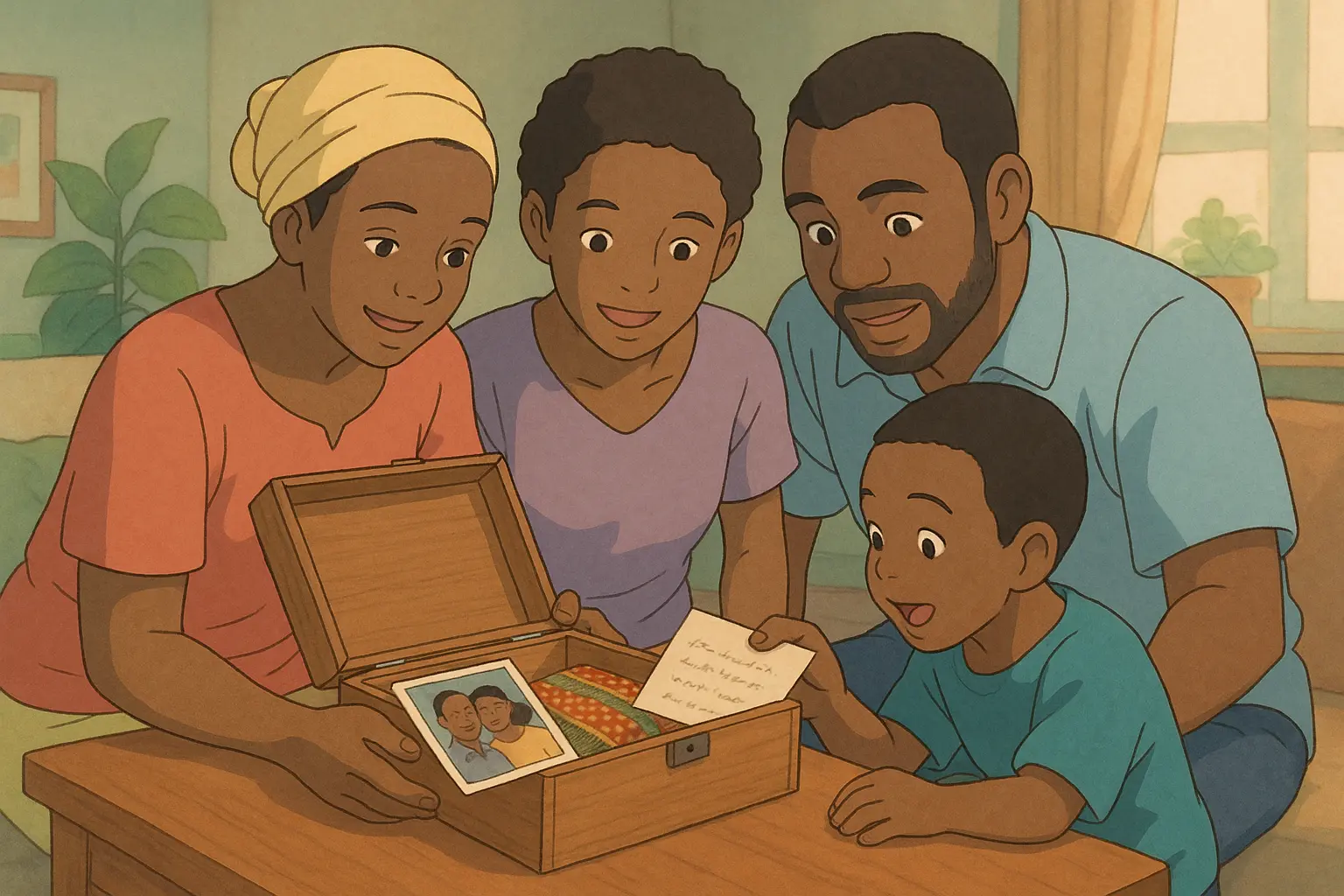
The Heritage Box: A Simple Way to Preserve Your Family's Cultural Roots

KEY HIGHLIGHTS

  • •Discover the three essential items to start your heritage box.
  • •Learn how to turn the box into a monthly family ritual.
  • •See how a physical collection makes culture tangible for kids.
cultural preservationfamily ritualsdiaspora heritage

Your child asks, “What’s our culture?” Instead of stumbling through explanations, you can open a box filled with stories, objects, and memories that speak for themselves.

That’s the power of a heritage box—a curated collection of physical items that make culture tangible and spark conversation. For diaspora parents who want to pass down tangible cultural artifacts but don’t know where to start, this simple method turns abstract lessons into hands‑on discovery.

1. What a heritage box is (and why it works better than abstract lessons)

A heritage box is more than a storage container; it’s a tactile bridge between generations. While abstract lessons about culture can feel distant and theoretical, a physical collection invites curiosity and interaction. When a child can hold a photograph, touch a piece of woven fabric, or read a handwritten note, the concept of “heritage” shifts from something they’re told to something they experience.

This approach works because it engages multiple senses and creates emotional anchors. Memories attached to objects are stronger and more vivid. A box that families can open together transforms culture from a passive subject into an active, shared exploration.

2. How to start with just three items (photo, proverb, everyday object)

You don’t need a museum‑worthy collection to begin. Start with just three meaningful items:

  • A photo – Choose a picture that tells a story: a family gathering, a traditional ceremony, or a portrait of an ancestor. Photos are immediate visual anchors that prompt questions and stories.
  • A proverb – Write down a saying or piece of wisdom in your native language. Proverbs encapsulate values and worldviews; they’re cultural shorthand that sparks deeper conversation.
  • An everyday object – Include something ordinary yet culturally specific: a cooking utensil, a piece of clothing, or a craft item. These objects ground culture in daily life, showing that heritage isn’t just for special occasions.

Place these three items in a simple wooden box. The act of choosing them together—explaining why each matters—is already the first step of the ritual.

3. Turning the box into a monthly family ritual

A heritage box isn’t a one‑time project; it’s a living tradition. Set a regular time—the first Sunday of the month, for example—when the family gathers to open the box.

During the ritual:

  • Take out each item and share its story. If the story has already been told, ask a new question: “What do you think this felt like to use every day?” or “How would you explain this to a friend?”
  • Add something new if you wish. A drawing, a pressed flower, a recent photo. The box grows alongside your family.
  • End with a moment of pride – Acknowledge that by keeping these items, you’re preserving a piece of your shared history.

This monthly habit reinforces that culture is ongoing, not frozen in the past. It gives children a predictable, positive association with their heritage and turns what could be a daunting “lesson” into an anticipated family activity.


Start your heritage box today. Pick three items, set a monthly ritual, and watch as your family’s culture becomes something your children can hold in their hands.
Previous ArticleThe 3 Multilingual Parenting Mistakes Every Diaspora Parent Makes (And How to Fix Them)
Start Your Language Learning Journey