Lingu.Africa Logo
Lingu.Africa
HomeBooksLearnTeachPricingDownloadPracticeTranslationAboutBlog
Lingu.Africa

Discover the beauty of African languages through bilingual books.

Our Books

  • Amharic Books
  • Bambara Books
  • Cape Verdean Kriolu Books
  • Ewe Books
  • Haitian Creole Books
  • Hausa Books
  • Igbo Books
  • Kikuyu Books
  • Kinyarwanda Books
  • Kirundi Books
  • Krio Books
  • Lingala Books
  • Luganda Books
  • Malagasy Books
  • Oromo Books
  • Pidgin Books
  • Shona Books
  • Somali Books
  • Swahili Books
  • Tigrinya Books
  • Twi Books
  • Wolof Books
  • Xhosa Books
  • Yemba Books
  • Yoruba Books
  • Zulu Books

Company

  • Translation Services
  • Blog
  • About Us
  • Languages
  • FAQ

Contact

Email: hello@lingu.africa

© 2026 Lingu.Africa•Terms•Privacy

Home
Blog
The 5‑Minute Daily Ritual That Builds Language Connection (Without Extra Work)

TABLE OF CONTENTS

  • The exact 5‑step morning ritual
  • Adapting for different ages and languages
  • The secret: ritual over rigidity

The 5‑Minute Daily Ritual That Builds Language Connection (Without Extra Work)

By Lionel Kubwimana

•Sep 3, 2026•

4 min

Discover a simple five‑minute morning ritual that weaves heritage language into your existing routine—no extra time, no prep needed.
The 5‑Minute Daily Ritual That Builds Language Connection (Without Extra Work)

KEY HIGHLIGHTS

  • •Consistency beats intensity: five minutes every morning builds more language connection than an hour once a week.
  • •The ritual uses items already in your home—no extra prep, no new materials.
  • •Adaptable for any age and language: tweak the words and gestures to fit your family's heritage.
parentinglanguage learningritualsheritage languagediaspora

When you’re a diaspora parent trying to pass on your heritage language, it’s easy to feel overwhelmed. Between school, work, and daily chores, who has time for another “lesson”? But what if you didn’t need extra time—just a tiny, intentional shift in a moment you’re already sharing?

Research shows that consistency matters far more than intensity. Five minutes of genuine connection every morning builds stronger neural pathways than an hour of forced study once a week. Rituals work because they create predictable, low‑pressure moments that feel natural, not like homework. They signal to your child that this language belongs in everyday life, not just in special books or videos.

The exact 5‑step morning ritual

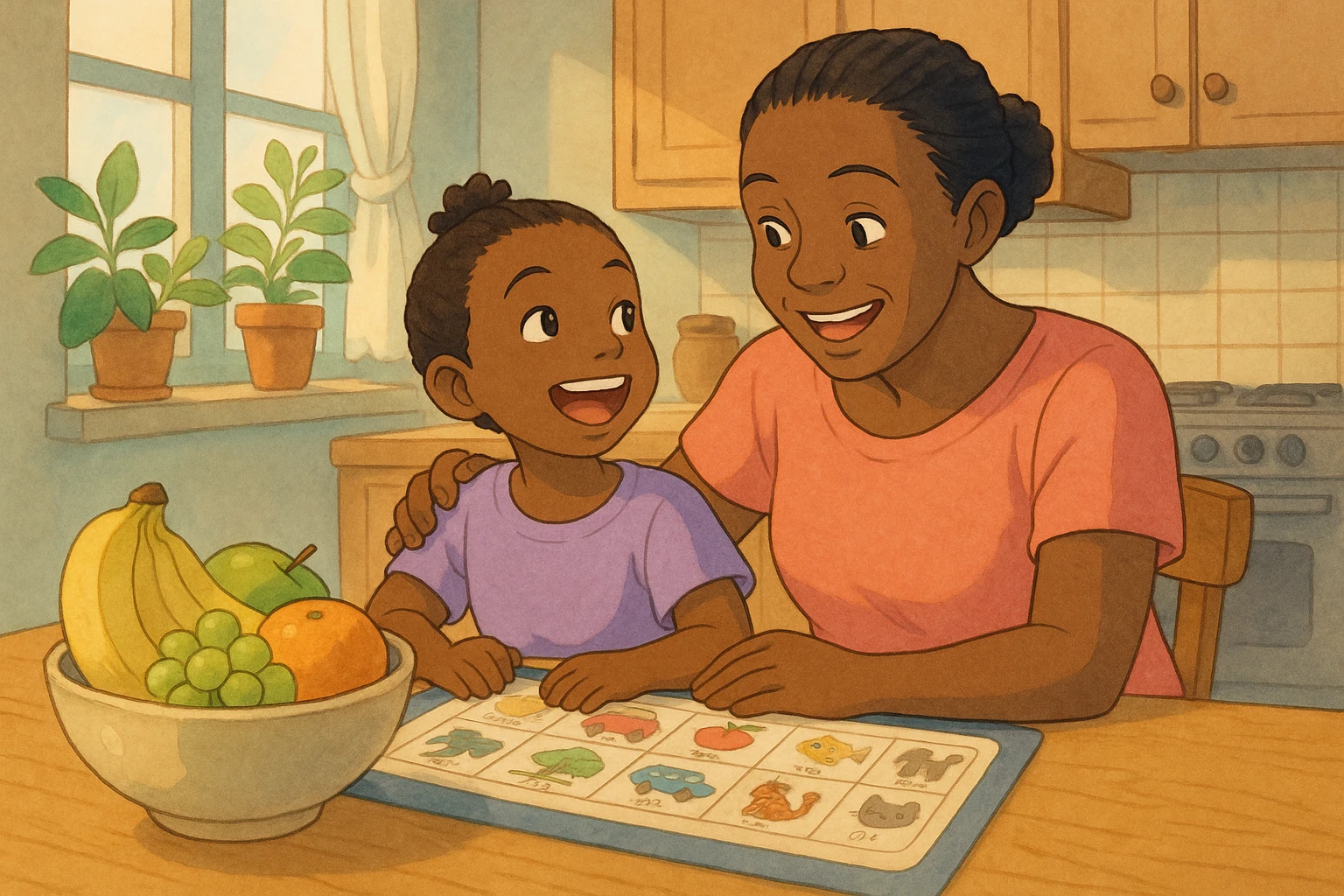
You’ll need just three things you already have: a kitchen table, a bowl of fruit (or any breakfast item), and a bilingual placemat (or a simple printed sheet with words in your heritage language). The ritual unfolds while you’re already sitting together for breakfast—no extra prep, no new materials.

  1. Point & name – Point to the fruit bowl and say its name in your heritage language. Use a warm, curious tone: ‘Look, these are [machungwa].’ Wait for your child to repeat or just listen.
  2. Touch & describe – Gently touch the placemat’s printed words and read them aloud. If you don’t have a placemat, point to the table and say a simple phrase like ‘Good morning, my love’ in your language.
  3. Gesture & connect – Make a small, affectionate gesture: a hand on their shoulder, a smile, a nod. This pairs the language with positive touch.
  4. Echo & expand – If your child repeats the word, praise them and add one more related word (‘Yes, machungwa! They are sweet and orange.’). If they don’t, simply move on—no pressure.
  5. Close with gratitude – Say ‘Thank you for sharing this morning with me’ in your heritage language. It frames the ritual as a gift, not a task.

The whole sequence takes about five minutes. The tone is light, playful, and unhurried. You’re not teaching; you’re sharing.

Adapting for different ages and languages

  • Toddlers (1–3) – Use single words and lots of repetition. Focus on objects they can touch (spoon, cup, banana). Keep gestures big and animated.
  • Preschoolers (4–6) – Introduce short phrases and simple questions (‘What color is this?’). Let them point to the words on the placemat.
  • School‑age children (7+) – Ask them to teach you the word in English (or the community language) after you say it in your heritage tongue. This builds metalinguistic awareness and makes them feel like experts.
  • Multiple languages – If you’re raising a child with two or more heritage languages, pick a different language each day, or use the same ritual but alternate languages each step. Consistency matters more than which language you use on a given day.

The secret: ritual over rigidity

The goal isn’t perfection—it’s presence. Some mornings you’ll only manage step 1; that’s still a win. The ritual becomes a familiar anchor, a moment of calm connection that also happens to strengthen language skills. Over weeks and months, those five minutes add up to hundreds of exposures, all woven into the fabric of your family’s daily life.

Start tomorrow. Set out the fruit bowl and placemat tonight. When you sit down, simply begin. No fanfare, no pressure. Just you, your child, and the words that connect you to your roots.

Previous ArticleThe Quiet Fear: What Happens When Your Child's Heritage Language Fades
Start Your Language Learning Journey