By Lionel Kubwimana
••4 min
Transform passive screen time into active language learning by using simple, free tools that turn videos into vocabulary builders.
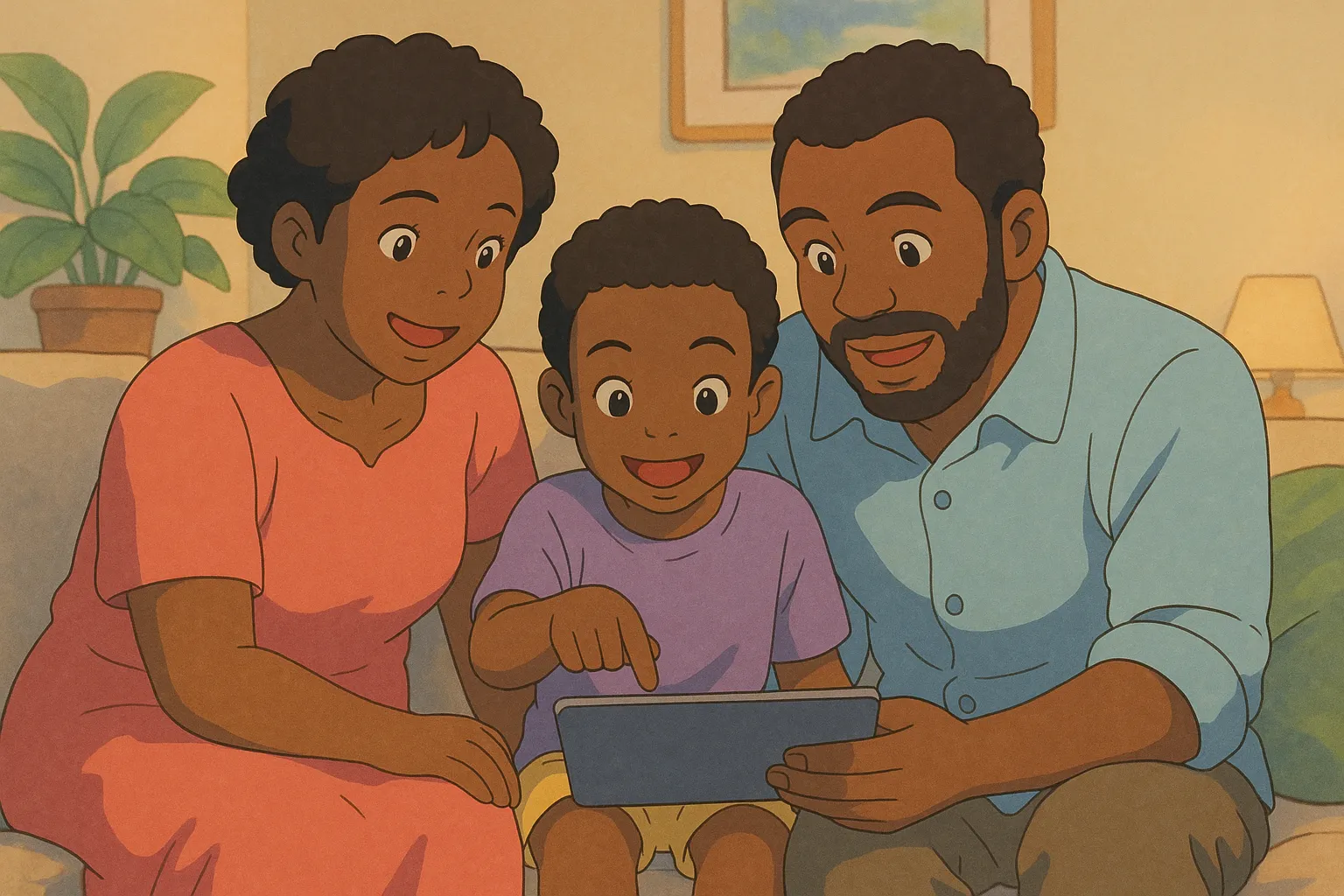
For diaspora parents, screen time guilt carries an extra layer of worry. While all parents fret about the effects of digital devices, you also carry the weight of preserving a language that might otherwise slip away. Each minute your child spends watching a cartoon in English or French feels like a minute stolen from your mother tongue. This double burden—trying to navigate modern parenting while safeguarding cultural heritage—can make screen time feel like a betrayal of your roots.
But guilt is a poor motivator. It drains energy and often leads to all-or‑nothing thinking: either you ban screens completely (unrealistic) or you resign yourself to the slow erosion of your language (heartbreaking). There’s a middle path. Instead of viewing screen time as the enemy, we can see it as a neutral canvas. The same device that delivers English‑language entertainment can also deliver vocabulary, pronunciation, and cultural stories in your language. The shift begins when we stop asking “How do I limit screen time?” and start asking “How can I make this screen time count for our language?”
Diaspora parents already face enough pressure: you’re balancing two (or more) cultures, often without the daily immersion that back‑home families take for granted. Adding screen‑time guilt on top of that is unnecessary—and unhelpful. Let’s replace guilt with intention. The goal isn’t to eliminate screens; it’s to infuse them with your language.
Transforming a passive video into an active language lesson doesn’t require special apps or expensive subscriptions. You already have three simple, free tools at your fingertips:
Subtitles – Turn on subtitles in your language while watching any video. Even if the audio is in another language, seeing the words written in your mother tongue builds reading fluency and reinforces spelling. For young children, point to the subtitles as they appear and read them aloud together. For older kids, pause occasionally and ask them to read a line back to you. This turns a watching session into a shared literacy moment.
Pause‑and‑repeat – Use the pause button liberally. When a character says a word or phrase you want your child to learn, pause immediately and repeat it together. Ask, “Can you say that word?” or “What did they just say?” Mimic the intonation and expression. This breaks the flow of passive consumption and inserts a tiny, focused language drill—without ever leaving the video.
“What’s that word?” game – Before you start watching, pick a category (e.g., animals, colors, actions). During the video, whenever an item from that category appears, pause and ask, “What’s that word in our language?” If your child doesn’t know, supply the word and have them repeat it. Keep a tally on a piece of paper; see how many words you can collect by the end of the video. This turns viewing into a treasure hunt, and the scorecard becomes a tangible record of new vocabulary.
These tools work with any video—cartoons, documentaries, family vlogs, even commercials. You don’t need curated “educational” content; you just need a video your child enjoys and a willingness to engage with it differently.
Random language moments are easily forgotten; a plan turns them into a ritual. A weekly screen‑time‑language plan doesn’t need to be elaborate. It only needs three ingredients:
A fixed slot – Choose one or two regular times each week when you’ll use screen time for language practice. Sunday afternoons, Wednesday evenings—whatever fits your rhythm. Write it on the family calendar or set a phone reminder. Consistency signals that this matters.
A pre‑selected video – Before the slot arrives, pick the video you’ll watch. Browse together with your child if possible. The act of choosing builds anticipation and ownership. Save the video in a “language time” playlist so it’s ready when the moment comes.
A tool focus – Each week, spotlight one of the three tools. “This week we’re going to practice with subtitles.” Next week might be “pause‑and‑repeat.” Rotating the focus keeps the practice fresh and ensures all skills get attention.
At the end of each session, spend two minutes reflecting: “What new word did we learn?” “What was fun about today?” This quick debrief cements the learning and makes the plan feel intentional, not accidental.
Over time, this weekly plan becomes a family habit—a small but steady current that moves your child closer to fluency. Screen time is no longer a source of guilt; it’s a scheduled appointment with your language.
By acknowledging the unique guilt diaspora parents face, equipping yourself with three simple tools, and wrapping everything in a gentle weekly plan, you can transform screen time from a cultural liability into a language asset. Your mother tongue deserves a place in your child’s digital world, and now you have a practical, guilt‑free way to make it happen.