By Lionel Kubwimana
••4 min
Use the natural flow of cooking to introduce food vocabulary through simple, repetitive phrases that stick at dinner.
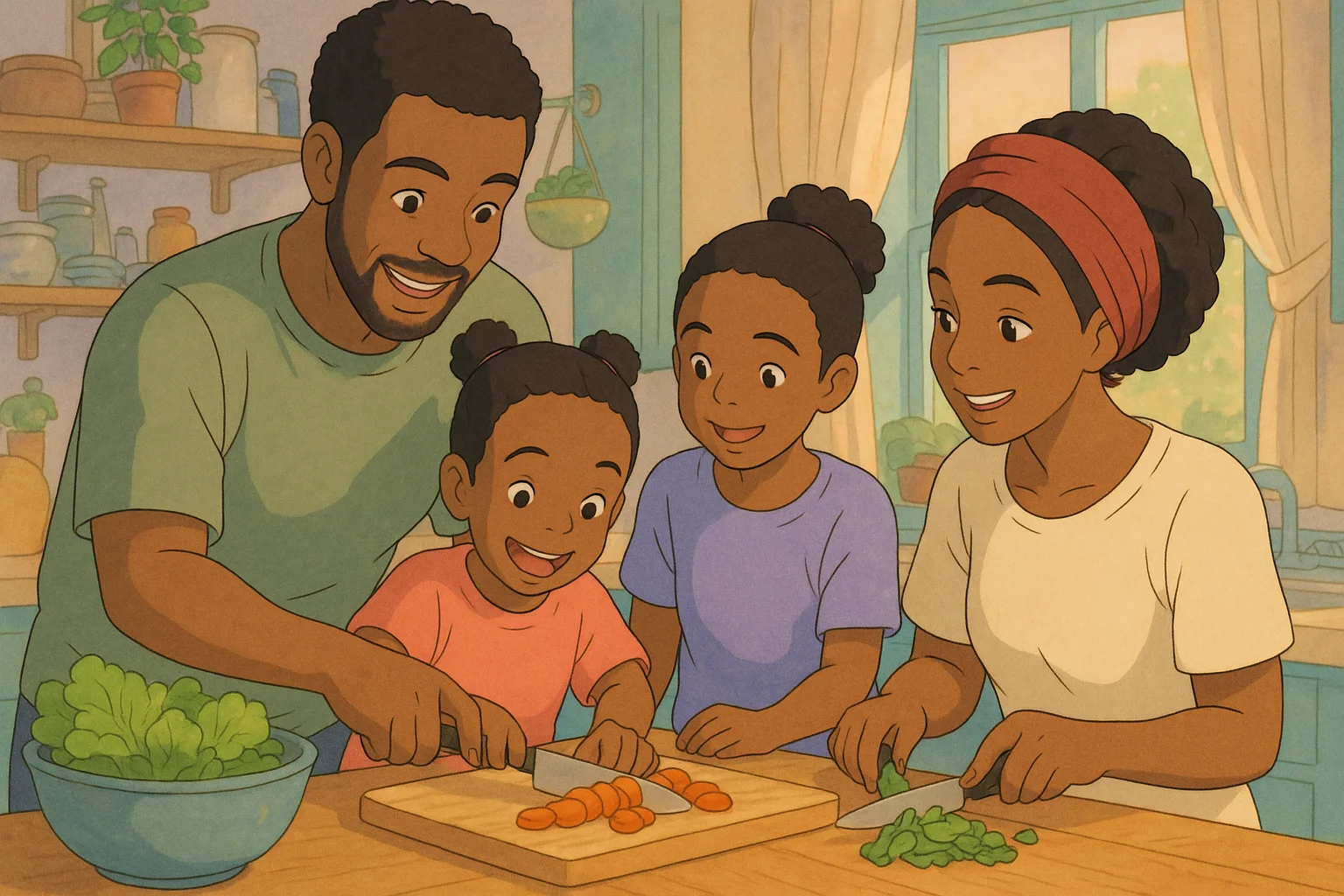
The kitchen is often the heart of the home—a place where families gather, meals are prepared, and conversations flow naturally. This makes it an ideal setting for language learning, especially for young children. Unlike formal lessons, the kitchen offers a familiar, sensory-rich environment where new words are tied to tangible objects and actions. The routine of cooking provides predictable moments for repetition, which is essential for vocabulary retention.
Cooking is a multi‑sensory experience. Children can see, touch, smell, and taste the ingredients, creating strong mental associations. When you say “tomato” while holding a ripe red tomato, the word sticks. The kitchen is also a space of daily routines—washing vegetables, stirring pots, setting the table—which creates natural opportunities to repeat the same phrases day after day without feeling forced.
Because everyone is focused on a shared goal (making dinner), the pressure to “perform” disappears. Language emerges from the activity itself, not from a textbook.
Here are three simple phrases you can weave into your cooking routine:
“Can you hand me the [vegetable]?”
Start with familiar vegetables (carrot, onion, potato). As you cook, ask your child to pass each item. The request is practical, and the repetition of the vegetable’ s name happens naturally.
“Let’s stir the [dish].”
Whether you’re making soup, sauce, or stew, invite your child to stir. Name the dish each time: “Let’s stir the soup.” This reinforces both the action (stirring) and the meal’s name.
“Time to taste the [spice].”
While seasoning, let your child smell or taste a tiny amount of a mild spice like cinnamon or paprika. Say the spice’s name clearly. The novel flavor helps cement the word.
These phrases are short, easy to remember, and fit seamlessly into the cooking flow. Use them in the same order each time to build a predictable language pattern.
The key is to avoid turning cooking into a lesson. Follow your child’s interest—if they’re fascinated by the sizzling pan, talk about “sizzle” instead of insisting on the planned phrase. Laugh together when a spoon clatters to the floor; name the objects as you pick them up.
Repetition works best when it feels like a game, not a drill. Sing a silly song about the vegetables, or invent a funny voice for the stirring spoon. The more fun you have, the more your child will want to join in—and the more they’ll absorb.
Cooking together isn’t just about preparing food; it’s about creating moments of connection and learning. By integrating a few simple phrases into your kitchen routine, you can build your child’s food vocabulary without adding extra time or effort. Start with one phrase this week, and watch how naturally the words become part of your family’s kitchen language.