By Lionel Kubwimana
••5 min
Use niche online communities to find support, swap ideas, and reinforce your commitment to teaching your language.
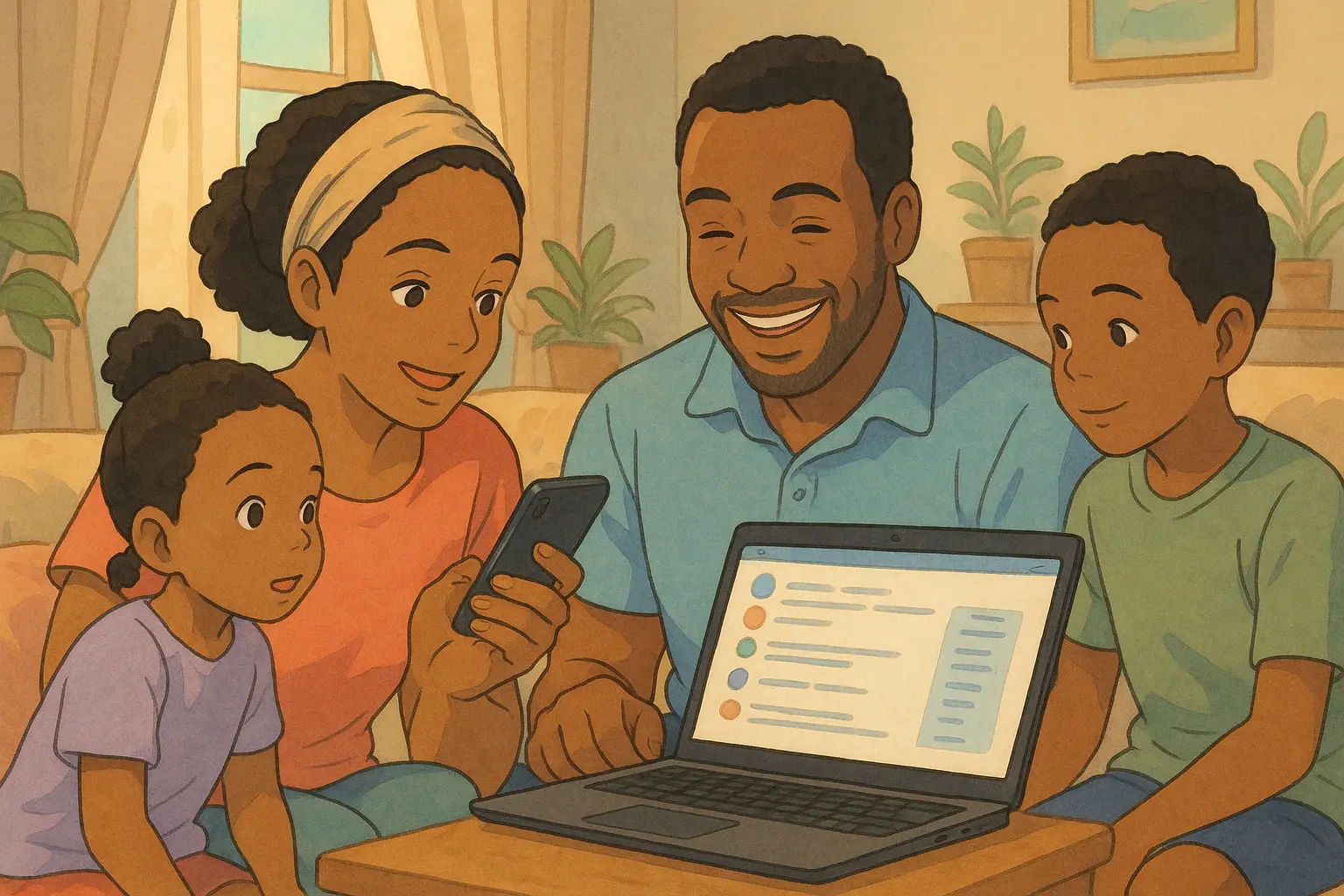
Why isolation makes language teaching harder (and how community helps)
Teaching your child an African language while living abroad can feel like a solitary journey. Without the daily reinforcement of extended family, you may find yourself questioning your methods, struggling to stay motivated, and wondering if the effort is worth it. This isolation isn't just emotional—it can directly impact your consistency and your child's progress.
That's where community steps in. Connecting with other diaspora parents who share your goals creates a powerful support network. These connections provide fresh ideas, encouragement when you're feeling discouraged, and a sense of accountability that keeps you moving forward. Knowing you're not alone makes the challenge feel lighter and the milestones more celebrated.
Three online spaces where diaspora parents gather
Facebook Groups Search for terms like “African diaspora parents,” “Bilingual parenting,” or your specific language community. Facebook groups often offer a mix of advice, resource sharing, and moral support. Many have weekly threads where members share wins, ask questions, and recommend books or apps. Because these groups are moderated, they tend to be safe spaces where you can be vulnerable about your struggles.
Subreddits Reddit communities such as r/languagelearning, r/AfricanParents, or r/linguistics provide a more anonymous, advice‑focused environment. Here you can find detailed discussions about methodology, research on bilingualism, and honest stories from other parents. The upvote/downvote system helps surface the most useful responses, and the sheer size of Reddit means there's always someone online to answer a question.
WhatsApp Communities Private, topic‑specific WhatsApp chats feel like a family group—fast‑paced, personal, and immediate. These are ideal for quick questions (“How do I say ‘homework’ in Yoruba?”), sharing a photo of your child's latest drawing labeled in your language, or organizing virtual meet‑ups. Because they're smaller and more intimate, they foster deeper connections over time.
How to engage without getting overwhelmed
It's easy to join every group and end up scrolling for hours without actually engaging with your child. To avoid burnout, set clear boundaries:
Remember, the goal isn't to be active in every platform—it's to find the one or two spaces that genuinely support you, so you can return to the real work of raising a bilingual child with renewed energy and connection.
Conclusion
Finding your tribe online isn't just about getting answers—it's about building a digital village that mirrors the extended family you might be missing. These communities remind you that your heritage is worth preserving, your efforts are seen, and your child's bilingual future is shared by many. Start by visiting one group this week, introduce yourself, and watch how a simple connection can transform your language‑teaching journey.