By Lionel Kubwimana
••5 min
A behind‑the‑scenes look at the three‑step process that ensures our bilingual books honor cultural nuances and actually work for families.
Creating a bilingual book that truly honors a culture is a three‑step journey—one that moves far beyond simple translation. Here’s how we do it, step by step.
Before a single word is written, we sit with elders, storytellers, and native speakers. We collect idioms, proverbs, and turns of phrase that carry the weight of generations. This isn’t about vocabulary lists; it’s about capturing the music of the language—the rhythm, humor, and subtle nuances that give it soul. Every story we tell is rooted in this research, ensuring authenticity that resonates with families who know the culture intimately.
A bilingual book must treat both languages as equals. We carefully plan the layout so that neither language feels secondary. Typography choices reflect the character of each script—whether it’s the flowing curves of Arabic‑script Swahili or the geometric clarity of N’Ko. Colors, illustrations, and visual motifs are chosen to evoke the cultural landscape the language comes from. The result is a book that feels cohesive, beautiful, and respectful to readers in both languages.
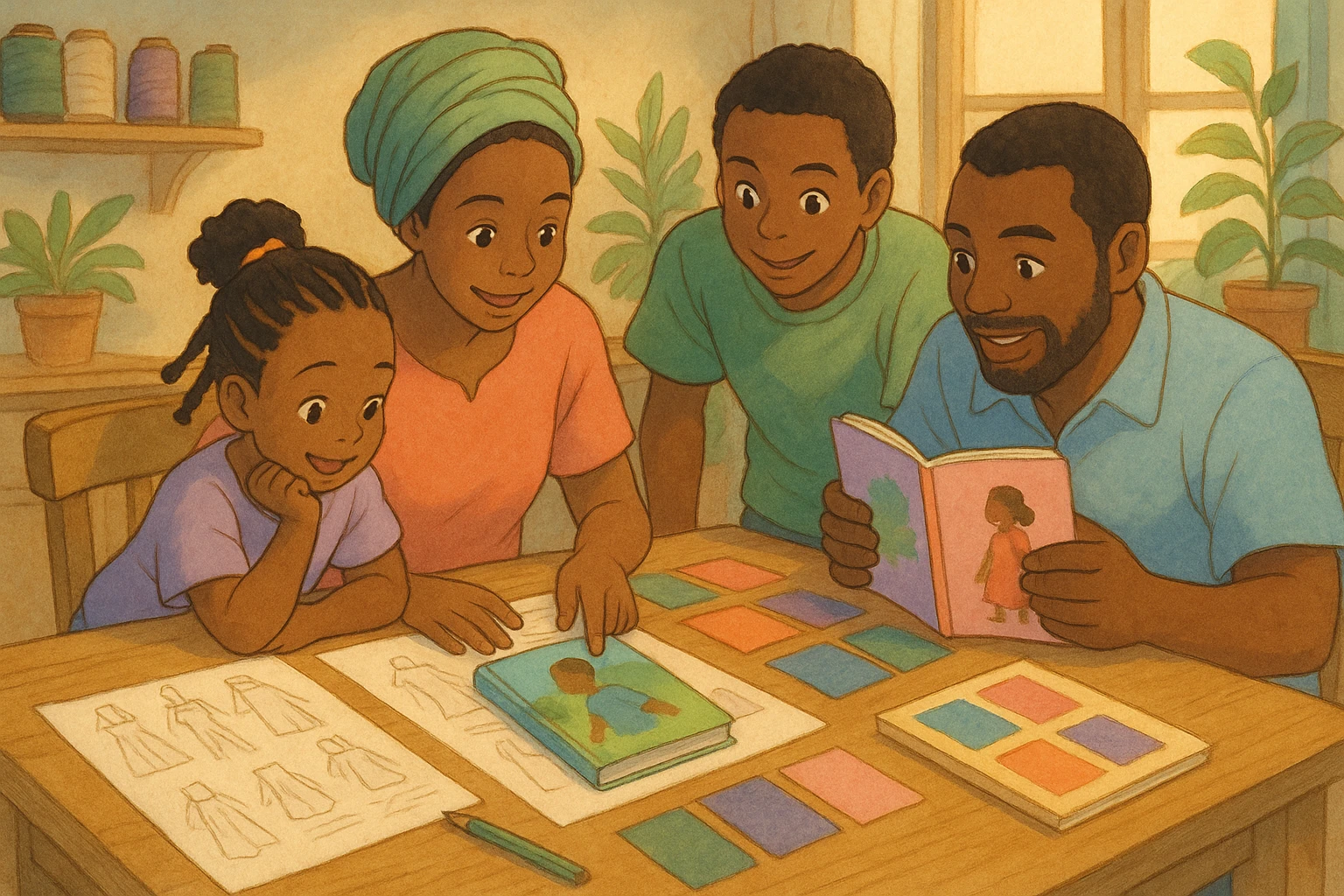
Once the design is locked, we put the book in the hands of real families—because a book that looks beautiful on a designer’s desk might still feel awkward during bedtime. We watch how parents read it aloud, note where kids’ eyes linger, and listen for questions that come up. Every round of feedback sharpens the text, adjusts the pacing, and often reveals a cultural nuance we’d missed. This iteration loop continues until the book feels natural, helpful, and, above all, loved.
Preserving a language isn’t just about vocabulary lists—it’s about preserving a way of seeing the world. A well‑crafted bilingual book carries the idioms, the humor, the warmth of a culture across generations. By investing in these three steps, we ensure that every book we publish isn’t just another children’s title, but a tangible bridge between a child’s present and their heritage.
If you’d like to see the results of this process in action, explore our latest collection of bilingual books—each one crafted with the same care we’ve described here.