Lingu.Africa Logo
Lingu.Africa
HomeBooksLearnTeachPricingDownloadPracticeTranslationAboutBlog
Lingu.Africa

Discover the beauty of African languages through bilingual books.

Our Books

  • Amharic Books
  • Bambara Books
  • Cape Verdean Kriolu Books
  • Ewe Books
  • Haitian Creole Books
  • Hausa Books
  • Igbo Books
  • Kikuyu Books
  • Kinyarwanda Books
  • Kirundi Books
  • Krio Books
  • Lingala Books
  • Luganda Books
  • Malagasy Books
  • Oromo Books
  • Pidgin Books
  • Shona Books
  • Somali Books
  • Swahili Books
  • Tigrinya Books
  • Twi Books
  • Wolof Books
  • Xhosa Books
  • Yemba Books
  • Yoruba Books
  • Zulu Books

Company

  • Translation Services
  • Blog
  • About Us
  • Languages
  • FAQ

Contact

Email: hello@lingu.africa

© 2026 Lingu.Africa•Terms•Privacy

Home
Blog
When Your Child Refuses to Speak Your Language: How to Respond Without Pressure

TABLE OF CONTENTS

  • Why children refuse
  • Three low‑pressure ways to invite speech
  • 1. Games that require the language
  • 2. Puppets or stuffed animals as “speakers”
  • 3. A “secret” language
  • What to say (and not say) when they still answer in English

When Your Child Refuses to Speak Your Language: How to Respond Without Pressure

By Lionel Kubwimana

•May 23, 2026•

4 min

Shift from demanding speech to creating safe, playful opportunities where speaking feels natural, not forced.
When Your Child Refuses to Speak Your Language: How to Respond Without Pressure

KEY HIGHLIGHTS

  • •Children's language refusal is more about comfort and social pressure than identity.
  • •Games, puppets, and 'secret' language create safe spaces for natural speech.
  • •Avoid corrective phrases; respond with acceptance and modeling.
parentinglanguagebilingualcommunicationchild development

Why children refuse

When your child chooses to answer you in English (or the community’s dominant language) despite your efforts to speak your heritage language with them, it’s easy to feel hurt or worried. You might wonder: Are they rejecting their roots? Do they not want to be part of our culture?

The truth is, children’s language refusal is rarely about identity. More often, it’s about comfort and social pressure.

  • Comfort: The heritage language may feel “harder” because they have fewer words, less practice, or because they associate it with “home rules” and English with “fun media.”
  • Social pressure: In a predominantly English-speaking environment, speaking another language can make a child feel different, exposed, or even teased. They may worry about standing out or being misunderstood.

Understanding this shifts the goal: instead of demanding speech, we create conditions where speaking the heritage language feels safe, natural, and rewarding.

Three low‑pressure ways to invite speech

1. Games that require the language

Turn simple board games or card games into language‑only zones. For example, “In this round, we can only speak Kinyarwanda to make a move.” The focus stays on play, not performance.

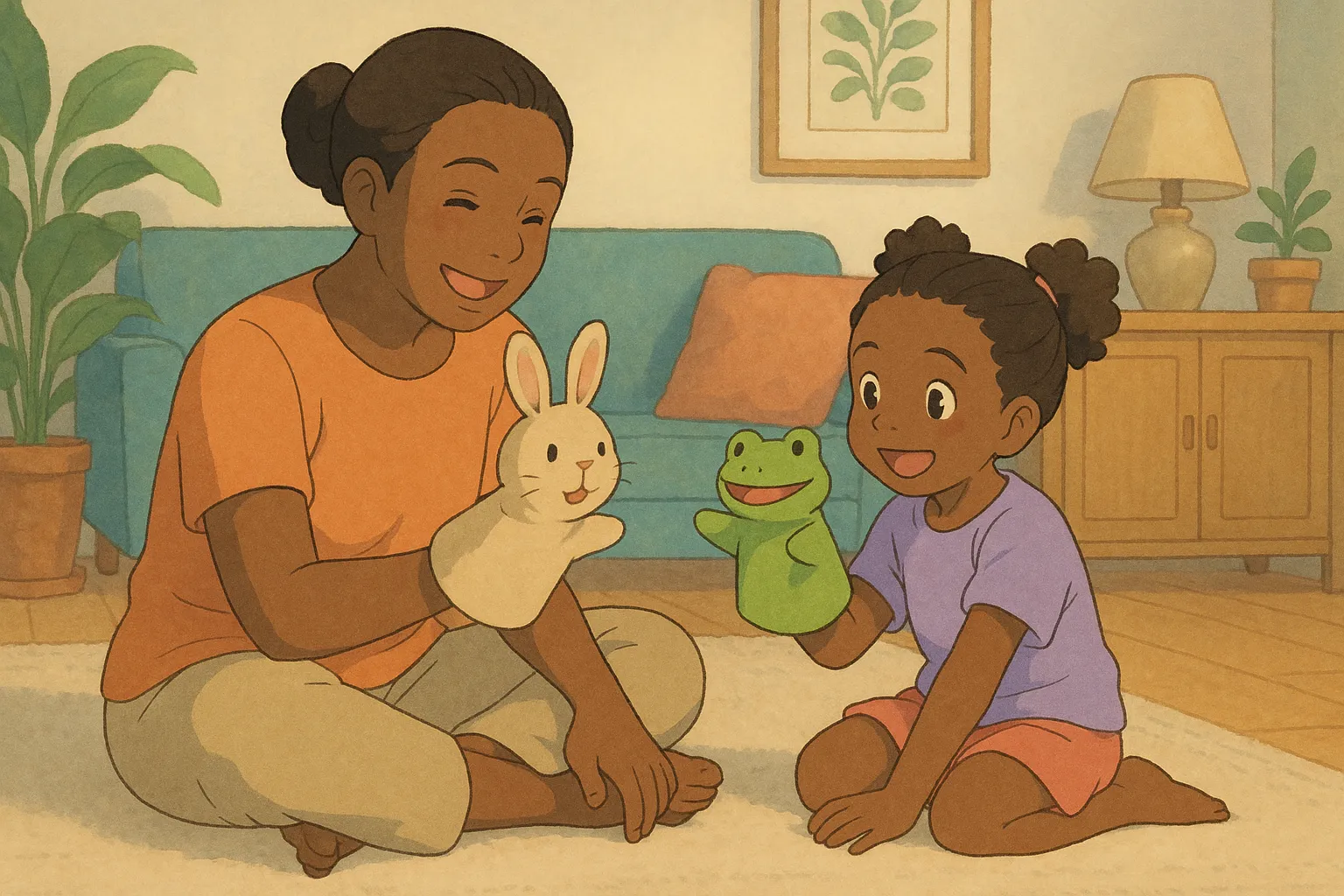
2. Puppets or stuffed animals as “speakers”

Give a puppet a name and a voice that only speaks your language. Let your child “talk to the puppet” while you operate it. The puppet becomes a safe intermediary—any “mistakes” belong to the puppet, not the child.

3. A “secret” language

Frame your heritage language as a family secret code. “When we’re out shopping, let’s use our secret words to decide what to buy.” This turns speaking into a game of inclusion rather than an obligation.

The key is to keep the interaction light and playful. If your child responds in English, gently repeat what they said in your language (without correcting them) and continue the game.

What to say (and not say) when they still answer in English

Avoid:

  • “Why won’t you speak our language?”
  • “Say it properly.”
  • “You’re not trying.”

These phrases create pressure and shame, which make speaking feel even more risky.

Instead, try:

  • Mirroring: “Oh, you want the red one? Ndashaka iyo nziza.” (Repeat their intent in your language.)
  • Acceptance: “It’s okay, you can tell me in English. I’ll answer in Kinyarwanda.”
  • Modeling: Use the language naturally in your own responses, without demanding they switch.

Remember, every child’s language journey is uneven. Some days they’ll surprise you with a full sentence; other days they’ll retreat to English. What matters is that they associate your heritage language with warmth, connection, and safety—not with tests or disappointment.

When you stop treating language as a requirement and start treating it as an invitation, you give your child the space to choose it on their own terms. And that choice, when it comes, will be infinitely more meaningful.

Previous ArticleProverbs as Cultural Bridges: How One Ancient Saying Can Connect Your Child to Their Roots
Start Your Language Learning Journey