By Lionel Kubwimana
••4 min
A practical method to turn video calls into comprehension‑building moments, helping your kids understand—and speak—the language your parents miss hearing.
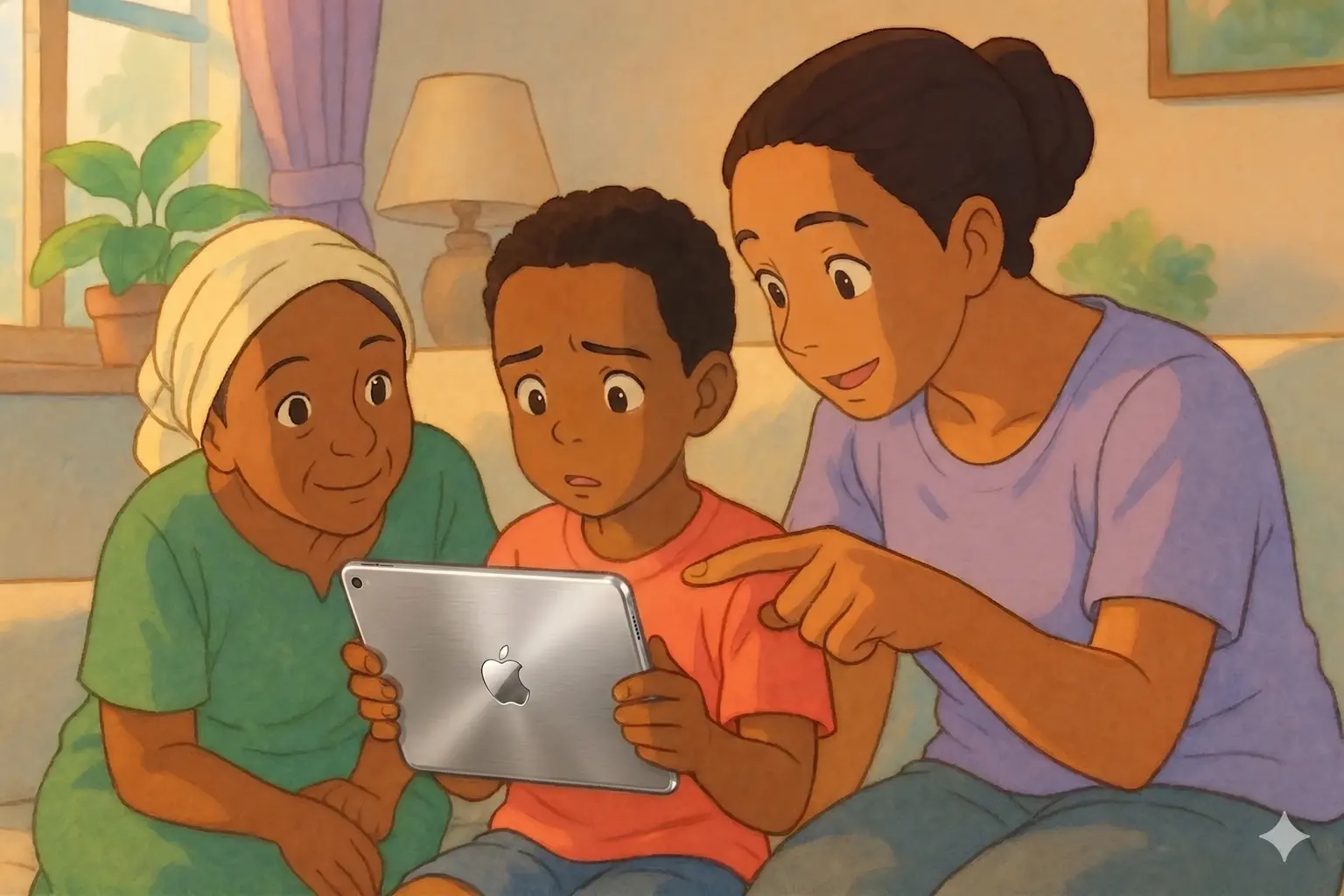
In many multilingual families, a common but painful reality unfolds: grandparents struggle to understand their own grandchildren. The primary culprit is language attrition—the gradual loss of a heritage language when children grow up in a dominant language environment. If the community language is French or English, and school, media, and friends all operate in that language, the child's brain naturally prioritizes it. Meanwhile, the heritage language—the one grandparents speak—becomes a “home language” used only in limited contexts, often with simplified vocabulary and grammar.
This isn't just about vocabulary gaps. The dominant language environment shapes cognitive patterns. Children think, dream, and solve problems in the community language. When they switch to the heritage language, they must consciously translate, which slows down conversation and makes spontaneous, nuanced exchange nearly impossible. Grandparents, who may have limited proficiency in the community language, feel shut out. They watch their grandchildren grow up in a linguistic world they can't fully enter.
The linguistic divide carries a heavy emotional toll. Parents feel guilt—they wanted their children to be bilingual, to maintain a bridge to their roots, but life got in the way. They see the disappointment in their own parents' eyes when a video call ends with a polite “Okay, bye” instead of a lively chat about the day.
For grandparents, the lost connection is a quiet grief. They miss hearing their grandchild's laughter in their mother tongue, sharing family stories in the language those stories were born in, passing on proverbs and folk wisdom that lose their essence in translation. This isn't just about communication; it's about cultural erosion. When language fades, so does the unique worldview, humor, and values embedded in it. The family's cultural identity becomes a museum piece—admired from a distance but no longer lived.
Children, too, sense the distance. They may feel awkward or embarrassed when they can't find the right words, leading them to avoid calls altogether. The very technology that should bring generations together—video calls—sometimes highlights the gap instead of bridging it.
The good news is that you don't need hours of language lessons or a total immersion environment. You can rebuild understanding in just 10 minutes a week by turning video calls into comprehension practice. Here’s how:
Instead of pressuring the child to produce fluent sentences, focus on receptive skills. Grandparents tell a short, simple story (2–3 minutes) in the heritage language, using gestures, pictures, or props. The child's job is to listen and show comprehension—by nodding, pointing to objects, or answering yes/no questions. This removes the performance anxiety and lets the brain absorb the language naturally.
Before the call, prepare a visual anchor—a photo, a toy, or a drawing related to the story. Grandparents hold it up as they speak. Visual support provides context clues that help the child infer meaning without translation. Over time, the child associates those keywords with the visuals, building a mental lexicon.
Limit the focused practice to 10 minutes. After that, let the call continue in whatever language flows naturally. The goal is consistent, positive exposure, not marathon sessions. End with a ritual—a song, a rhyme, or a simple phrase—that becomes a familiar, comforting routine.
When the child correctly points to the “cat” in the picture after hearing the heritage‑language word, celebrate it. Each tiny success reinforces the neural pathways and makes the next step easier. Over weeks, those minutes add up: comprehension improves, vocabulary grows, and the emotional connection deepens.
Schedule the 10‑minute slot at the same time each week. Treat it like a standing appointment. Involve siblings if possible—peer interaction motivates kids. Rotate who chooses the visual anchor to keep it engaging.
This approach doesn't just bridge the language gap; it transforms video calls from stilted obligations into meaningful shared experiences. Grandparents feel valued as teachers, children feel capable as learners, and parents witness the re‑knitting of family bonds.
The heritage language stops being a “problem” and becomes a living bridge—one that carries not just words, but love, identity, and continuity across generations. And it all starts with 10 minutes a week.