By Lionel Kubwimana
••6 min read
Turn weekly video calls with grandparents into engaging language lessons that strengthen family bonds across distances.
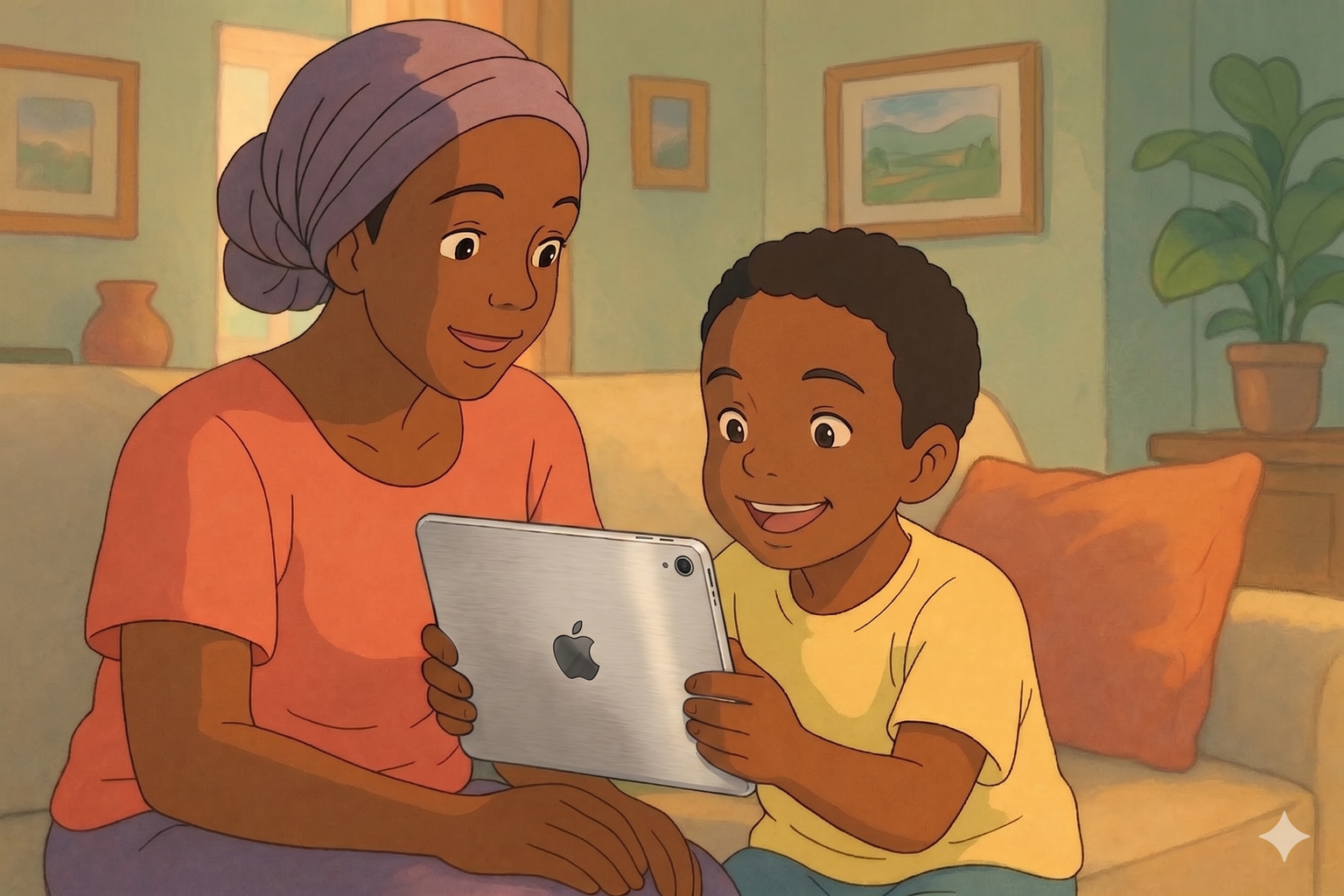
Weekly video calls can be more than a way to keep in touch—they can be a bridge connecting children to their heritage.
In the diaspora, maintaining an African language is often hard. Grandparents, frequently the strongest speakers, may live far away. Regular contact can become a lifeline for cultural identity—and a simple video call can double as a focused language lesson.
Here are ideas you might try, alone or in combination.
Theme the call: for example, cook a traditional dish “together” on camera. An elder walks the child through the steps, naming ingredients and actions in the heritage language. The shared activity gives words a context, which tends to make them stick.
Use real objects in frame: if the topic is clothing, each side can hold up items from the closet. The elder names each piece in the language, invites the child to repeat, and adds simple descriptions—color, pattern—with adjectives. That pattern works for many everyday themes.
Keep the “lesson” slice short—on the order of five minutes—so attention stays high. The whole call does not have to feel like class; even a short segment can reinforce what you are working on.
Notice small wins: when a child uses a new word or phrase correctly, name it in the moment. Over time, you can keep a light list of words they have used well as a visible record of progress.
Language is more than words. It is about identity, belonging, and memory. Treating some call time as intentional language practice is one way diaspora families can help the next generation stay connected to African languages—without needing a perfect plan to start.
You can begin with a single, simple call.
Set a clear objective: Before the call, decide on one or two language goals (e.g., naming five fruits, asking simple questions). Share these with your elder so they can prepare.
Use visual supports: Hold up real objects, point to pictures in a bilingual book, or screen‑share a short video clip. Visual cues help children connect the new word to its meaning.
Keep it conversational: Let the natural flow of the conversation lead the lesson. Avoid drilling; instead, wait for moments when a word or phrase fits naturally.
Record and review: With permission, record a few minutes of the call. Listen together afterward and reinforce the new vocabulary. Over time, you’ll build an audio library of your family’s pronunciation.
Celebrate and reflect: After each call, ask your child what they learned and how they felt. Highlight their progress—even a single new word is a victory.
Authentic accent exposure: Children hear the language spoken by a native speaker in real time, picking up intonation and rhythm that textbooks can’t provide.
Strengthened family ties: The shared activity deepens the emotional bond between children and grandparents, making language a vehicle for love and connection.
Cultural continuity: Beyond words, grandparents share stories, proverbs, and family history—passing down a holistic cultural heritage.
Flexible and low‑cost: No travel, no formal curriculum. A weekly 20‑minute call fits into busy schedules and requires only a smartphone or tablet.
Resources: Lingu.Africa's bilingual books illustrate daily life and help bridge language gaps for African diaspora families using video calls.