By Lionel Kubwimana
••4 min
What to do when your child replies in English—and how to turn those moments into playful language opportunities.
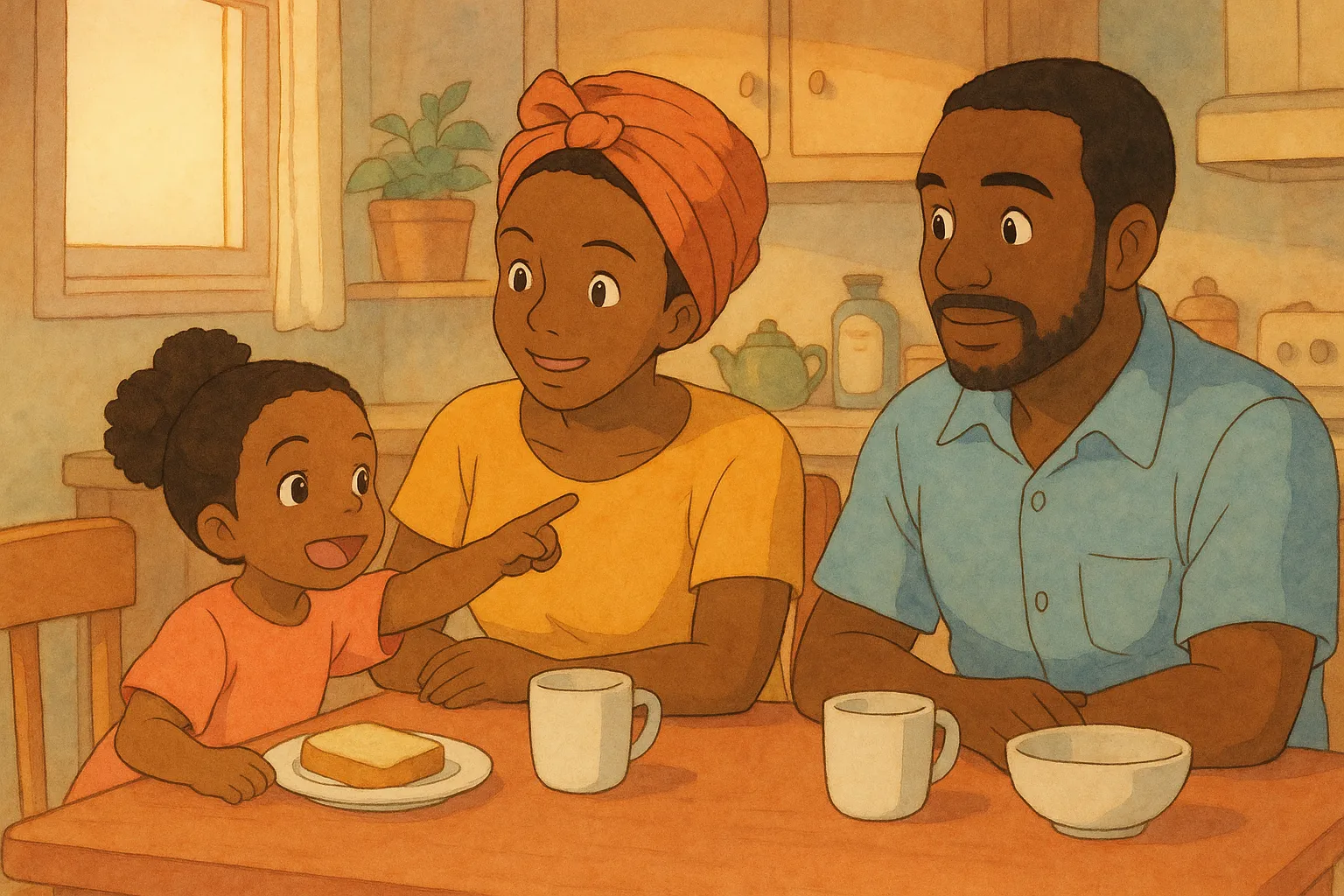
You ask your child a simple question in your mother tongue—maybe in Kinyarwanda, Swahili, or Yoruba—and they answer in English. Again.
That moment can feel like a tiny defeat. After all the effort you've put into speaking your language at home, reading stories, singing songs, they still reach for the dominant language. It's tempting to think they're rejecting their heritage, or that you've failed.
But here's the truth: it's not personal. And understanding why is the first step to turning frustration into opportunity.
Children are efficiency experts. They'll use the language that feels easiest, most available, and most rewarded in their daily environment. If English is what they hear at school, on TV, in apps, and from most of their friends, it becomes their default "easy" mode.
Neurologically, their brains are wired to follow the path of least resistance. Switching languages requires extra cognitive effort—something a tired or excited child might avoid. This isn't a rejection of your culture; it's just their brain conserving energy.
It's also worth remembering that answering in English doesn't mean they don't understand your language. Often, they understand perfectly—they just find it faster to reply in the language they use more frequently.
Pressure backfires. Correction that feels like criticism can make children associate your language with stress rather than warmth. Instead, try these gentle nudges:
The goal isn't perfection. It's creating positive associations that make them want to use your language.
When you feel that flicker of frustration, pause. That's your signal to get creative. Here are a few simple games that turn language switching into play:
Every time your child answers in English, see it not as a setback but as a data point. It tells you which contexts feel "English‑only" to them. Use that information to sprinkle more of your language into those moments—through games, through curiosity, through connection.
Your language isn't just vocabulary and grammar. It's the sound of home, the rhythm of your childhood, the carrier of your family's stories. When you respond to their English answers with patience and playfulness, you're teaching them that your language is a place of safety and joy.
And that's something no dominant language can ever replace.