Lingu.Africa Logo
Lingu.Africa
HomeBooksLearnTeachPricingDownloadTranslationAboutBlog
Lingu.Africa

Discover the beauty of African languages through bilingual books.

Our Books

  • Amharic Books
  • Bambara Books
  • Cape Verdean Kriolu Books
  • Ewe Books
  • Haitian Creole Books
  • Hausa Books
  • Igbo Books
  • Kikuyu Books
  • Kinyarwanda Books
  • Kirundi Books
  • Krio Books
  • Lingala Books
  • Luganda Books
  • Malagasy Books
  • Oromo Books
  • Pidgin Books
  • Shona Books
  • Somali Books
  • Swahili Books
  • Tigrinya Books
  • Twi Books
  • Wolof Books
  • Xhosa Books
  • Yemba Books
  • Yoruba Books
  • Zulu Books

Company

  • Translation Services
  • Blog
  • About Us
  • Languages
  • FAQ

Contact

Email: hello@lingu.africa

© 2026 Lingu.Africa•Terms•Privacy

Home
Blog
Connection Through Storybooks: How One Bilingual Book Can Turn Bedtime into a Language Lesson

TABLE OF CONTENTS

  • Why storybooks are the perfect Trojan horse for language learning
  • How to choose a bilingual book that matches your child's interests and your language level
  • Reading techniques that maximize engagement and retention (without turning into a teacher)

Connection Through Storybooks: How One Bilingual Book Can Turn Bedtime into a Language Lesson

By Lionel Kubwimana

•May 1, 2026•

3 min

Discover how bilingual storybooks can seamlessly weave your heritage language into your child's favorite daily ritual.
Connection Through Storybooks: How One Bilingual Book Can Turn Bedtime into a Language Lesson

KEY HIGHLIGHTS

  • •Bilingual storybooks turn bedtime into a language lesson without extra effort
  • •Visual cues and repetition reinforce vocabulary naturally
  • •Choosing the right book matches child's interests and parent's language level
storybooksbilingualparentinglanguage learningbedtime

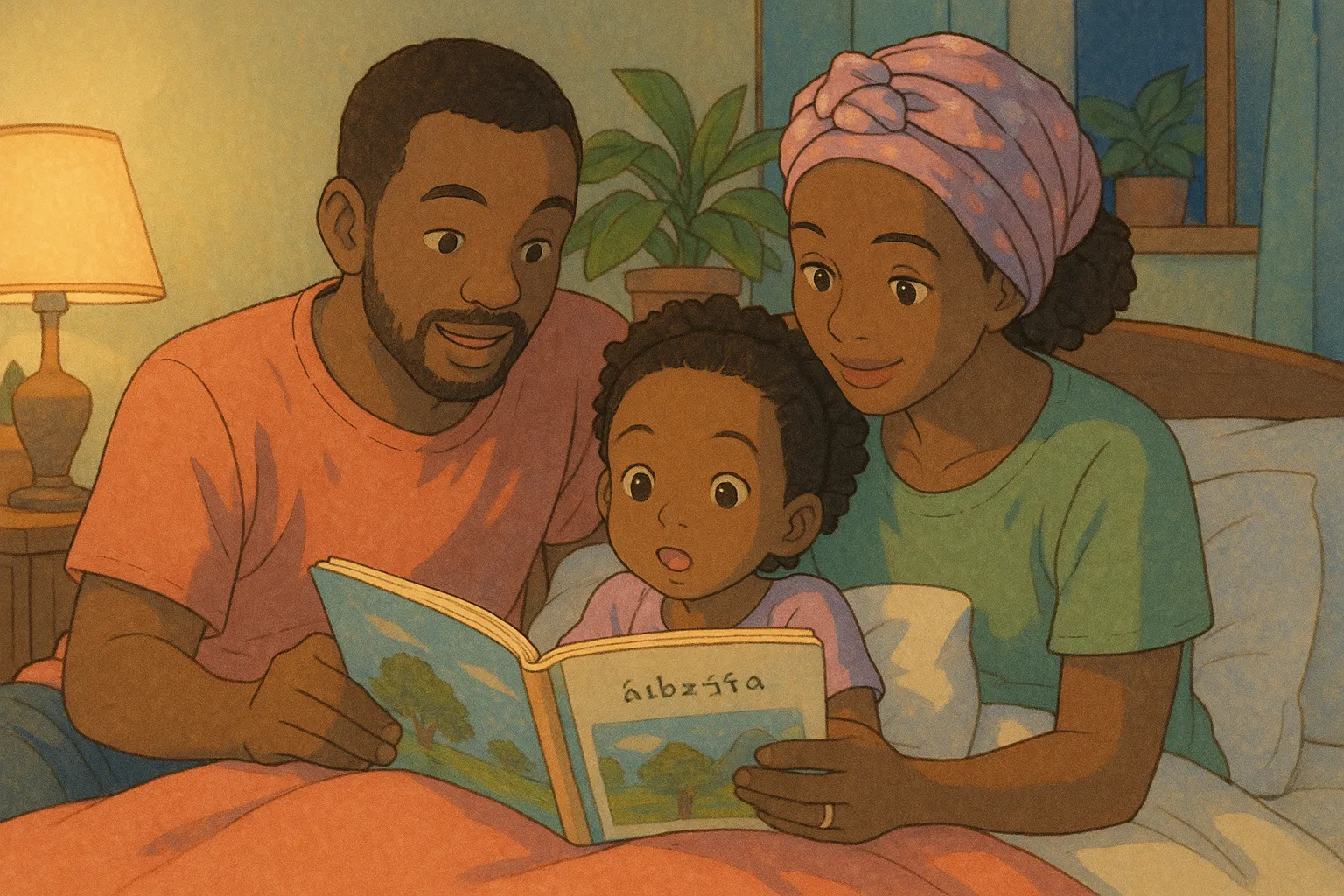
Bedtime stories are a cherished ritual in many families. They offer a moment of calm, connection, and imagination. For parents raising bilingual children, this daily routine holds an extra secret: it's the perfect Trojan horse for language learning. By introducing a bilingual storybook into the mix, you can seamlessly weave your heritage language into your child's favorite nightly activity—without adding extra effort or turning into a formal teacher.

Why storybooks are the perfect Trojan horse for language learning

Children thrive on familiarity and repetition. The bedtime story routine is already a fixed point in their day, a safe space where they expect comfort and engagement. This predictable structure makes it an ideal vehicle for language exposure. Visual cues—the illustrations on each page—provide immediate context, helping children connect new words to concrete images. When you read the same book night after night (as children often demand), the repetition reinforces vocabulary naturally. The child isn't “studying” a language; they're simply enjoying a story, and the language sticks because it's tied to emotion, imagery, and routine.

How to choose a bilingual book that matches your child's interests and your language level

Not every bilingual book will fit your family's needs. Look for books that align with your child's current passions—whether that's dinosaurs, princesses, vehicles, or animals. If the topic already excites them, they'll be more eager to engage, even if some of the words are unfamiliar. At the same time, be honest about your own comfort level in the heritage language. If you're still rebuilding your fluency, pick a book with simple sentence structures and vocabulary you can confidently pronounce. Many bilingual editions place both languages side-by-side on the same page, which can be a helpful crutch for parents, too. The goal is to create a positive, low-pressure experience for everyone.

Reading techniques that maximize engagement and retention (without turning into a teacher)

Once you've selected the right book, a few simple techniques can amplify its language benefits:

  • Point and name: As you read, gently point to the corresponding part of the illustration when you say a new word. This builds a direct mental link between the sound and the image.
  • Mix languages naturally: Don't feel compelled to read the entire text in both languages every time. You might read the page first in the dominant language (e.g., English), then again in the heritage language, or alternate pages. Follow your child's interest—if they ask a question in one language, answer in that language, then repeat the key idea in the other.
  • Ask open-ended questions: “What do you think will happen next?” or “How do you think the character feels?” Encourage responses in whichever language they choose. This keeps the interaction conversational rather than instructional.
  • Embrace sound effects and voices: Children love playful reading. Use different voices for characters, add animal sounds, or exaggerate emotional tones. These auditory hooks make the language more memorable and fun.

Remember, the objective isn't to quiz your child or achieve perfect pronunciation. It's to create warm, positive associations with the heritage language. Over time, these shared story moments will build a foundation of vocabulary, cultural connection, and the unshakable feeling that your language belongs right here, in the coziest part of the day.

So tonight, grab a bilingual book, snuggle up, and let the story do the work. You're not just reading a book—you're planting seeds of language that will grow alongside your child.

Previous ArticleNostalgia of Childhood Songs: How the Music You Grew Up With Can Become Your Child's Favorite
Start Your Language Learning Journey