By Lionel Kubwimana
••4 min
Start a simple, low‑pressure playgroup where families take turns hosting and leading 30‑minute language‑focused activities, creating peer motivation and shared accountability.
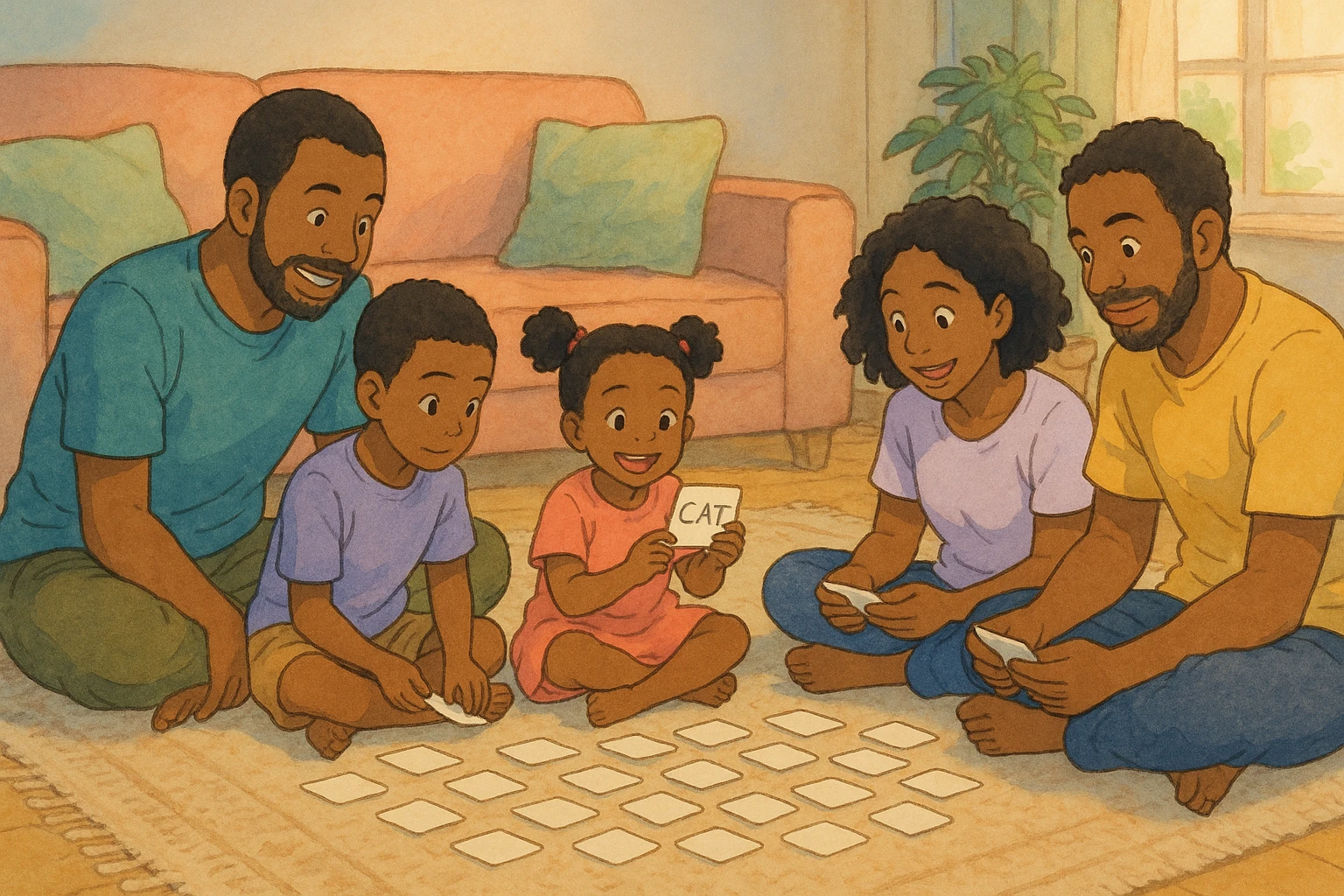
Teaching your child your heritage language can sometimes feel like shouting into a void. You repeat words, play songs, point to objects—and yet, when you look around your neighborhood, you see no other families doing the same. That isolation isn’t just emotional; it makes the practical work of language transmission harder. Children thrive on peer examples, on hearing other voices speak the same sounds, on feeling that the language lives outside your living room. The moment you find one other family who shares your goal, the whole dynamic shifts. Instead of being the sole “language police,” you become part of a small, supportive community where motivation is mutual, accountability is shared, and the work feels lighter because you’re no longer doing it alone.
Language learning is inherently social. When a child sees that only one parent speaks a language, they unconsciously rank it as “less useful” than the dominant community tongue. Neuroscience confirms that peer reinforcement strengthens neural pathways: hearing other children use the same vocabulary makes the words stickier, more “real.” In diaspora contexts, where the heritage language has no institutional support, this peer effect is even more critical.
A 2022 study of bilingual households in Canada found that children who had regular playdates with another family speaking the same minority language showed a 40% higher retention of that language over two years compared to children who only heard it at home. The reason wasn’t more hours of exposure—it was the social validation that came from seeing peers engage with the language joyfully, without pressure.
When you partner with another family, you create a micro‑community that normalizes the language. Your child isn’t just learning words; they’re learning that those words belong to a circle of friends, to a shared identity. The shift from “my mom’s weird language” to “our secret club code” is subtle but powerful.
You don’t need a crowd—just one other family is enough. Here are three practical places to look:
Search for “[Your Language] Families in [Your City]” or “[Your Country] Expats in [Your Region].” These groups often have parents who are quietly looking for the same connection. Post a simple, friendly message: “Looking for another family who’s teaching [Language] to kids ages [X–Y]. Would love to arrange a casual playdate where we can practice together.”
Many cities have cultural associations that run weekend language classes. Even if you don’t enroll, attend one of their open events—a holiday celebration, a food festival—and strike up conversations. The parents there are already invested in language preservation; they’re your best potential partners.
Ask teachers if they know of any other families who speak your language. Schools often maintain diversity lists (with consent) and can facilitate an introduction. Alternatively, look for families with names that match your cultural background and approach them gently at pickup time.
The goal isn’t to find a perfect match, but a willing one. You’re not searching for a fluent speaker—you’re searching for a family who shares your desire to keep the language alive.
Once you’ve connected with another family, keep the playdates short, sweet, and structured enough to ensure language practice happens. Here’s a formula that has worked for dozens of diaspora families:
Greeting song (5 minutes)
Start with a simple hello song in your language. Sit in a circle, clap hands, and sing together. The repetition builds routine, and music lowers anxiety for both kids and parents.
Vocabulary game (15 minutes)
Choose a theme (animals, food, clothing) and prepare picture cards. Play a simple game like “What’s this?” or “Find the card.” Let the children take turns being the “teacher.” Keep it playful—no corrections, just encouragement.
Snack in the target language (10 minutes)
Serve a snack that ties to your culture (fruit, traditional biscuits, juice). Use the language to ask for items (“Can I have the mango, please?”) and model simple phrases. Eating together creates a natural, low‑pressure setting for conversation.
This 30‑minute format respects everyone’s time, prevents overwhelm, and ensures that language practice is the centerpiece without feeling like a lesson. Rotate hosting duties each week so no one family bears the burden.
You don’t need a grand plan—just one other family and 30 minutes a week. That small circle becomes a lifeline, a source of laughter, and a tangible reminder that you’re not alone in this journey. The language that felt fragile in isolation grows stronger each time your child hears it from a friend’s mouth. Start this week. Send that message, make that call. Your child’s heritage—and your own sense of belonging—will thank you for it.