By Lionel Kubwimana
••4 min
Nostalgic for the stories you heard as a child? They’re a secret weapon for teaching your heritage language—here’s how to bring them back.
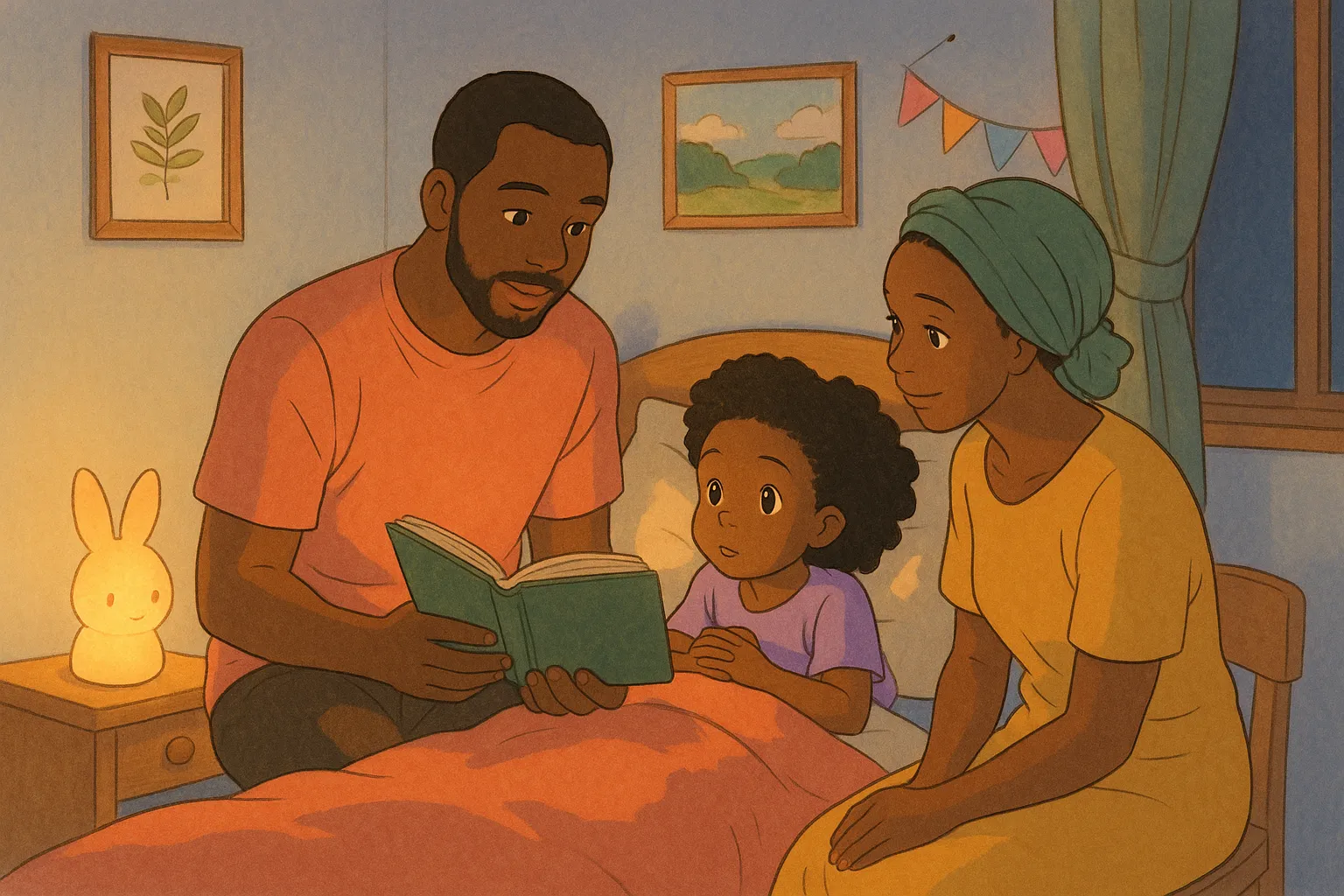
Do you remember the stories your parents told you at bedtime? The ones that made you feel safe, loved, and connected to your roots? Those stories are more than just memories—they’re a powerful tool for passing your heritage language to your children.
In today’s busy world, it’s easy to feel like you don’t have time to teach your mother tongue. But bedtime offers a daily opportunity for language immersion that’s both intimate and low-pressure. By reviving the stories you heard as a child, you can give your kids the gift of language without adding extra tasks to your day.
Bedtime stories are not just entertainment; they are cultural vessels. Each story carries vocabulary, grammar, idioms, and values unique to your heritage. When you tell a story you heard from your parents, you’re not just repeating words—you’re passing down a piece of your identity.
Children absorb language best through repetition and emotional connection. A beloved story told night after night embeds phrases and sentence structures naturally. The emotional warmth of the moment makes the language stick. This is why many of us still remember phrases from childhood tales, even if we haven’t spoken the language in years.
You might worry that you’ve forgotten the details. That’s okay—the emotional core matters more than every plot point. Start by asking family members for their versions. Often, siblings or cousins remember different parts. Piece together what you can, and don’t be afraid to fill gaps with your own creativity.
If the original story feels too complex for young children, simplify it. Keep the main characters and the moral, but adjust the language to your child’s level. Use gestures, expressions, and tone to convey meaning. The goal is not a perfect recitation but a shared experience.
Consistency is more important than duration. Ten minutes every night is more effective than an hour once a week. Create a bedtime routine that includes a story in your heritage language. You can use a special blanket, a dim light, or a favorite stuffed animal to signal “story time.”
Keep the pressure low. If you stumble over words, laugh it off. If your child asks for a translation, give it casually. The aim is to associate the language with comfort and joy, not with correction or stress.
You don’t need a perfect plan—just start. Pick one story, even if it’s short. Tell it tonight. Your child may not understand every word at first, but they’ll feel the love in your voice. Over time, the language will grow alongside your relationship.
Those bedtime stories your parents told you are a legacy waiting to be passed on. By sharing them with your children, you’re not only teaching a language—you’re weaving a thread of continuity that ties generations together. And that’s a story worth telling.