By Lionel Kubwimana
••4 min
When your child speaks their first word in your heritage language, that surge of pride is more than a feeling—it's proof your efforts are working.
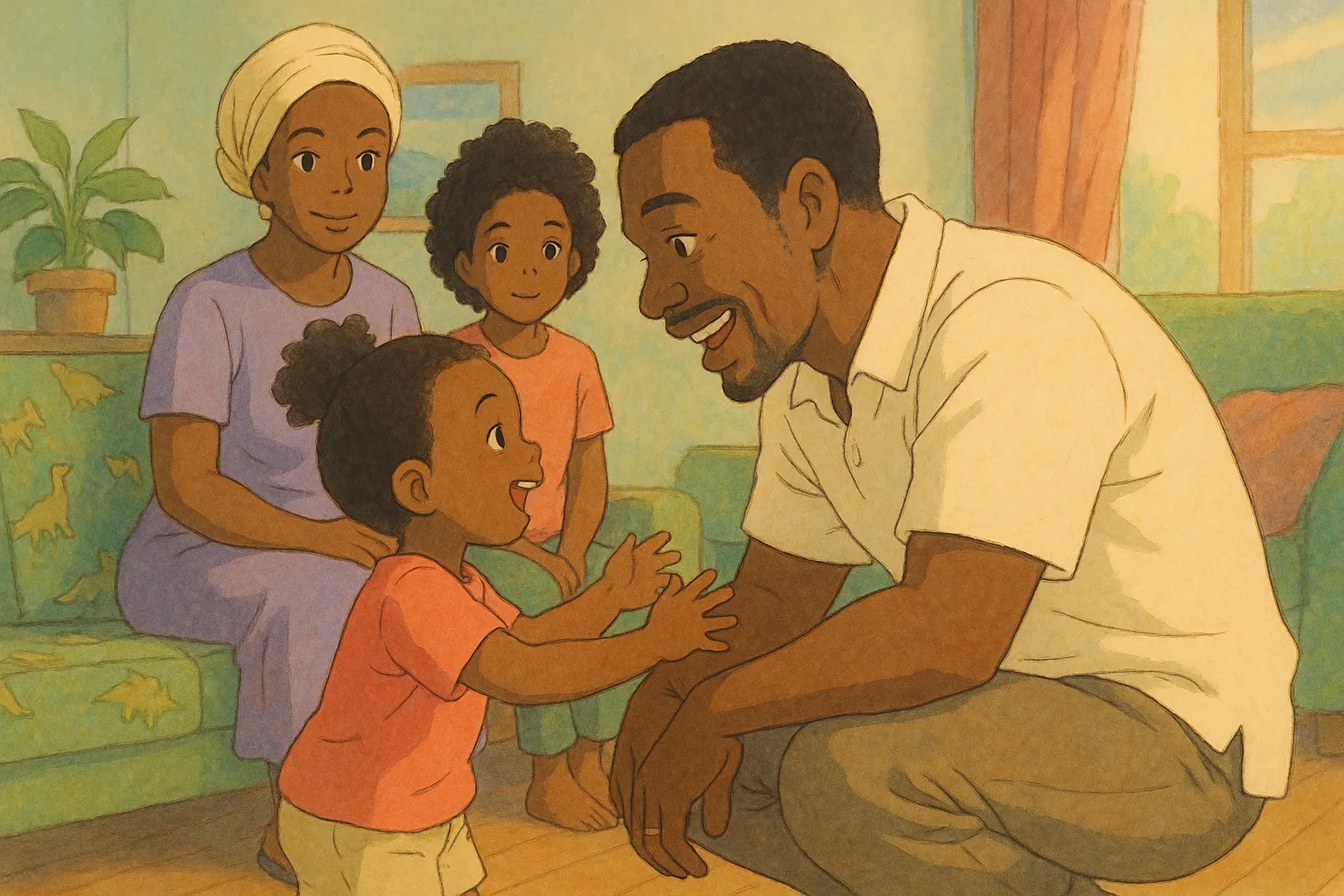
That first word isn't just a sound—it's a bridge. When your child looks at you and says “mama” or “dada” in your heritage language, something shifts. You’ve spent months, maybe years, singing lullabies, naming objects, repeating phrases, and wondering if any of it is sinking in. Then, out of nowhere, they give you a word that belongs to your family, your culture, your history.
That moment is a tangible sign of progress. It’s evidence that your efforts aren’t in vain. More importantly, it’s a connection—a tiny thread that ties your child to a lineage that stretches across oceans and generations. In that instant, you’re not just a parent teaching a language; you’re a keeper of a flame that could have easily flickered out in a foreign land.
You can’t force magic, but you can create the conditions for it to appear. Here are a few gentle ways to invite more of those precious first words:
1. Follow their curiosity. Kids learn best when they’re interested. If your toddler is obsessed with trucks, name every truck you see in your language. If they love bananas, make “banana” a word they hear daily in your tongue. The vocabulary that sticks is the vocabulary that matters to them.
2. Make it a game, not a lesson. Turn naming into a peek‑a‑boo moment. Hide a toy and announce its name when you reveal it. Clap when they mimic the sound. Keep it light, keep it fun, and never let language practice feel like homework.
3. Use “scripted” routines. Bedtime, mealtime, bath time—these are natural language anchors. Say the same phrases each night in your language: “Time to brush teeth,” “Let’s put on pajamas,” “Goodnight, my love.” Repetition in a safe, predictable context builds comfort and recall.
4. Involve other speakers. If you have family members or friends who speak the language, create opportunities for your child to hear different voices and accents. A video call with a grandparent who only speaks the heritage language can work wonders.
5. Celebrate every attempt. Whether it’s a full word, a syllable, or even a gesture that matches the meaning, acknowledge it with a smile, a hug, or a cheerful “You said it!” Positive reinforcement builds confidence, and confidence leads to more words.
There will be days when it feels like you’re speaking into a void. Your child might answer in the dominant language, or seem uninterested, or even push back. That’s when you call on the memory of that first word.
Pride is a renewable fuel. Each time you remember that surge of joy, you’re reminded why you started. Keep a mental (or actual) album of those tiny victories: the first word, the first sentence, the first time they correct your pronunciation. On the hard days, flip through that album.
Also, shift your metric of success. Instead of measuring fluency, measure connection. Did you share a laugh over a word today? Did you sing a song together? Did you tell a story that made their eyes light up? Those are wins. The language is the vehicle; the relationship is the destination.
That first word is just the beginning. It opens a door to a world of identity, belonging, and cultural continuity. One day, your child will use that language to speak to their own children, and the thread you spun with that first word will become a rope that ties generations together.
So when you hear that first word, let yourself feel the pride—then let that pride carry you through the next word, and the next, and the next. You’re not just teaching a language; you’re gifting a legacy.