Lingu.Africa Logo
Lingu.Africa
HomeBooksLearnTeachPricingDownloadPracticeTranslationAboutBlog
Lingu.Africa

Discover the beauty of African languages through bilingual books.

Our Books

  • Amharic Books
  • Bambara Books
  • Cape Verdean Kriolu Books
  • Ewe Books
  • Haitian Creole Books
  • Hausa Books
  • Igbo Books
  • Kikuyu Books
  • Kinyarwanda Books
  • Kirundi Books
  • Krio Books
  • Lingala Books
  • Luganda Books
  • Malagasy Books
  • Oromo Books
  • Pidgin Books
  • Shona Books
  • Somali Books
  • Swahili Books
  • Tigrinya Books
  • Twi Books
  • Wolof Books
  • Xhosa Books
  • Yemba Books
  • Yoruba Books
  • Zulu Books

Company

  • Translation Services
  • Blog
  • About Us
  • Languages
  • FAQ

Contact

Email: hello@lingu.africa

© 2026 Lingu.Africa•Terms•Privacy

Home
Blog
Preserving Cultural Roots: The 3‑Item 'Heritage Box' Every Diaspora Family Needs

TABLE OF CONTENTS

  • Why physical objects anchor cultural memory better than words alone
  • The three‑item rule: story, proverb, recipe (and how to choose yours)
  • 1. A story
  • 2. A proverb
  • 3. A recipe
  • How to use the heritage box as a monthly family ritual
  • What happens after the first year?
  • Start this weekend

Preserving Cultural Roots: The 3‑Item 'Heritage Box' Every Diaspora Family Needs

By Lionel Kubwimana

•Jul 4, 2026•

6 min

Overwhelmed by how to pass on your culture? This simple 'heritage box' system uses just three physical items to create tangible family connections that last generations.
Preserving Cultural Roots: The 3‑Item 'Heritage Box' Every Diaspora Family Needs

KEY HIGHLIGHTS

  • •A physical 'heritage box' with just three items — a story, a proverb, a recipe — makes culture tangible for children
  • •Monthly family rituals transform the box from a passive container into a living connection to your roots
  • •Start small: choose items that already exist in your home; perfection is not the goal
parentingdiasporaheritagecultural preservationfamily rituals

Let’s be honest: teaching your children about your culture while living abroad can feel like an impossible, never‑ending to‑do list. You worry they’ll lose the language. You feel guilty for not having enough time. You’re unsure where to start.

What if you could turn that overwhelming mountain into a simple, physical box you can hold in your hands?

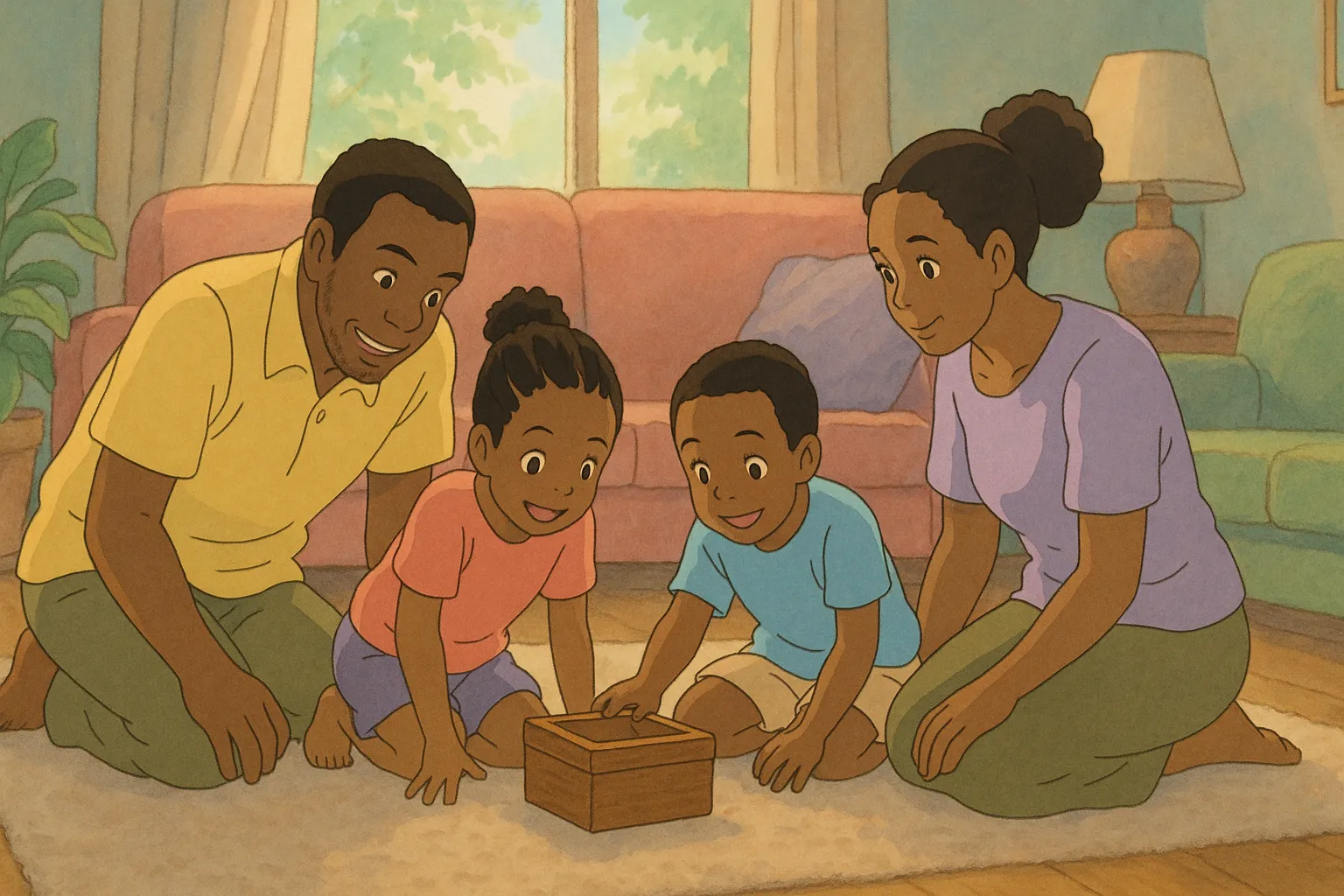
This is the “heritage box” — a tangible, three‑item system I’ve used with my own family to anchor our cultural memory without stress. No complicated lesson plans, no fluency required, no guilt. Just a box that sits in our living room and, once a month, becomes a bridge to the world we come from.

Why physical objects anchor cultural memory better than words alone

Language is fluid, stories fade, but a physical object you can touch carries a weight that words alone can’t match. A study in the Journal of Applied Research in Memory and Cognition found that material cues — objects tied to personal or cultural narratives — improve long‑term recall by up to 40% compared to purely verbal accounts.

For diaspora families, this is especially powerful. When a child holds a worn‑out recipe card in their hands, they’re not just reading ingredients; they’re connecting with the grandmother who wrote it. When they trace the shape of a talisman, they’re touching the same contours their ancestors touched. The object becomes a tangible proof of belonging in a world where their identity is often questioned.

“But what if I don’t have heirlooms?”

You don’t need heirlooms. A heritage box is built from what you already have. The goal isn’t museum‑quality artifacts; it’s about creating meaningful anchors that your children can see, hold, and associate with your family’s story.

The three‑item rule: story, proverb, recipe (and how to choose yours)

In my family, we’ve settled on three categories that cover the essentials of cultural transmission:

1. A story

Pick a single, memorable story from your childhood or your parents’ childhood. It doesn’t have to be epic — a funny mishap, a moment of kindness, a lesson learned the hard way.

  • How to choose: Think of a story you’ve told more than once. If you can’t think of one, ask older relatives for “the story about…” If you’re still stuck, start with a well‑known folktale from your culture.
  • Physical form: Write it on a piece of nice paper, or record a short voice memo on your phone and print a QR code that links to it. Place the paper or code in an envelope labeled “Our Story.”

2. A proverb

Proverbs distill generations of wisdom into one line. They’re cultural shorthand — easy to remember, rich in meaning.

  • How to choose: Pick one proverb you genuinely believe in. In our home, we use “A tree without roots cannot stand.” It’s a literal and metaphorical anchor.
  • Physical form: Write the proverb on a small card. If your language uses a non‑Latin script, include both the original script and a transliteration/translation. Decorate the card if you like.

3. A recipe

Food is the most visceral carrier of culture. One recipe can evoke a dozen memories of taste, smell, and shared meals.

  • How to choose: Pick a dish your family actually eats — not the most elaborate festival meal, but the simple, comforting one you make regularly.
  • Physical form: Hand‑write the recipe on an index card. If possible, add a tiny bag of the most distinctive spice or ingredient (e.g., a few grains of selim pepper, a piece of dried fish).

Why only three? Because any more becomes a burden. Three is manageable, memorable, and leaves room for curiosity. It’s a start, not a final collection.

How to use the heritage box as a monthly family ritual

The box itself can be anything — a wooden chest, a decorated shoebox, a small basket. Place your three items inside.

Once a month, set aside 20–30 minutes for “Heritage Box Time.” No screens, no distractions.

  1. Open the box together. Let the children take out the items.
  2. Engage one item. Alternate monthly:
    • Story Month: Read the story aloud. Ask: “What would you have done?” “What do you think happened next?”
    • Proverb Month: Discuss the proverb. Ask: “Have you seen this be true? When?” Create a simple drawing together that illustrates it.
    • Recipe Month: Cook the recipe together. Even young kids can stir, pour, or wash vegetables. Talk about who taught you this dish.
  3. Add a small new trace. After you discuss the item, add one new thing to the box: a child’s drawing about the story, a photo of the cooked meal, a sentence they say about the proverb. This shows the culture is alive and growing with them.

The ritual does three things: it makes culture a regular, expected part of family life; it creates positive, low‑pressure associations; and it builds a physical archive of your family’s journey.

What happens after the first year?

You might have 12 new traces in the box. You might decide to swap the original proverb for a new one. You might add a fourth category — a song, a photograph, a piece of fabric.

The system bends to your family’s rhythm. The goal isn’t a perfect, finished collection; it’s the habit of remembering together.

Start this weekend

  1. Find a container.
  2. Spend 15 minutes choosing your story, proverb, and recipe.
  3. Put them in the box.
  4. Schedule your first Heritage Box Time on your calendar.

That’s it. No fluency required, no ancestral village needed, no guilt allowed. You are already enough to begin. The heritage box isn’t about preserving a frozen past; it’s about giving your children a tangible handle on their roots so they can grow into their future with both feet firmly planted.

What will you put in your box?

Previous ArticleBilingual Storytelling Magic: How One Simple Swap Transforms Bedtime
Start Your Language Learning Journey