By Lionel Kubwimana
••5 min
Want to introduce your native language at bedtime without turning storytime into a lesson? This one‑sentence swap method makes it feel like magic, not work.
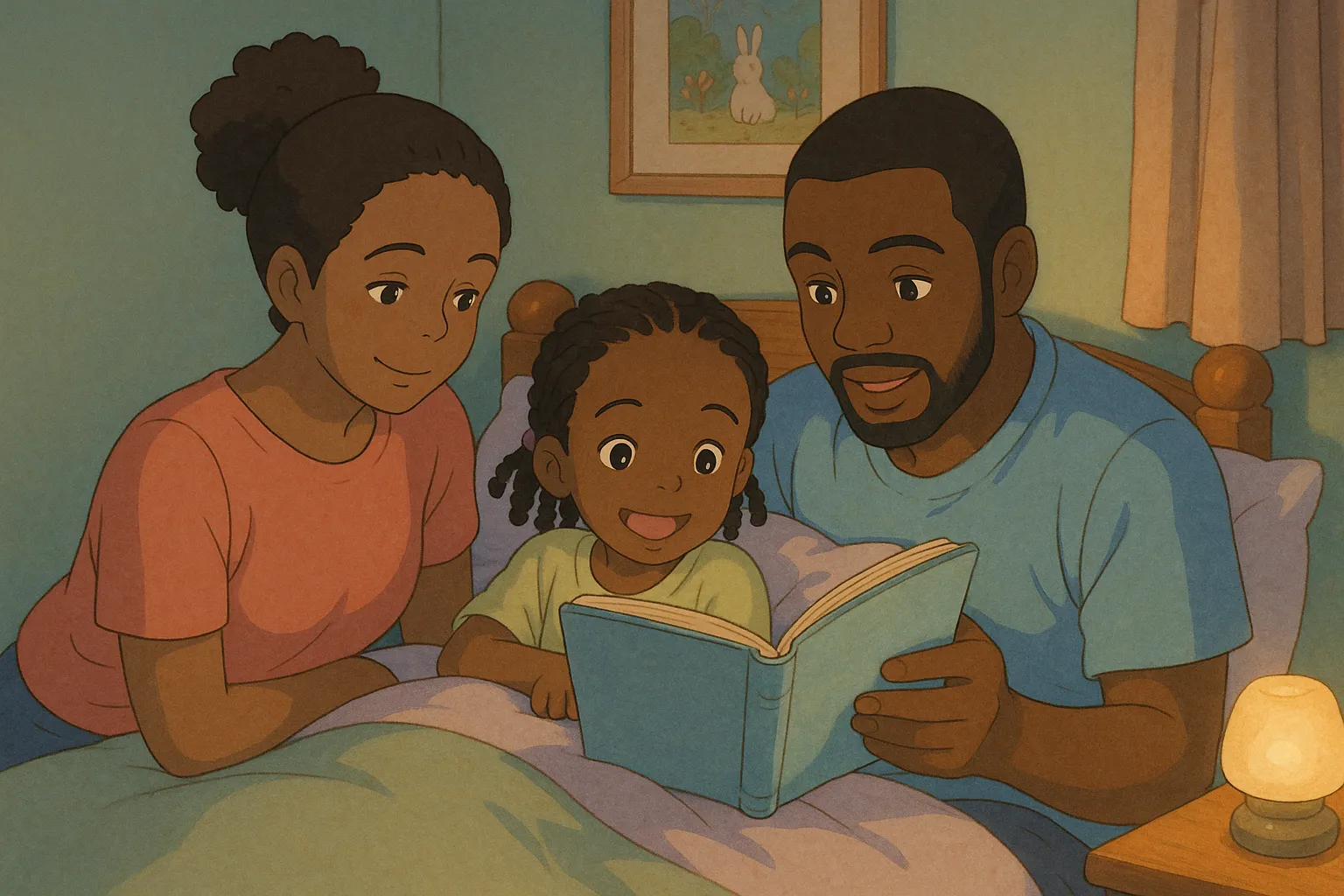
Every parent knows the bedtime ritual: the same book, night after night. While we might worry we're 'wasting time' on 'just entertainment,' storytelling is actually a secret weapon for language learning.
Unlike formal lessons, which feel like work to both parent and child, storytelling engages the emotional centres of the brain. When a child is curled up against you, listening to a familiar tale, their guard is down. They're in 'receptive mode'—open to new sounds, new words, new ways of thinking. It's the perfect moment to slip in a phrase from your heritage language, because it arrives wrapped in safety, warmth, and connection.
Neuroscience backs this up. Repetition is how children's brains build neural pathways. The more a sound or word is repeated in a meaningful context, the stronger the connection becomes. Bedtime stories are built on repetition: 'Goodnight moon, goodnight cow, goodnight room...' That predictability makes them ideal for language swaps.
You don't need to rewrite the whole book. All you need is one phrase that appears multiple times.
Here's how to choose the perfect phrase:
For example:
The child will quickly learn to anticipate that part in your language, and soon they'll be saying it with you.
Once the swapped phrase is familiar, you can grow the language exposure slowly, without pressure.
Week 1–2: Stick with the single swapped phrase. Let it become a comfortable part of the ritual.
Week 3–4: Add a second phrase. Choose another repetitive line or a key word (like the animal name in an animal book).
Month 2: Use your language for the dialogue tags. Instead of 'said the little bear', say it in your language while keeping the main dialogue in English.
Month 3: Read one whole page in your language. Pick a page with simple vocabulary, perhaps the book's climax or a vivid illustration page.
Beyond: Alternate languages by paragraph, or even by book. Soon, your child won't see it as 'English vs. our language'—just as 'storytime'.
The key is gradual, consistent, joyful. If you notice resistance, step back slightly. The goal isn't fluency overnight; it's building a positive association with your language.
This method does more than teach vocabulary. It weaves your heritage into your child's earliest memories. Years from now, when they hear that phrase, they'll think of bedtime with you—of safety, love, and belonging.
That emotional connection is the real magic. It turns language preservation from a duty into a gift. And the best part? You don't need special books, lesson plans, or extra time. You just need the bedtime story you already read—and one simple swap.