By Lionel Kubwimana
••4 min
Tap into the songs of your own childhood to create joyful, meaningful language moments with your kids.
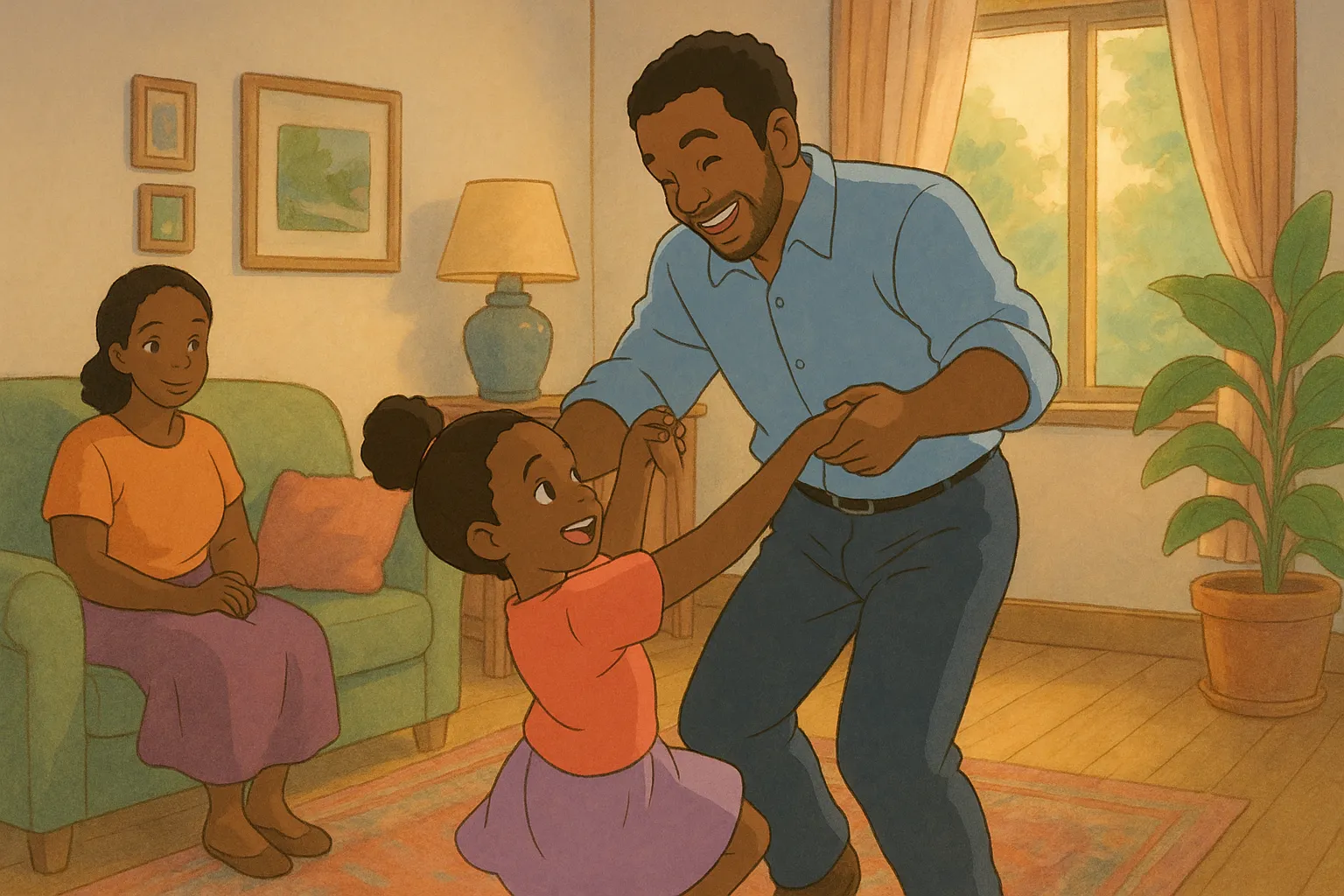
Songs are more than just entertainment—they’re a secret superpower for language learning. The rhythm, repetition, and emotional connection woven into a melody make words stick in a way that flashcards never could. For parents raising bilingual or multilingual children, especially in African languages where resources can be scarce, turning to the songs you grew up with is a natural, joyful way to pass on vocabulary, grammar, and cultural nuance.
Our brains are wired to remember music. The predictable cadence of a song gives children a scaffold for new sounds, while repetition—whether in a chorus or a verse—reinforces words without feeling like drill. Emotion matters, too: the warmth of a lullaby or the energy of a play song attaches positive feelings to the language, making kids want to return to those sounds again and again.
This is especially powerful for African languages, where oral tradition has carried stories and knowledge for generations. A simple call‑and‑response song, a counting rhyme, or a naming game can introduce sentence structure and pronunciation in a context that feels like play, not study.
Start by listing the songs you remember most vividly from your own early years. Which ones made you smile, which ones did you sing with your parents or grandparents? Those emotional anchors will make the experience authentic for you, and your genuine enjoyment will be contagious.
Next, listen with fresh ears. Does the song have a clear, repeatable melody? Are the lyrics relatively simple and culturally relevant? If the original version feels too complex, simplify it—shorten the verses, slow the tempo, or focus on a single catchy refrain. The goal is to make it accessible, not to perform a perfect rendition.
Finally, weave in visuals and gestures. Point to objects as you name them, act out the verbs, use facial expressions to convey meaning. This multisensory approach helps children connect the sounds to concrete ideas, even before they understand every word.
Consistency matters more than duration. Choose a natural slot—during breakfast, while getting dressed, or in the evening bath—and dedicate just three to five minutes to singing one or two songs. Keep it light; if your child isn’t in the mood, try again later rather than turning it into a power struggle.
Let your child lead sometimes. They might want to repeat the same song ten times, or they might invent their own silly version. Embrace that. The repetition is deepening their familiarity, and the creativity shows they’re engaging with the language on their own terms.
Over time, you can build a small repertoire of “our songs” that belong to your family’s daily rhythm. When you notice your child humming a tune or using a word from a song in a new context, you’ll know the music is doing its quiet, joyful work.
What childhood songs do you still remember? Share them with us—we’d love to hear which melodies are finding a second life with your little ones.