By Lionel Kubwimana
••4 min
This week, share one vivid memory from your childhood in your native language. See how nostalgia becomes a bridge your child wants to cross.
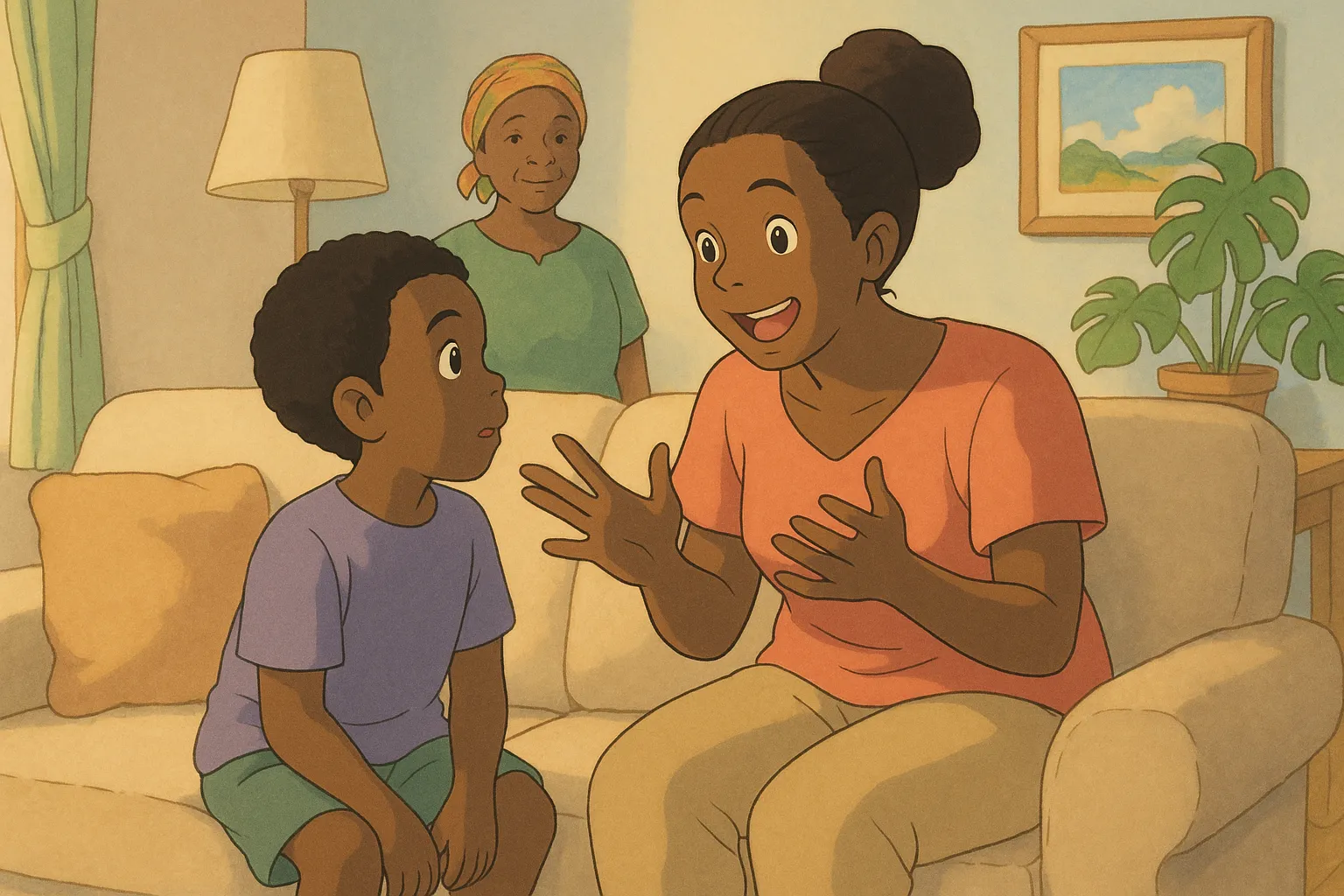
Childhood memories are uniquely powerful because they come wrapped in emotion—the joy of a surprise birthday party, the thrill of climbing a tree, the comfort of a grandparent's hug. Emotions act as cognitive glue, making details stick. When you tell a story from your own childhood in your native language, you're not just teaching vocabulary; you're giving your child a piece of you, coated in genuine feeling.
That emotional anchor makes the new words far more memorable. Research in bilingual education shows that children recall language better when it's tied to a personal, emotionally resonant narrative. Your nostalgia becomes a bridge your child wants to cross because they sense the warmth on the other side. They're not just learning words; they're stepping into your past, seeing you as a child, and building empathy alongside language.
Pick a memory that plays like a short movie in your mind—something with a clear image, a brief arc, and a satisfying ending. Avoid complex plots; aim for a 30‑second anecdote. Good candidates:
Look for a story that naturally contains a few concrete nouns (cake, puppy, medal) and action verbs (mix, rescue, sprint). Those will become your “three translated words” later. The story should also have a clear takeaway—a lesson learned, a funny mishap, or a moment of pride. That takeaway gives the story structure and makes it satisfying to hear.
When you’re ready to tell the story, follow this simple script:
Set the scene in your shared language (e.g., English). “When I was seven, my grandma and I decided to bake a cake for my dad’s birthday.”
Weave in three translated words—key nouns or verbs from the story—in your native language. Say them naturally, then immediately repeat the sentence in English so the meaning is clear.
“We measured the farine (flour), cracked the œufs (eggs), and stirred in the sucre (sugar).”
Pause after each translated word and smile. Let your child hear the new sound, see your expression, and connect it to the object or action.
End with one curious question that invites your child into the memory.
“What do you think happened when we forgot to add the sugar?”
Or: “If you were helping me bake, which ingredient would you want to measure?”
That question shifts your child from passive listener to co‑explorer. They’re now thinking about the story, imagining themselves there, and—importantly—engaging with the new words because they need them to answer.
Once you’ve told the story, keep the bridge open. Use those three translated words casually over the next few days (“Pass me the farine, please”). Ask your child to draw a picture of the puppy or the cake. Watch a short cartoon that includes similar vocabulary. The goal isn’t a one‑time lesson; it’s to weave the words into your family’s shared world.
Remember, you’re not teaching a language—you’re sharing a piece of your life. Your child’s curiosity will grow because they’re curious about you. And with each story, the bridge gets stronger, until one day they’ll start telling their own childhood stories, maybe even in your native tongue.
Ready to try? Pick one memory tonight and share it at dinner. Keep it light, keep it short, and watch the magic happen.