By Lionel Kubwimana
••6 min
Worried your child is losing their cultural identity along with the language? These three simple 'identity anchors' can rebuild that sense of belonging without adding more lessons.
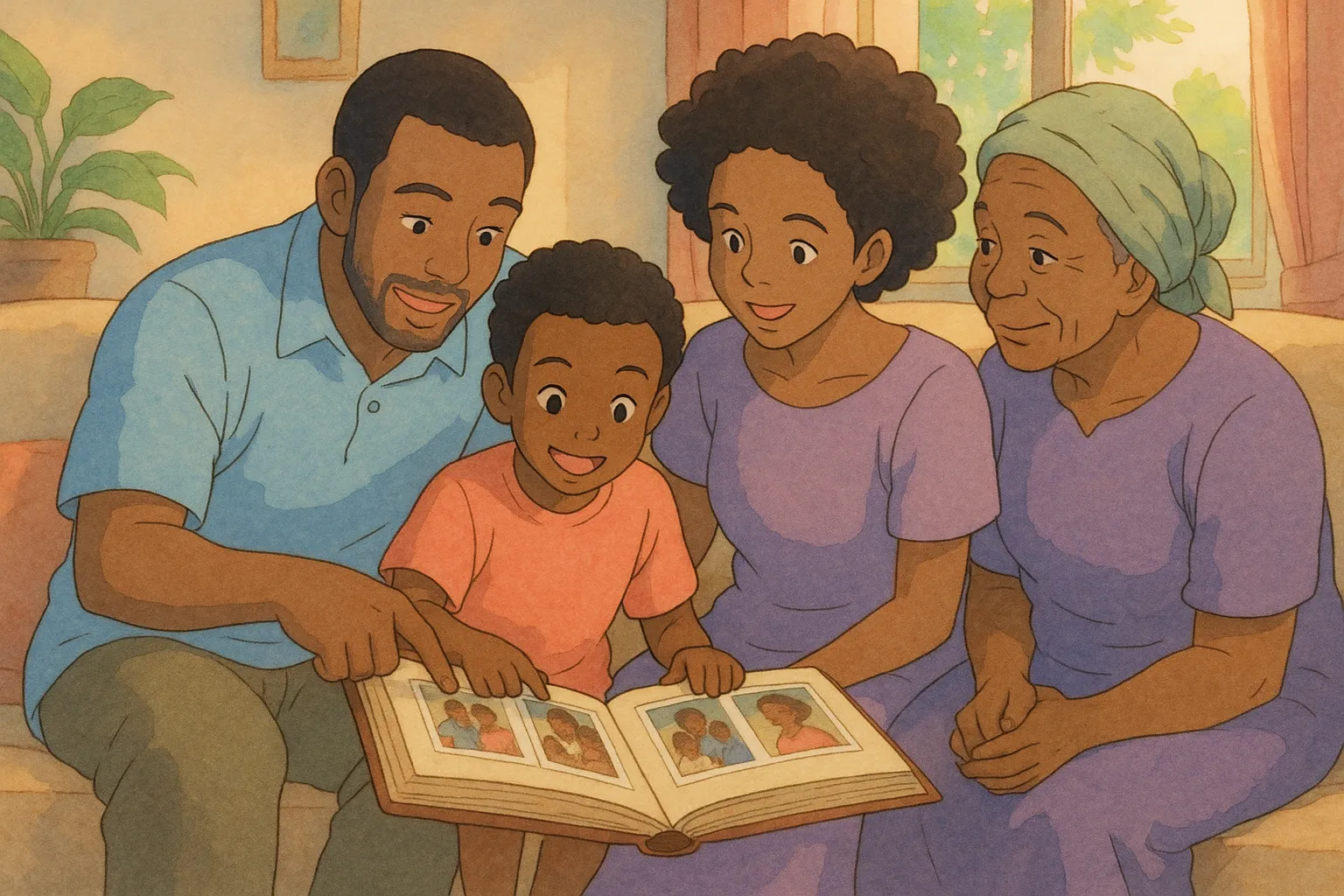
You’re not alone if you’ve noticed your child struggling to connect with their African heritage. Maybe they avoid speaking your mother tongue, or they shrug when you share family stories. It’s easy to think the problem is about language fluency—but often, it’s something deeper: a language identity crisis.
When language is tied to culture, losing the language can feel like losing a part of who you are. In my work with diaspora families, I’ve seen this pattern often: parents worry about fluency, while what children really miss is a solid sense of belonging. The good news is that rebuilding that sense of identity doesn’t always require more language lessons—it’s about reconnecting with the cultural anchors that make language meaningful.
Think about your own upbringing. Being “African” wasn’t just about speaking Kinyarwanda, Swahili, or Yoruba—it was about the proverbs your grandmother repeated, the way stories were told at bedtime, the rituals around mealtimes, celebrations, and greetings.
A language identity crisis happens when those cultural anchors are missing. A child may know the words, but without the deeper cultural context, the language feels hollow, academic, or something only for “old people.”
Example: A girl who speaks fluent Igbo but feels awkward using it outside the home because she doesn’t know the stories behind the proverbs or the significance of traditional greetings.
Research on heritage‑language learners shows that cultural identity is a stronger predictor of language retention than grammatical accuracy. If children feel a genuine connection to the culture, they are more likely to embrace the language—even if they make mistakes.
So, instead of focusing only on vocabulary and grammar, we need to nurture the pillars of cultural identity.
These three elements are like hooks that catch and hold a child’s sense of belonging. They are memorable, emotionally resonant, and often the parts of culture that children absorb almost unconsciously.
Every culture has its own storytelling style—whether it’s the call‑and‑response of West African folktales, the suspense‑filled animal fables of East Africa, or the ancestor narratives of Southern Africa. Stories carry values, humor, and worldviews in a way that direct instruction can never match.
Proverbs are cultural wisdom wrapped in a sentence. They’re portable, repeatable, and full of layered meaning. A child who learns “A single hand cannot tie a bundle” (Swahili: Mkono mmoja haufungi mfuko) isn’t just learning a metaphor—they’re absorbing a worldview about community and interdependence.
Rituals are the daily or seasonal actions that encode culture. It could be how you greet elders, the way you prepare a certain dish together, a song you sing on Saturday mornings, or a special handshake. Rituals create a sense of continuity and belonging.
These three pillars work together: stories give context, proverbs give wisdom, rituals give practice.
You don’t need to overhaul your family’s schedule. Start with one identity anchor—pick either a story, a proverb, or a ritual—and build from there.
Week 1 – Choose your anchor
Week 2 – Introduce it naturally
Week 3 – Make it interactive
Week 4 – Reflect and celebrate
Language identity isn’t built in a day. It’s the accumulation of small, meaningful moments. Every story shared, every proverb explained, every ritual performed is a thread that weaves your child into the cultural fabric.
You’re not just teaching language—you’re giving your child a sense of belonging that will support them long after they’ve mastered the grammar. And that’s something no textbook can provide.
If you try one identity anchor this month, I’d love to hear how it goes. Send me a note—I read every one.