By Lionel Kubwimana
••4 min
Use everyday objects in your home to teach African languages naturally, without extra time or materials.
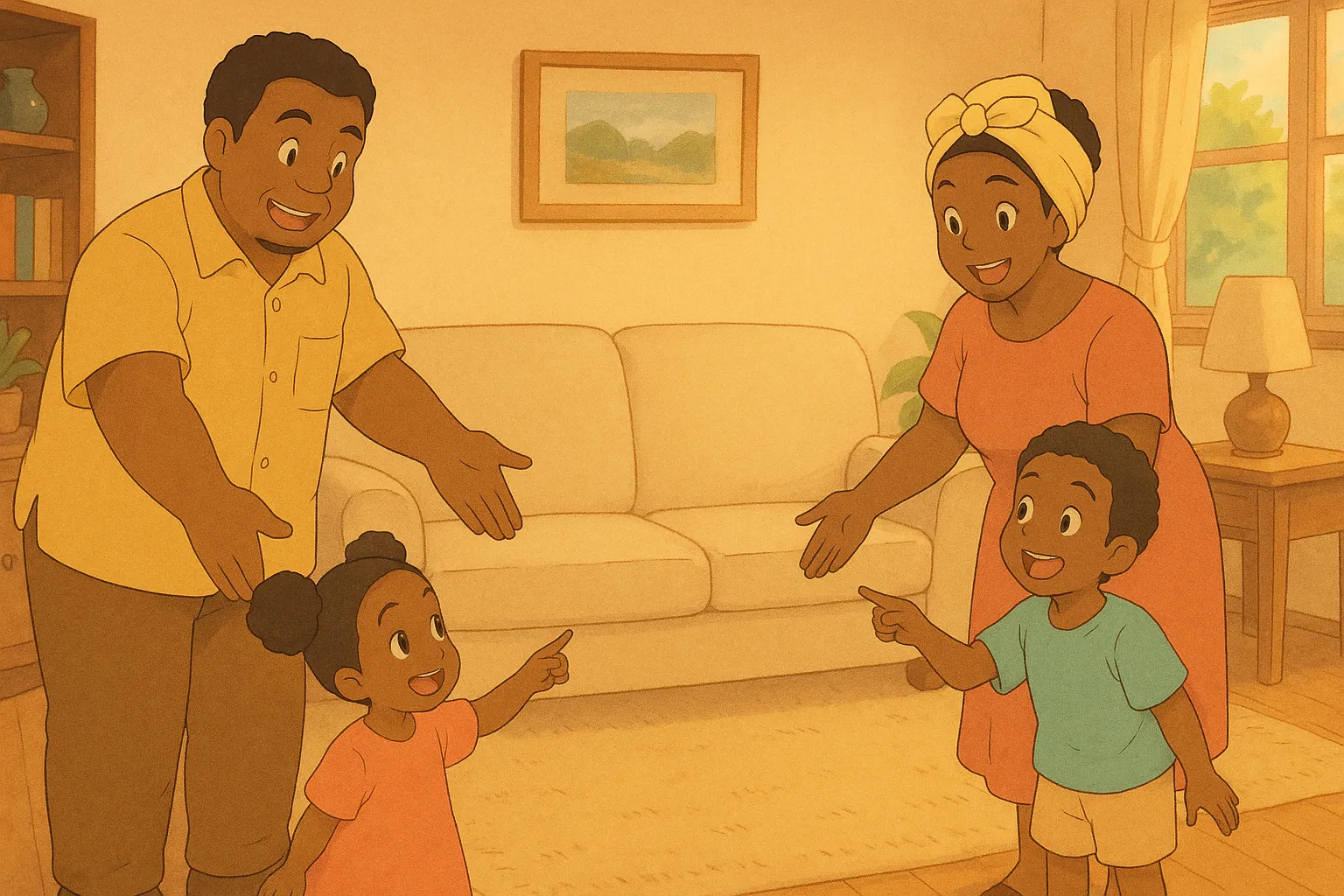
When you look around your home, what do you see? A couch, a spoon, a toy, a cup. These ordinary items are already part of your child's world—and they can become your most effective language teachers.
Many parents in the diaspora feel they need special flashcards, worksheets, or scheduled "language lessons" to pass on their heritage tongue. That extra effort can feel overwhelming, especially when life is already busy. But what if you didn't need to add anything? What if you could teach African languages simply by using what's already in front of you every day?
Familiarity builds comfort. A child sees the same couch, the same spoon, the same toy car dozens of times a day. That repetition is a learning superpower. Each encounter is a chance to hear the word again—without you having to create artificial repetition.
Tangibility makes meaning clear. When you point to a real couch and say "intebe" (Kirundi for "chair/seat"), your child connects the sound directly to the object. No translation needed. The meaning is embedded in the thing itself.
Frequency creates natural spacing. Language researchers call this "spaced repetition"—the ideal pattern for memory. Because everyday objects appear throughout the day, your child hears the words at just the right intervals to stick.
You don't need to buy special materials or set aside extra time. The curriculum is already built into your home.
Start with one room. Pick the living room or kitchen—where you spend the most time together. Choose three to five objects you both see every day: the couch (intebe), the window (idirisha), the table (imeza), the cup (ikirahuri), the spoon (ikiyiko).
Use the word when the object is relevant. Don't sit your child down for a "lesson." Simply say the word as you use the object:
Pair the word with a gesture—a light tap on the object, or a pointing finger. This multi-sensory input helps the brain link sound and thing.
Resist the urge to translate. If your child looks confused, just repeat the word and keep using the object normally. Trust that the context will convey the meaning.
Add a second language layer once the first word sticks. "This is the intebe. In French we say chaise. In English we say chair." This bilingual or trilingual labeling comes naturally after the child already knows the object.
Bath time, meals, and play are already rich with objects. Use them.
Bath time: Name the soap (isabuni), the water (amazi), the towel (igitambara). "Let's wash with isabuni." "Dry with the itambaro."
Meals: Name each utensil and food item. "Pass the ikiyiko." "This ikirahuri is for your juice." "We're eating ibijumbu (sweet potatoes) today."
Play: Use toy names. "Bring the imodoka (car)." "The umupira (ball) rolled under the intebe (chair)."
The key is to keep it light, playful, and integrated. No quizzes, no pressure. Just language woven into what you're already doing.
Pick one object. Just one. The next time you and your child are near it, say its name in your heritage language. Do that every time you use it for the rest of the day.
Tomorrow, add a second object.
By the end of the week, you'll have a small, solid vocabulary growing naturally—with zero extra time, zero extra materials.
Your home is already full of language teachers. You just need to start pointing at them.